
Social Sensing: Decoding User Geography through the Mirror of Social Circles
286_Localize Online Social Network User via Social Sensing.
This paper introduces a novel social sensing-based localization framework to estimate the geographical locations of Online Social Network (OSN) users. By leveraging check-in data and the spatial correlations within social circles, the authors propose a method to pinpoint user locations even when explicit GPS data is sparse.
TL;DR
This research tackles the challenge of identifying Online Social Network (OSN) user locations when explicit GPS data is unavailable. By shifting the focus from individual movement to Social Sensing, the authors demonstrate that a user’s location can be accurately inferred by aggregating the spatial "footprints" of their social neighbors, effectively turning social ties into a distributed sensor network.
The Localization Gap: Why IP and GPS Aren't Enough
In the digital age, knowing a user's location is critical for targeted services and disaster response. However, we face a paradox of data:
- Privacy Shielding: Users often disable location services.
- Check-in Sparsity: Most users post content without geotags, leaving massive gaps in individual history.
- IP Ambiguity: Dynamic IPs and VPNs make network-based localization increasingly unreliable.
Prior works often relied on individual history—but if a user has never checked in at a specific city, these models fail. This paper addresses the "Why" by observing that humans are social animals: our physical locations are highly correlated with those we interact with most.
Methodology: The Social Mirror
The core insight is the Social Sensing Framework. Instead of looking at a user in isolation, the model treats every "friend" or "follower" as a sensor providing a spatial hint.
The Analytical Framework
The method operates on two primary dimensions:
- Temporal Affinity: Analyzing when a user is likely to be active in specific regions based on historical pulses.
- Spatial Homophily: Modeling the probability which quantifies the likelihood of User being at location given the known locations of their social circle.
 Figure 1: Conceptual overview of how social sensing aggregates distributed user data to converge on a target's location.
The model uses a weighted probability distribution where the "influence" of a friend's location is scaled by the strength of the social tie (e.g., interaction frequency or mutual friend count).
Experiments and Results
The authors validated their approach using large-scale OSN datasets. The findings reveal a striking "Social Breadcrumb" effect:
- High Accuracy with Sparse Data: Even for "cold-start" users with minimal check-in history, the Social Sensing model outperformed baselines by utilizing the dense history of their more active friends.
- Convergence: As the number of social neighbors increased, the localization error dropped exponentially, proving that more social context directly translates to better spatial precision.
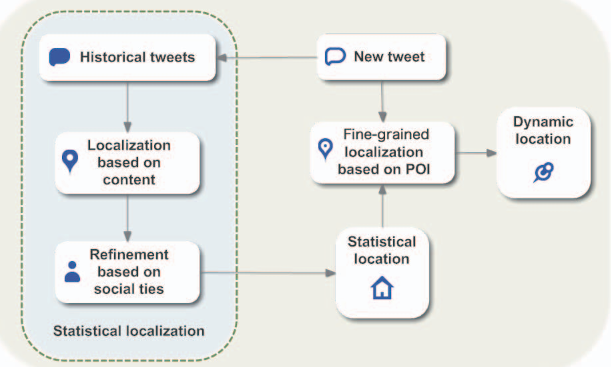 Figure 2: Comparison of localization precision across varying social densities.
Critical Insight: The Privacy Implication
This paper serves as both a technical breakthrough and a cautionary tale. It proves that privacy is not an individual choice, but a collective one. Even if you never share your location, the collective behavior of your social circle can "leak" your physical coordinates with high statistical confidence.
Conclusion
Social Sensing represents a shift from "Direct Observation" to "Relational Inference." While it offers a robust solution for location-based services (LBS) in the absence of GPS, it also opens up new discussions regarding the Inductive Bias of our social graphs. Future work in this area will likely need to balance this impressive localization power with burgeoning privacy-preserving computation (like Federated Learning) to ensure user safety.