
LDP-Recruit: Safeguarding Location Privacy in Mobile Crowdsourcing without Sacrificing Coverage
Locally Differentially Private Participant Recruitment for Mobile Crowdsourcing
The paper introduces a locally differentially private (LDP) framework for participant recruitment in mobile crowdsourcing. By leveraging a customized randomized response mechanism and a posterior-based heuristic optimization, the system maximizes spatial coverage while ensuring that sensitive user location data never leaves the mobile device in its raw form.
TL;DR
Mobile crowdsourcing often forces users to trade their privacy for participation. This paper presents a participant recruitment system that utilizes Local Differential Privacy (LDP) to protect location data directly on the user's device. By introducing a novel posterior-based decoding algorithm, the system maintains a high spatial coverage—outperforming standard noisy baselines by over 10%—even when the server receives only heavily "obfuscated" data.
The Conflict: Privacy vs. Spatial Utility
In urban sensing, the "Value of Data" often lies in the "Where." To coordinate a fleet of mobile participants effectively, a central server needs to know who is going where. However, reporting frequent locations (e.g., home, office) exposes users to severe risks like stalking or physical surveillance.
While Differential Privacy is the gold standard for protection, Local Differential Privacy (LDP) is even more robust because it removes the need for a "Trusted Server." In LDP, data is perturbed on the device itself. The challenge? Most LDP algorithms are designed to find "Heavy Hitters" (the most popular items). In crowdsourcing, we often care about the Long Tail—those few users who visit remote or rare locations—to ensure 100% spatial coverage. Existing methods usually ignore these "weak signals" in the noise.
Methodology: Randomized Response meets Heuristic Optimization
The authors propose a two-phase architecture to solve this:
1. The Client Side: Local Perturbation
Participants don't send their actual locations. Instead, they represent their visited locations as a bit-array and apply a Randomized Response mechanism.
- For each bit, the user "flips a coin."
- Depending on the result, they either report the truth or a random value.
- This provides "plausible deniability"—even if the server sees a "1" for a sensitive location, the user can claim it was just the result of a random coin flip.
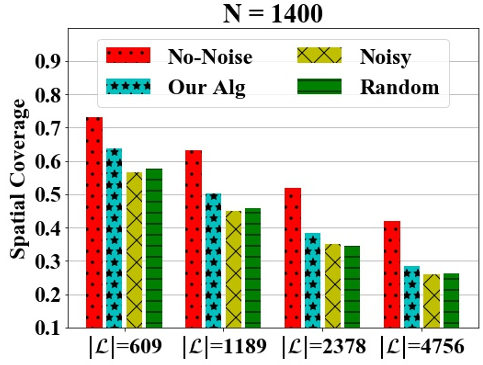 Figure 1: The dual-phase framework consisting of Local Perturbation and Server-side Allocation.
2. The Server Side: Posterior Decoding
Standard decoders fail to identify individuals who cover "rare" locations in noisy datasets. To fix this, the authors derived a complex posterior probability formula (Equation 4) that estimates the likelihood that a specific location remains unvisited by a candidate pool, given the observed noisy sums .
By minimizing the sum of these "unvisited" probabilities, the server can pick a subset of participants that collectively maximizes spatial coverage. They use a Heuristic Swap Algorithm (similar to gradient descent) to iteratively refine the participant pool until the best coverage is achieved.
Experimental Results
The researchers tested their system using real-world trajectories from 10,000 users in Beijing. They compared their method against:
- No-Noise: The theoretical upper bound (zero privacy).
- Noisy: Directly using the obfuscated reports as if they were true.
- Random: Randomly selecting participants.
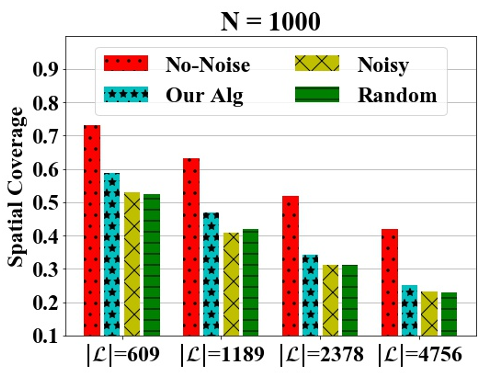 Figure 2: Spatial coverage performance across different privacy budgets and participant counts.
The results were conclusive: The proposed decoding algorithm significantly outperformed the "Noisy" baseline, proving that mathematical modeling of the noise is better than just ignoring it. They achieved a 10%-16.5% improvement in coverage, making the LDP approach practically viable for real-world urban sensing.
Critical Insight & Conclusion
This paper proves that Local Differential Privacy doesn't have to mean local data uselessness. The key insight is that while individual reports are unreliable due to noise, the collective statistical distribution still contains enough signal to drive complex optimization tasks like spatial coverage.
Limitations: The current model assumes a fixed "privacy budget" () for all users and a static number of tasks. Future Work: Moving toward "Personalized LDP," where different users can choose their own balance of privacy vs. incentive, will be the next frontier in making crowdsourcing truly user-centric.