
MobilisGroups: Bridging the Physical-Virtual Gap via Spatio-Temporal Grouping
MobilisGroups: Location-based group formation in Mobile Social Networks
MobilisGroups is a reusable location-based group formation service integrated into the Mobilis platform, utilizing XMPP to enable group management with specific geographic and temporal constraints. It establishes an Android-based reference implementation that allows users to create, discover, and join groups only when satisfying predefined "place and time" requirements.
TL;DR
MobilisGroups is a specialized service for the Mobilis platform that enables the creation of mobile social groups with strict geographic and temporal boundaries. By leveraging XMPP and Android, it allows developers to create "event-bound" or "location-bound" communities where visibility and membership are earned through physical presence at a specific time and place.
Background: Beyond the Simple "Check-in"
In the early 2010s, Mobile Social Networks (MSNs) were dominated by the "check-in" culture (Foursquare, Gowalla). However, these platforms often treated "places" as static entities. Academic efforts like Urbiflock moved toward proximity-based matching (finding people nearby), but there remained a gap: How do we create formal groups that exist only during a specific event, at a specific building, yet persist digitally after the event is over?
The authors argue that by introducing temporal and spatial restrictions, we can create stronger incentives for users to interact within the physical world, effectively linking physical "BarCamps" or apartment complexes to virtual social hubs.
Methodology: The Grouping Engine
The MobilisGroups service is built as a centralized middleware. The choice of a centralized architecture was driven by the finding that it typically yields higher user satisfaction in MSN contexts due to data consistency.
1. Architecture & XMPP
The system functions on top of the eXtensible Messaging and Presence Protocol (XMPP).
- Coordinator Service: Acts as a directory to help mobile clients find the Grouping Service.
- MXA (Mobilis XMPP on Android): A library that handles inter-process communication on the device.
- Custom IQ Messages: Instead of generic messages, the authors defined
GroupCreateandGroupMemberInfoIQ (Info/Query) extensions to handle complex metadata like coordinates and time windows.
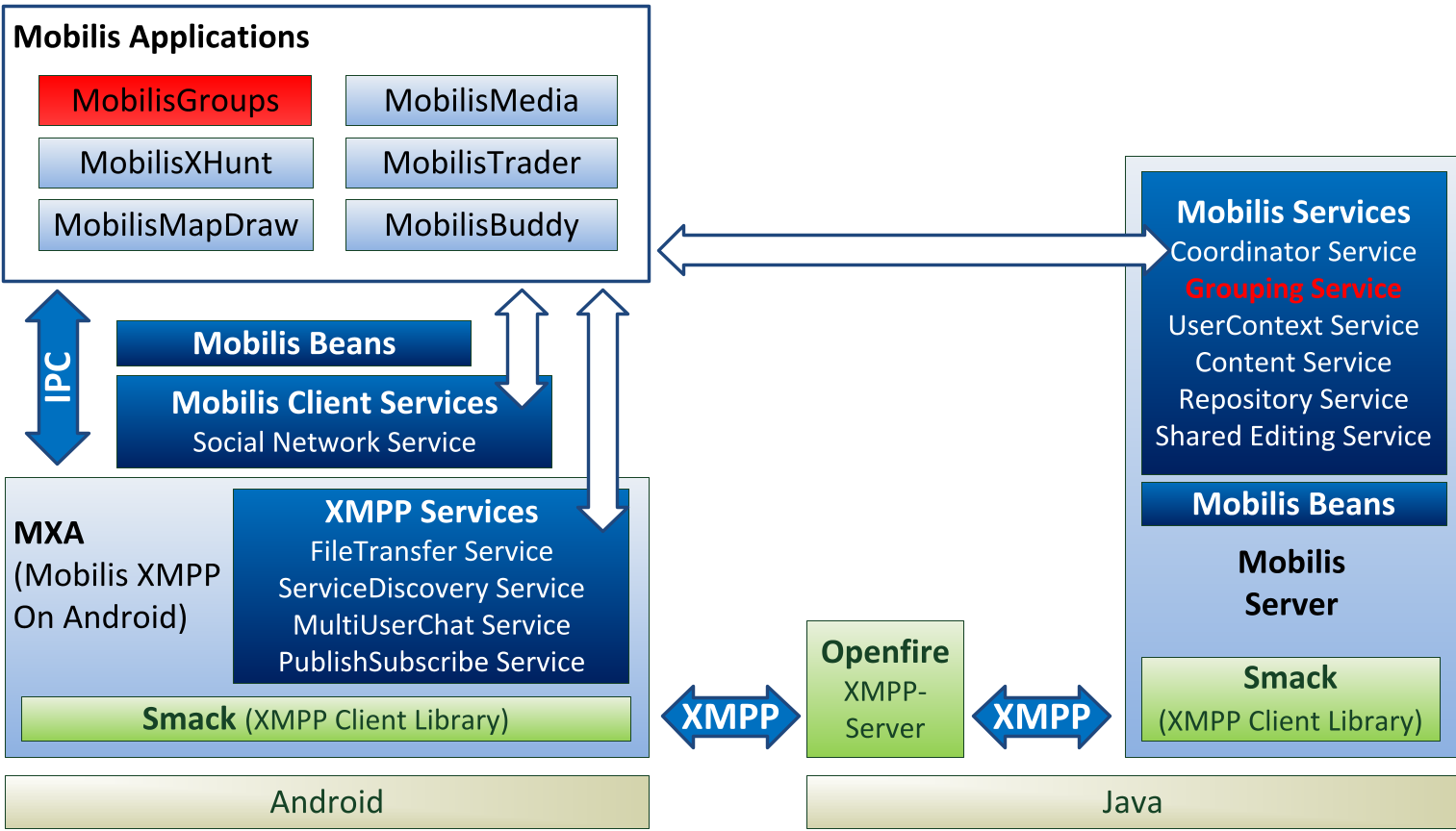 Figure 1: Integration of MobilisGroups into the broader Mobilis framework.
2. Spatio-Temporal Constraints
The core "Insight" of the paper is the implementation of restrictions:
- Visibility Radius: A group might only appear on your map if you are within 200 meters.
- Joinability Window: You may see a "BarCamp" group 4 weeks early, but you can only join the chat when you are physically in the building on the day of the event.
Experiments & Scalability
The implementation was tested on Android with a Java-based server. To test if the system could handle a dense urban environment, the authors simulated the creation of 1,000 groups within a 5 km² area.
- Creation Latency: ~30 ms per group.
- Query Speed: Processing time scales linearly. Even with 1,000 groups visible to a user, the query returned in under 500ms.
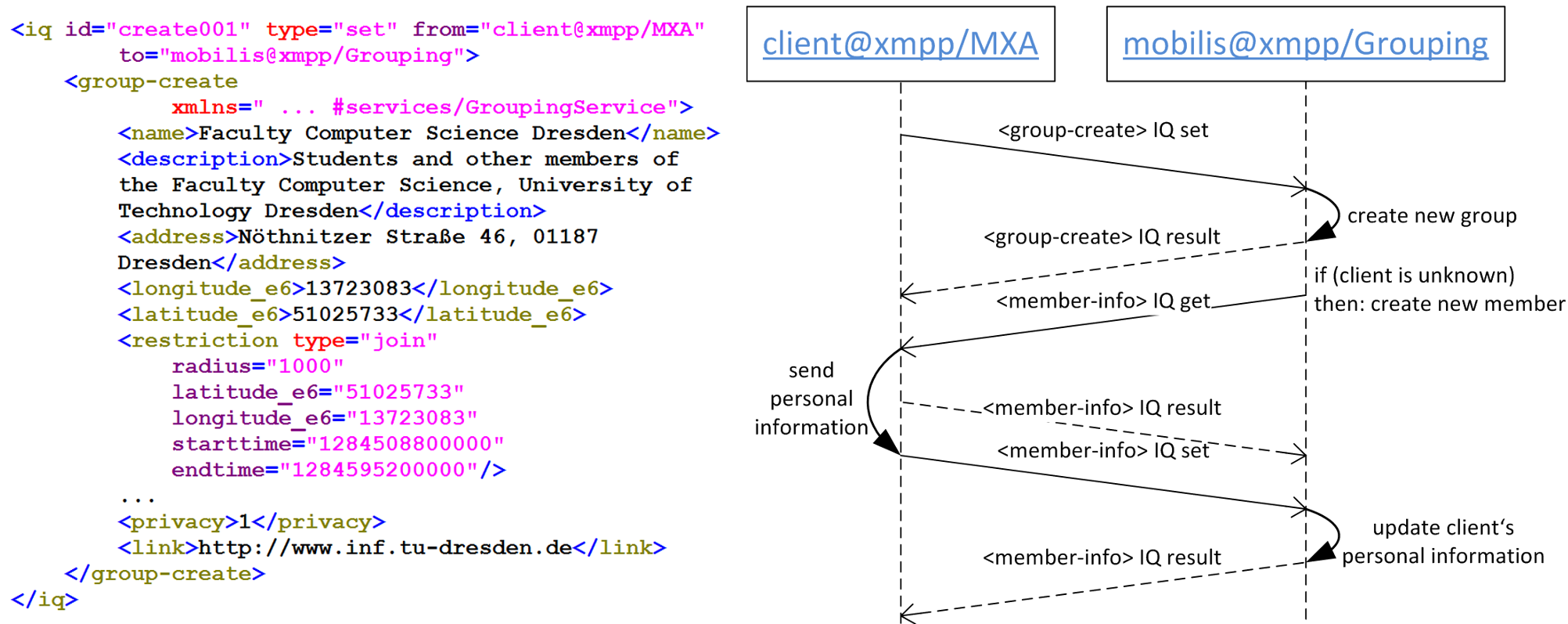 Figure 2: The GroupCreate communication flow between the Android client and the XMPP server.
Critical Analysis & Future Outlook
Strengths
The use of XMPP is a brilliant architectural choice for this era; it provides built-in presence management (knowing who is online) and multi-user chat (MUC) capabilities for groups right out of the box. The "Overlay Architecture" for Foursquare integration also shows a forward-thinking approach to extensibility.
Limitations
The primary weakness is the centralized nature of the Grouping Service. In a truly pervasive environment, a single point of failure (the Mobilis Server) can be problematic. Additionally, the paper focuses on "Static" location groups (fixed coordinates), leaving "Dynamic" groups (where the group moves with a leader) as future work.
Takeaway for Researchers
MobilisGroups proves that social software is most effective when it respects the context of the physical world. By enforcing "being there" as a requirement for "joining in," developers can foster more meaningful, high-intent social interactions rather than passive digital scrolling.
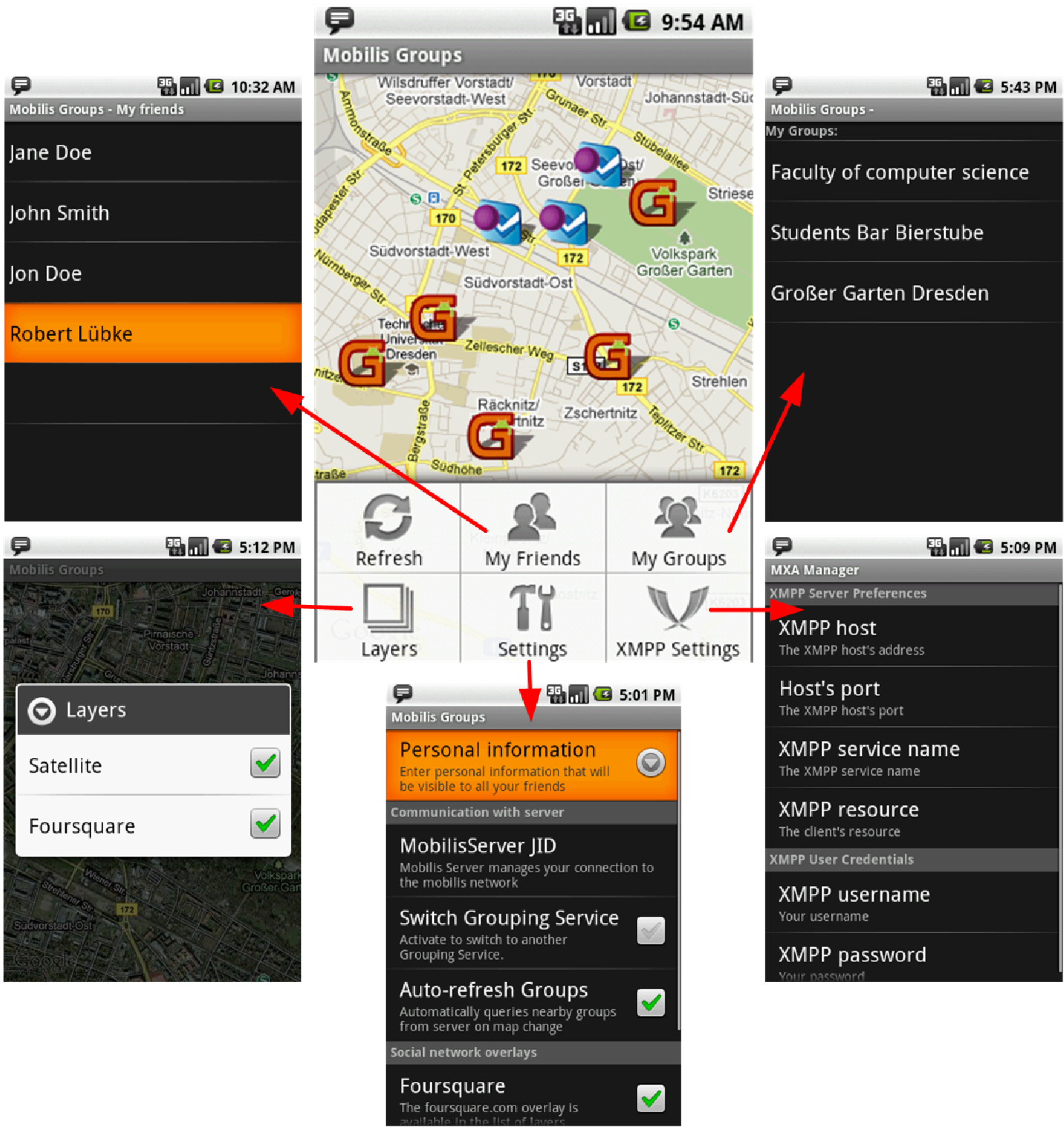 Figure 3: The Android prototype showing the map-based group discovery and management interface.