
Time-Space Social Networking: Beyond the "Here and Now"
Location-Based Service for a Social Network with Time and Space Information
This paper introduces a Location-Based Service (LBS) framework integrated with Facebook that uniquely incorporates a temporal dimension (past and future locations). Managed via an MVC-based architecture, the system offers both web and mobile interfaces to visualize user movements and agendas across the time-space continuum.
TL;DR
While most location services answer "Where are you now?", this research proposes a system that answers "Where were you?" and "Where will you be?". By integrating a temporal component into Facebook-based location services, the authors enable users to share agendas and history, creating a more functional and predictive social network.
Context & Motivation: The Missing Dimension
Location-Based Services (LBS) have long been staples of the Web 2.0 era, with apps like Foursquare or Google Latitude making "check-ins" a social norm. However, current systems are often "trapped in the present." They fail to capture the intent of a user (future locations) or the context of their movements (past history).
The authors argue that a truly useful social LBS should allow for coordination without constant personal contact. If your friends know you will be at the library at 3:00 PM tomorrow, the "coordination cost" drops to zero.
Methodology: Bridging the Web and Mobile Gap
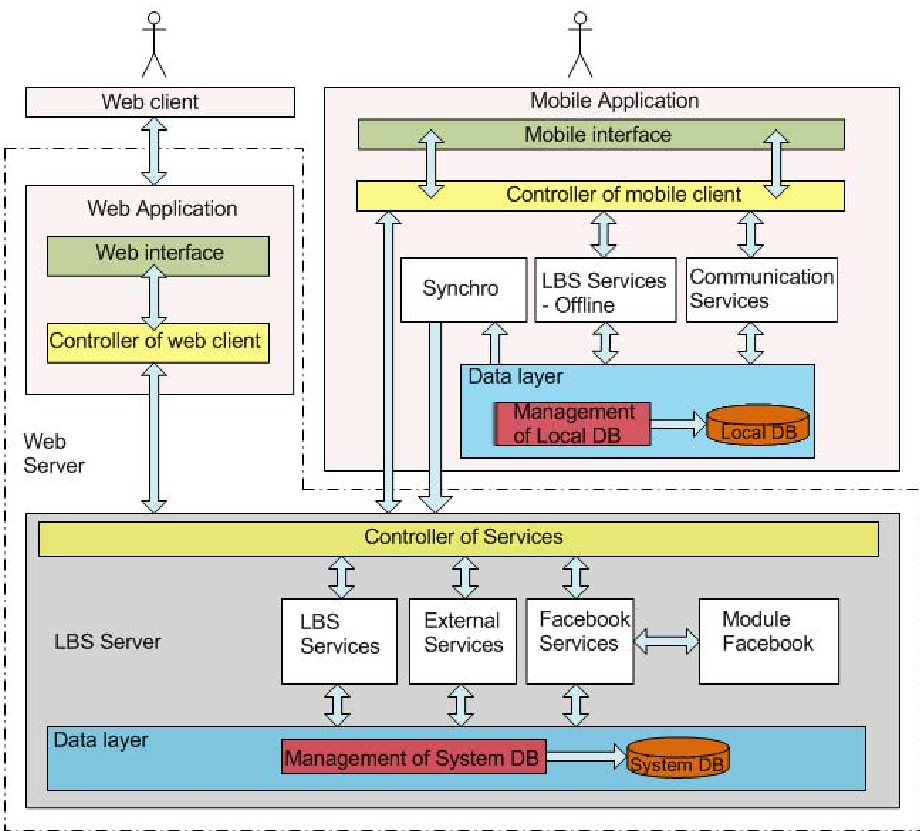
The researchers developed an architecture following the Model-View-Controller (MVC) pattern to ensure scalability across different platforms.
The Architecture
The system is split into three main pillars:
- LBS Server: The "brain" that handles Facebook API integration, database management, and the core spatio-temporal logic.
- Web Client: An application embedded directly into the Facebook interface.
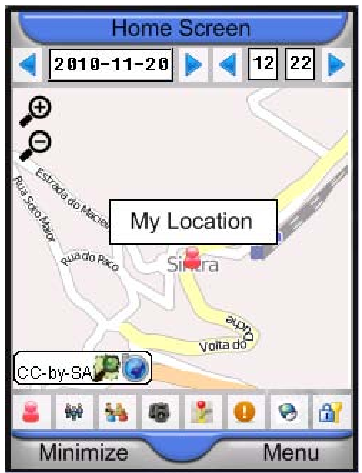
- Mobile Client: A Java ME-based runtime application designed for on-the-go tracking and "offline" functionality.
Core Innovation: Granular Visibility Rules
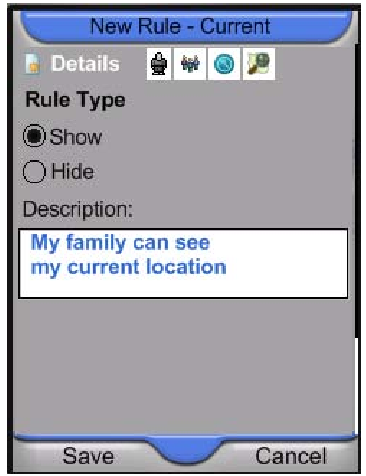
A major contribution of this work is its approach to Privacy. Instead of a simple On/Off switch, the system allows for "Visibility Rules." A user can define:
- Who: Specific friends or groups (e.g., "Family" vs. "Classmates").
- When: Specific time slots (e.g., only show my location during work hours).
- Where: Geographic boundaries (e.g., hide my location when I am at home).
Real-World Validation: Case Studies
The paper validates the framework through four practical scenarios:
- Geocaching: Enhancing treasure hunts by sharing GPS coordinates and timing for "hiding" and "finding."
- Biclis (Bike Sharing): Improving the Leiria bicycle sharing system by allowing employees to track bike locations and allowing users to register deliveries online.
- Carpooling: This is where the temporal aspect shines—matching drivers and passengers by aligning their future "agendas" and routes.
Critical Insight & Conclusion
The true value of this work lies in the transition from reactive to proactive services. By including a "future" component, the system can send alerts for upcoming events or notify a user if a friend's future path intersects with their own.
Limitations: The use of Java ME is a reflection of the era (2010), and today's privacy requirements (GDPR) would require even more robust encryption than the "visibility rules" suggested. However, the logic of "Temporal LBS" remains highly relevant for modern logistics and social coordination apps.
Future Outlook: Transitioning this framework to modern OS environments like Android/iOS and incorporating AI to predict "likely" future locations based on past history could be the next logical step for this research.