
Beyond Random Walk: Why Real-World Social Data Challenges Mobile Crowdsensing
Location-based social networks data for mobile crowdsensing
This paper investigates the feasibility of Mobile Crowdsensing (MCS) by comparing real-world mobility data from the Brightkite Location-Based Social Network (LBSN) against traditional Random Walk models. Using a Reverse Auction based Dynamic Price (RADP) incentive mechanism, the study evaluates system performance across 500 sensing rounds.
TL;DR
Mobile Crowdsensing (MCS) relies on the ubiquity of smartphones to collect urban data, but how realistic are our assumptions about user movement? This paper pits real-world check-in data from the Brightkite social network against a standard Random Walk model. The verdict: real human movement is too predictable and localized to provide the coverage that theoretical models promise, leading to a rapid decline in active participants and poor spatial sensing.
The Reality Gap in Mobility
Most Participatory Sensing (PS) systems are designed under the assumption that if you have enough people, they will eventually cover your target area. Researchers often use Random Walk models to simulate this. However, humans are creatures of habit. They go to work, go home, and visit the same coffee shops.
The authors argue that this "socially-influenced" mobility creates a massive bottleneck for MCS. If participants don't naturally move to where the data is needed, the system fails—regardless of how sophisticated the incentive mechanism is.
Methodology: Auctions and Incentives
To test this, the researchers used a Reverse Auction based Dynamic Price (RADP) mechanism.
The Economic Engine: RADP-VPC-RC
In this system:
- Users Bid: Contributors submit a "sensing plan" and a price for their data.
- Selection: The crowdsourcer buys the cheapest samples first to stay within budget.
- Retention (VPC): To prevent losers from quitting, the system gives them "Virtual Participation Credit," lowering their virtual bid price over time until they eventually win and stay in the loop.
- Recruitment (E-ROI): A "re-joint" module targets users who dropped out, luring them back with the promise of higher recent payouts.
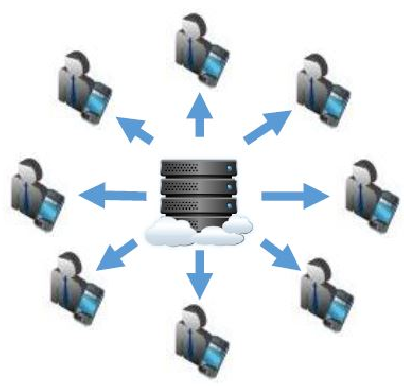 Fig 1: The general architecture of the Crowdsensing market, connecting the cloud-based crowdsourcer to mobile contributors.
Real Data vs. Simulation: The Results
The researchers filtered Brightkite data for users with over 500 check-ins and ran 500 auction rounds. The results highlight a stark contrast between theory and reality.
1. Area Coverage
While the Random Walk model showed participants wandering across the map, the Brightkite users remained stubbornly localized.
- Finding: Real-world data reached less than 30% area coverage.
- Insight: Human predictability makes it nearly impossible to "accidentally" sense an entire city.
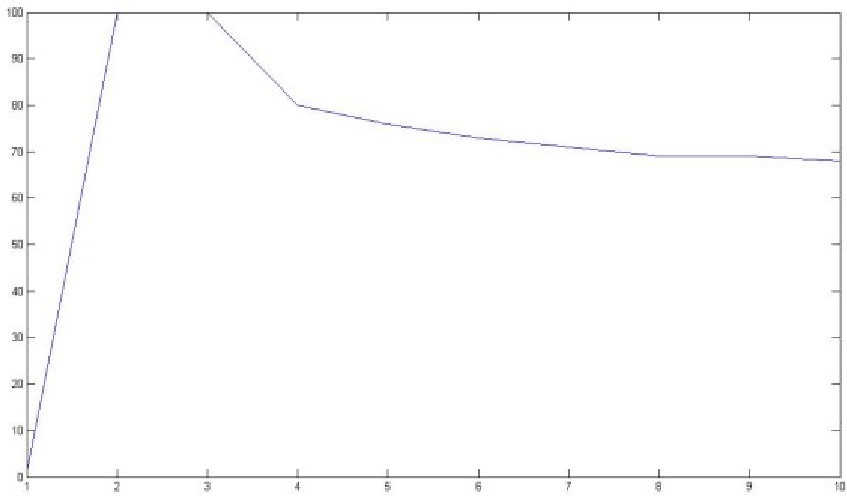 Fig 2: Coverage using the Random Walk algorithm—highly dispersed and effective in theory.
2. Participant Retention
In the Random Walk scenario, the number of participants remained relatively stable. In the Brightkite scenario, participants dropped out at an alarming rate.
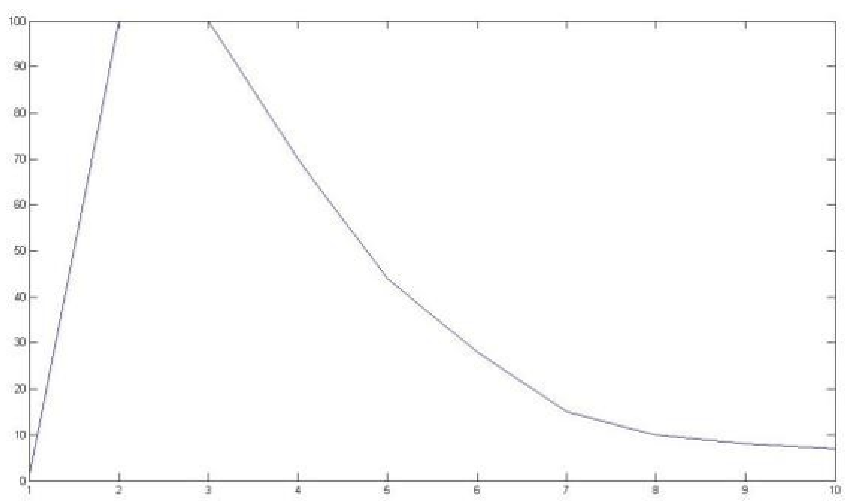 Fig 3: The rapid decline of active participants when using real-world social network data.
Critical Insight: The "Passive" Failure
The core takeaway is that passive crowdsensing is insufficient. If a system only rewards users for being where they already are, it will struggle with coverage gaps.
Limitations: The authors admit that their time windows for "rounds" might have been too rigid. Check-ins in a social network are sporadic, whereas sensing tasks often require a constant cadence (e.g., every hour).
Conclusion
This study serves as a reality check for IoT and Smart City designers. Relying on the "natural" movement of the crowd is a recipe for sparse data. To make Mobile Crowdsensing viable, incentive mechanisms must evolve from simply paying for data to paying for movement—actively encouraging users to deviate slightly from their daily routines to fill the sensing gaps.