
Beyond Simple Check-ins: Decoding Human Mobility through Social Trust and Asymmetric Influence
Location Recommendation Based on Social Trust
This paper introduces a Trust-Based Location Recommendation algorithm for Location-Based Social Networks (LBSNs). The method integrates structural friendship ties with behavioral trust and influence metrics to predict the most relevant Points of Interest (POIs) for users, achieving a 78.9% success rate on the Gowalla dataset.
TL;DR
Location-Based Social Networks (LBSNs) like Gowalla and Brightkite are more than just digital maps—they are complex webs of human relationships. This paper presents a novel recommendation engine that moves beyond "friendship" as a binary link. By quantifying Social Trust and Behavioral Influence through a five-stage mathematical framework, the researchers improved location recommendation accuracy to nearly 79%, outperforming traditional graph-search and random-walk baselines.
Background: The Problem with Peer Pressure
In the world of social recommendation, not all friends are created equal. Prior work often treated social graphs as undirected and unweighted, or relied solely on spatial proximity. However, the intuition behind this paper is rooted in human psychology: you are far more likely to visit a restaurant's recommendation from a trusted childhood friend than a random acquaintance, even if both are "friends" on Facebook. The challenge lies in quantifying this "trust" and "influence" when the data—check-in logs—is often sparse and lacks demographic depth.
Methodology: The Five Stages of Trust-Driven Recommendation
The core of this work is the Trust Based Location Recommendation Algorithm. It treats the social network as a directed graph , where each edge is not just a link but a multi-dimensional vector.
1. Quantifying the Bond (Weight & Trust)
The process begins by calculating the Weight between users using the Pearson Correlation Coefficient on user attributes (educational background, workplace, etc.). This leads to Edge Trust:
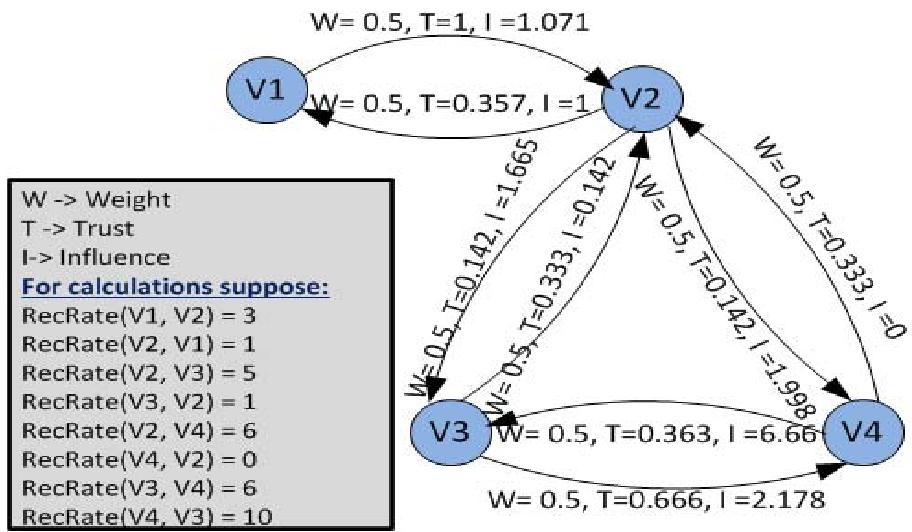 Fig 1: Conceptual model of asymmetric Trust and Influence between nodes.
Crucially, trust is asymmetric. The Edge Trust represents how much User trusts User , which is normalized by the total weight of all of User 's connections.
2. From Trust to Influence
Trust is a predisposition, but Influence is behavioral. The authors introduce the Recommendation Rate, derived from shared historical check-in data. If User and User frequently visit similar places, their mutual influence score is boosted.
The Edge Influence is the product of this behavioral rate and the established trust. This ensures that a recommendation is only highly ranked if there is both a social bond and a history of shared spatial interests.
Experiments: Real-World Latent Influence
The researchers utilized two classic LBSN datasets: Gowalla and Brightkite. Because these datasets lack demographic data, the team performed a "Data Augmentation" phase, synthesizing functional attributes (like education and political views) to simulate real-world social dynamics.
Key Results & SOTA Comparison
The algorithm was pitted against two major baselines:
- Weighted Graph Search (Hangal et al.): Focused on edge weights in social graphs.
- Context-Aware Random Walk (Bagci & Karagoz): A SOTA approach using stochastic traversal of the social graph.
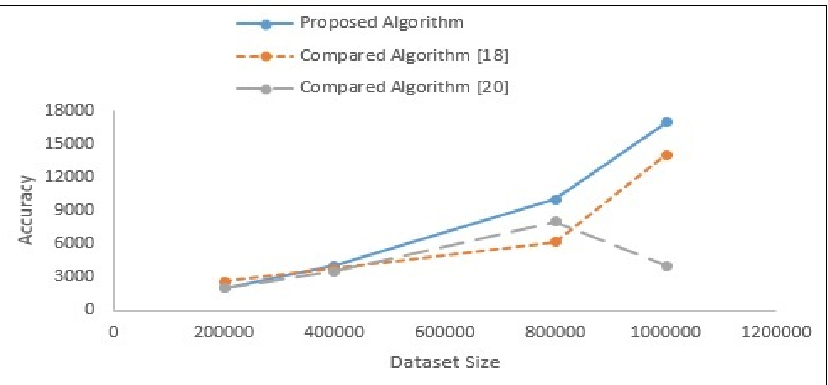 Fig 2: Performance comparison—Trust-based approach (Blue) vs. Baselines.
As shown in the experimental results, the Trust-Based approach maintains high accuracy (78.9%) even as the dataset size increases, whereas the baselines struggle to scale their predictive power.
Critical Analysis & Future Outlook
This paper successfully demonstrates that asymmetry is key to modeling social networks. By distinguishing between "who I trust" (Edge Trust) and "who is influential in the network" (Node Influence), the model captures the nuance of social hierarchies.
Limitations:
- Data Synthesis: The reliance on augmented (synthetic) demographic data is a potential weakness. Validating this on a dataset with native demographic info (like Foursquare or Yelp) would be the next logical step.
- Direct Ties: Currently, the model only considers direct friends.
Future Directions: The authors suggest expanding the reach to "friends of friends" (transitive trust) and investigating how ranking nodes based on global influence can refine the recommendation "noise" in massive datasets. For developers and researchers in LBSN, the takeaway is clear: stop looking at check-ins in isolation and start looking at the strength of the threads connecting the check-ins.
Conclusion
By integrating Pearson correlation for attribute similarity with behavioral check-in frequency, this Trust-Based algorithm provides a robust framework for the next generation of personalized spatial services, from localized advertising to urban planning.