
Beyond the Check-in: Decoding the Privacy and Social Logic of Location Sharing in China
Understanding the Use of Location Sharing Services on Social Networking Platforms in China
This paper presents a qualitative study on the adoption and usage patterns of Location Sharing Services (LSS) on Chinese social networking platforms (WeChat and Weibo). Using 43 in-depth face-to-face interviews, the study identifies key drivers like social connection and safety, alongside significant barriers rooted in privacy concerns and lack of service awareness.
TL;DR
Why do we tell the world where we are? This study dives deep into the Chinese social media ecosystem—specifically WeChat and Weibo—to uncover why users share their locations. It reveals a complex tug-of-war between the desire for social "fashion" and an acute fear of being "watched" by merchants or unwanted acquaintances.
Contextualizing the "Where": Problem & Motivation
In the early 2010s, Location Sharing Services (LSS) became the cornerstone of mobile social networking. However, most academic literature focused on Western apps like Foursquare. China, despite having the world’s largest internet population, presents a unique landscape:
- Platform Divergence: The stark contrast between "Microblogging" (Weibo) and "Instant Messaging" (WeChat).
- The Trust Gap: High digital penetration vs. rising concerns over cybercrime and data monetization.
The authors sought to bridge this gap, using the Theory of Contextual Integrity to ask: Is privacy about keeping secrets, or about the "appropriate" flow of information?
Methodology: The Logic of Contextual Integrity
The researchers conducted 43 face-to-face interviews, segmenting participants into users and non-users. They applied Nissenbaum’s Theory of Contextual Integrity (CI), which posits that privacy is violated when "social norms" regarding information flow are broken.
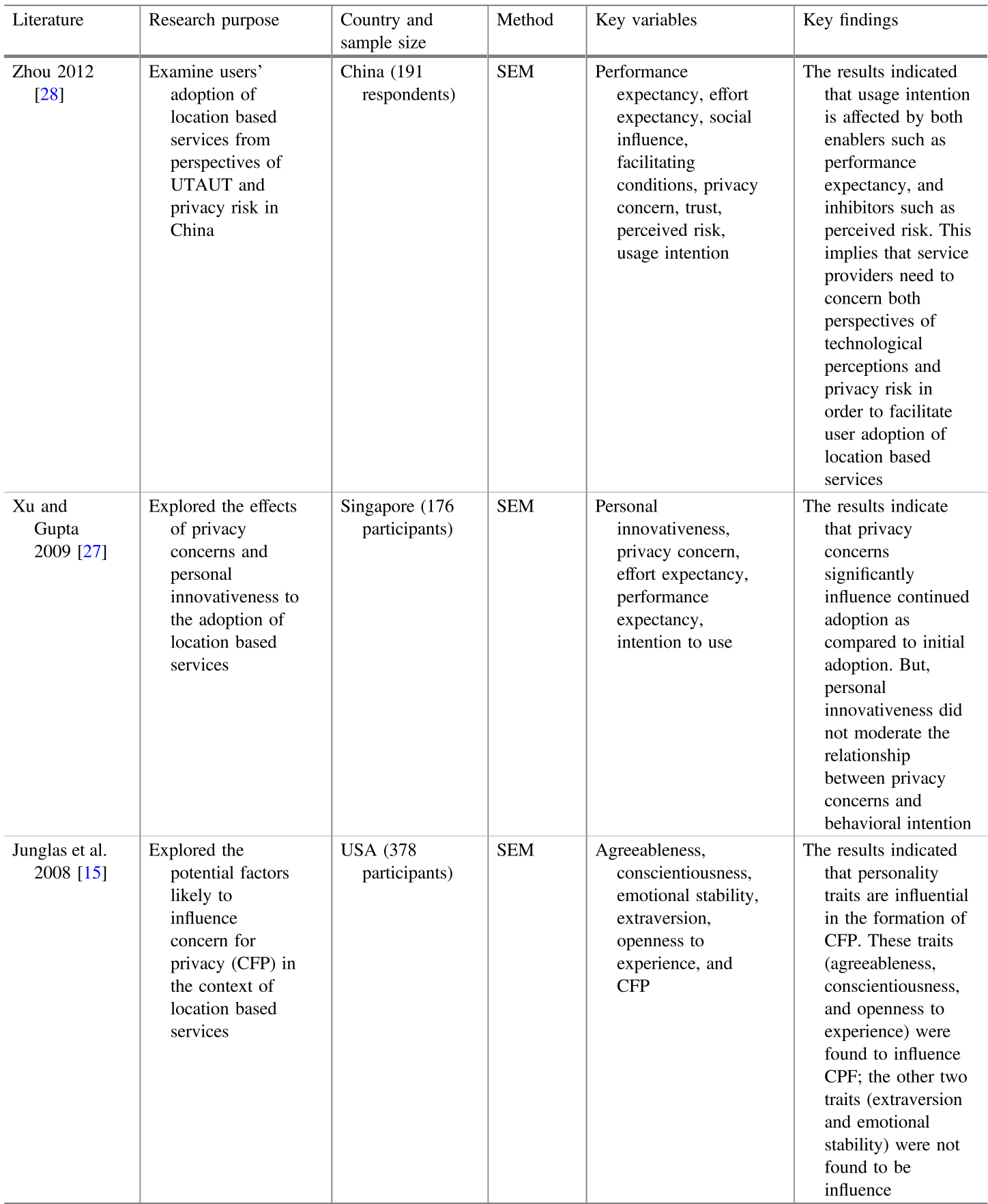 The study builds upon existing TAM and UTAUT models but shifts the focus toward qualitative human experiences.
Deep Dive: Where and Why Do We Share?
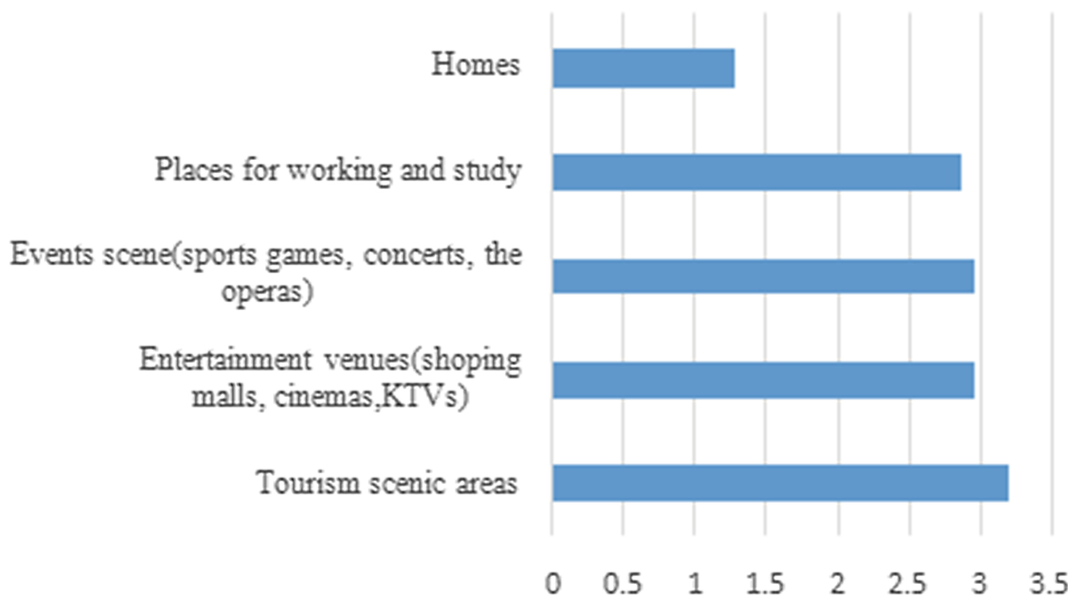
The study discovered a hierarchy of "Shareable Spaces." Users perform a subconscious risk-benefit analysis before hitting that "Check-in" button.
1. The Geographic Hierarchy
As shown in the data, users are not equally likely to share all locations:
- High Probability: Tourism scenic areas and entertainment venues (seen as "fun," "fashionable," and "non-routine").
- Low Probability: Home. Sharing one's home location is viewed as a fundamental breach of personal security.
2. Motivations vs. Barriers
- Drivers: Recording life routines, "romantic" signaling (e.g., dating), and even a sense of safety (letting friends know where you are in case of emergency).
- Barriers: Interestingly, it wasn't just privacy. A significant portion of non-users simply didn't know the feature existed or how to use it—a major insight for product marketers.
Privacy Paradox: WeChat vs. Weibo
A central finding of the paper is the perceived "Privacy Safety" of different platforms.
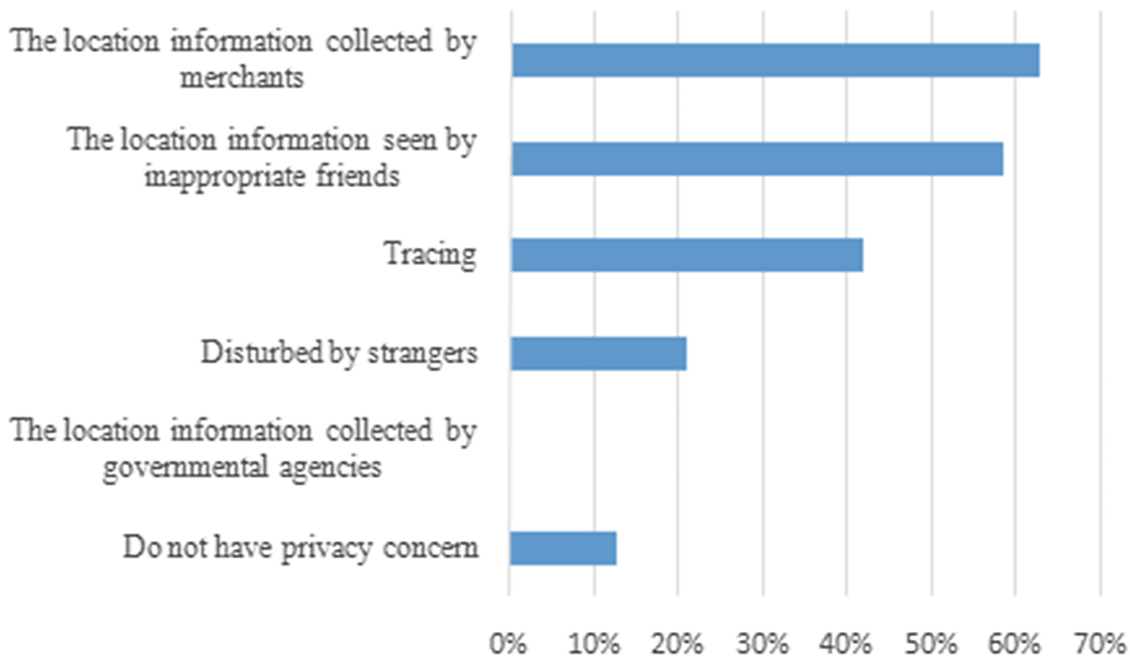
- WeChat (The Winner): Because messages are only seen by verified friends, it satisfies the "Appropriateness" norm. 44.4% of users preferred sharing here.
- Weibo (The Risk): Being public by default, it often violates the "Distribution" principle. Users fear "unknown merchants" and "strangers" accessing their data.
Critical Insights & The Path Forward
The Takeaway
Privacy in the age of LSS is not "binary" (on or off). It is context-dependent. Users in China are willing to share their location for social capital (likes, comments, "fashion") provided they have Authority Management—the ability to block specific audiences (like parents or bosses) from seeing specific flows.
Limitations
The study focused on a young demographic (under 25). Future research must investigate how older generations—who may have different concepts of "Public" vs. "Private"—handle the same technologies.
Future Outlook
As LSS moves toward "automated tracking" (where apps sense location without a manual check-in), the violation of Contextual Integrity will become even more sensitive. Product designers must move toward "Visible Flows," making it crystal clear who sees what, and when.