
Detecting the Digital Ghost: A Semantic Approach to Location Spoofing in Social Networks
A Location Spoofing Detection Method for Social Networks (Short Paper)
This paper introduces a robust location spoofing detection method for Location-Based Social Networks (LBSNs) like Sina Weibo. The core approach, "LDA+JS+Bayes," combines semantic analysis of user-generated microblogs via Latent Dirichlet Allocation (LDA) with a Bayesian model of historical check-in probability to identify fraudulent geo-tags.
TL;DR
With the rise of "check-in rewards," location spoofing has become a rampant issue for the credibility of LBSN data. This paper presents a novel detection framework that monitors not just where you are, but what you say about where you are. By fusing LDA-based semantic similarity with Bayesian mobility modeling, the researchers achieved a 20% performance boost over traditional methods.
The "Short URL" Loophole: Why Current Shields Fail
Modern LBSNs like Sina Weibo often use unique short URLs to represent Points of Interest (POIs). The authors discovered a critical vulnerability: as long as a user possesses this URL, they can trigger a check-in from any client (desktop or mobile) without being physically present.
Existing defense mechanisms usually look for "teleportation"—moving from Beijing to Shanghai in seconds. However, sophisticated "spoofers" now simulate travel speeds or use automated scripts to post at realistic intervals, rendering simple spatial-temporal checks obsolete.
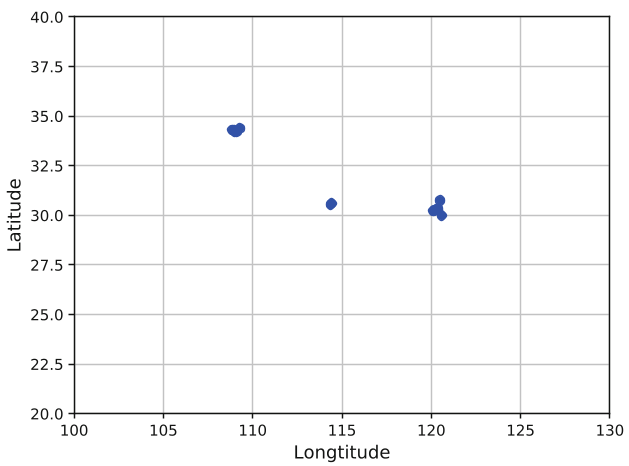 Figure 1: Demonstration of how a user can spoof locations across 30 cities in minutes by exploiting URL-based check-ins.
The Core Insight: Semantics Don't Lie
The researchers' fundamental hypothesis is that language is a proxy for proximity. People living near a POI naturally post content related to that venue's environment, services, or local culture. A spoofer checking into a high-end restaurant in Shanghai while sitting in a dormitory in Hangzhou is unlikely to have a post history that aligns semantically with that restaurant's specific "topic space."
The Methodology: LDA + JS + Bayes
The framework consists of three pillars:
- LDA Topic Modeling: The system aggregates a user's history into a document () and the POI's information into a document (). It then maps these to a latent topic space using Latent Dirichlet Allocation.
- Jensen-Shannon (JS) Divergence: To quantify the "distance" between a user's interests and the POI's nature, the model calculates the JS divergence between their topic distributions.
- Bayesian Visiting Probability: It calculates the likelihood of a visit based on the user's history and the POI's general popularity (crowded vs. sparse areas).
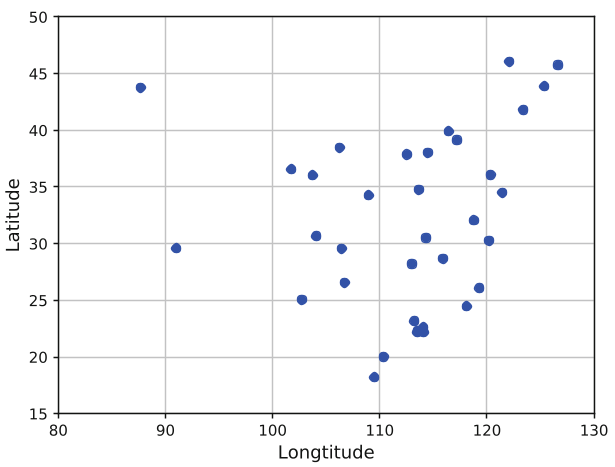 Figure 2: The proposed multi-modal framework for spoofing detection.
Experimental Results: Quantitative Victory
The authors tested their method on 120,000 real-world microblogs from Weibo. The results were categorized into three tiers:
- Bayes only: Poor performance (F1: 0.537) because it lacks textual context.
- LDA + JS: Moderate (F1: 0.663) but lacks historical mobility context.
- Hybrid (LDA+JS+Bayes): The clear winner with an F1-score of 0.738.
| Method | Precision | Recall | F1-Score |
|---|---|---|---|
| Bayes Model | 0.523 | 0.551 | 0.537 |
| LDA + JS | 0.667 | 0.660 | 0.663 |
| Proposed (Hybrid) | 0.724 | 0.752 | 0.738 |
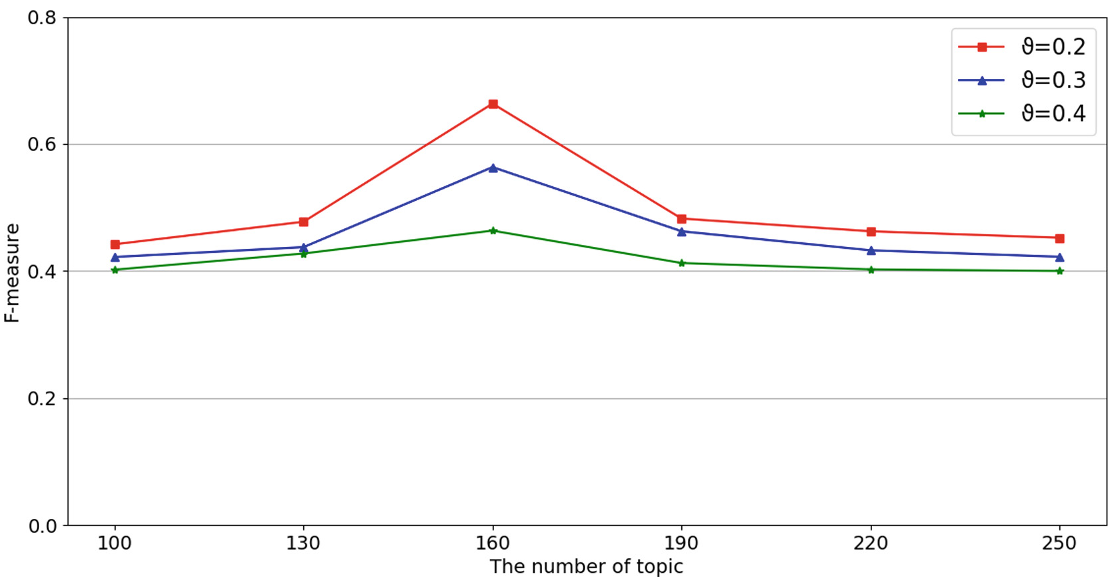 Figure 3: Sensitivity analysis showing how the number of topics () impacts the detection F-measure.
Critical Insight & Future Outlook
While this work successfully integrates semantic context into LBSN security, it relies on the "Bag-of-Words" assumption intrinsic to LDA, which ignores the sequential context of text.
The Future of Detection:
- Neural Context: As the authors note, moving toward Word2Vec or Transformer-based embeddings (like BERT/RoBERTa) would allow the system to catch more subtle semantic mismatches.
- Social Graph Analysis: Integrating information about a user's social circle (who they hang out with) would further increase the cost of spoofing, as faking an entire social network's physical location is significantly harder than faking an individual's.
In conclusion, this paper shifts the location security paradigm from "Are you here?" to "Do you sound like someone who is here?", providing a vital layer of defense for the integrity of spatial-temporal big data.