
Logistics Social Networks: Turning Cargo Flows into Collective Intelligence
Logistics social networks
The paper introduces Logistics Social Networks (LSN), a novel paradigm that integrates the Internet of Things (IoT) with Social Network Analysis (SNA) to model the dynamic interactions between people, cargos, and facilities. By treating logistics entities as social actors, the authors propose a framework for analyzing spatio-temporal behaviors and community structures to optimize global supply chain responsiveness.
TL;DR
In an era where every package is "smart," the boundary between logistics and social networks is blurring. This paper proposes Logistics Social Networks (LSN)—a framework that treats cargos, drivers, and facilities as social actors. By leveraging IoT data, LSN moves beyond simple routing to map the complex, opportunistic "social" behaviors of supply chains, enabling smarter responses to massive demand shocks.
Problem & Motivation: Why Static Models Fail
Standard logistics management treats the supply chain as a cold, mechanical process of optimization (Point A to Point B). However, the reality is a chaotic, living system. During peak events like "11.11" or "Cyber Monday," static schedules fail because they ignore the dynamic sociality of the actors involved—the opportunistic links formed when a driver meets a warehouse manager, or when multiple cargos share a temporary storage hub.
The authors argue that the Internet of Things (IoT) has fundamentally changed the game. Objects now have "identifications and embedded intelligence." The missing piece is a methodology to analyze these footprints as a social fabric rather than just a sequence of timestamps.
Methodology: The Core of LSN
The paper defines LSN as a distinct layer above physical logistics. Unlike Facebook or Twitter, LSN is physical, aging, and space-related.
1. The Data Preprocessor
The authors propose a "Storage-Carriage-Communication-Transfer" model. As an RFID-tagged cargo moves, it doesn't just transmit location; it builds a relationship with the facility it resides in.
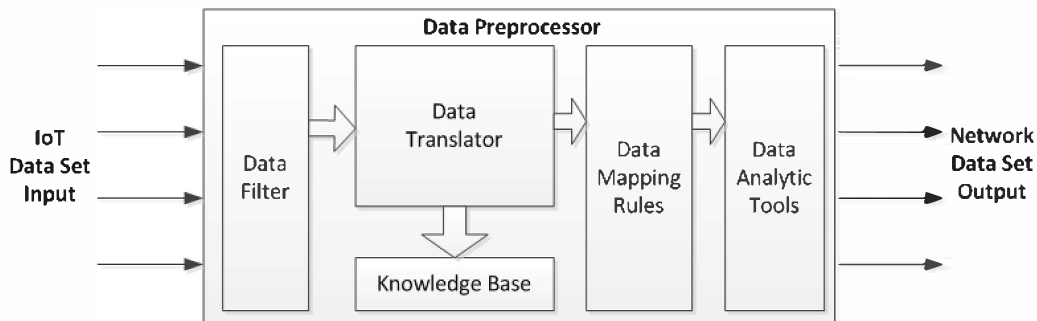 Fig. 5: Mapping raw IoT data streams into structured social parameters.
2. Measuring Network Evolution
To quantify how the network changes, three key metrics are introduced:
- Node Mutation Coefficient (): Measures changes in a node’s importance/weight over time.
- Tie Matching Degree (): Analyzes how much the connections between nodes overlap between two time segments.
- Load Degree (): Evaluates a node's current capacity usage.
Experiments & Community Analysis
The most powerful application of LSN is Community Detection. By using link similarity algorithms, the system can group different actors—manufacturers (blue), transport vehicles (pink), and users (purple)—into functional clusters.
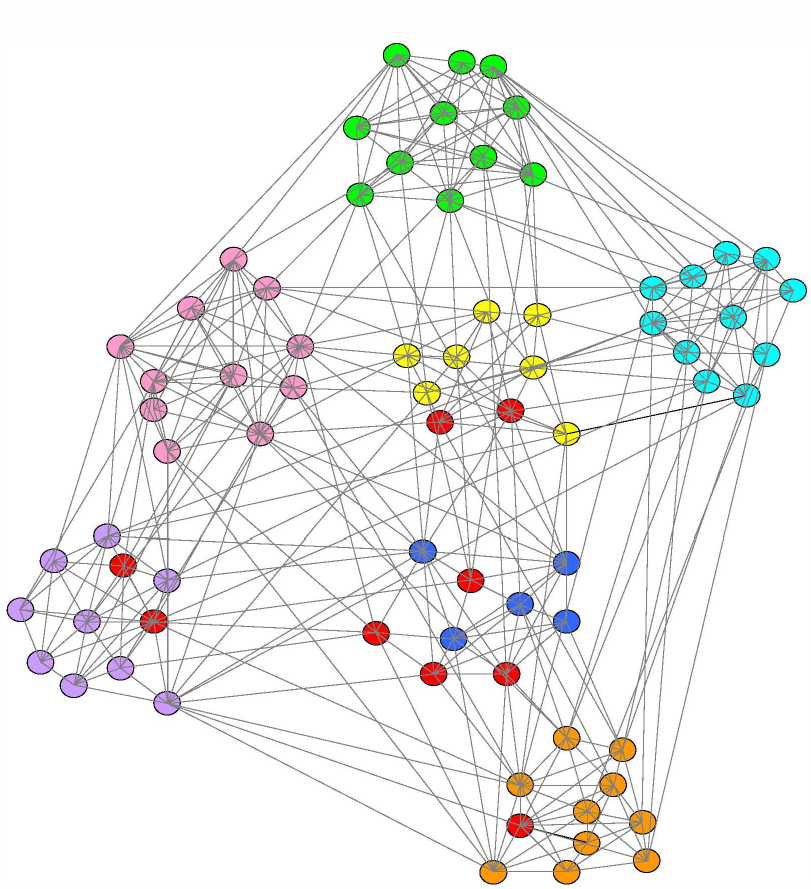 Fig. 7: A visualization of identified communities within an LSN, revealing hidden operational dependencies.
Through this analysis, a logistics manager can see if a delay in one specific "community" (e.g., a group of delivery trucks in a specific district) will ripple through to specific end-users or other product lines that share the same opportunistic links.
Critical Insight & Conclusion
The true value of LSN lies in its ability to handle opportunistic business. By understanding the "social" relationship between a cargo and a facility, logistics providers can create more "elastic" services—much like the concept of Cloud Logistics.
Takeaway for the Future:
While this work provides a strong conceptual foundation, the next step is the integration of LSN with existing social media (like Facebook or WeChat). Imagine a world where your package’s "social status" allows it to negotiate its own priority in a crowded warehouse or find a "hitchhiking" opportunity on a nearby vehicle automatically.
Limitations: The paper is primarily theoretical/methodological. Real-world implementation would require massive cross-company data sharing, which remains a significant hurdle in the highly competitive logistics industry.