
PLSTM: Unlocking the Power of Long-Term History for Personalized Hashtag Suggestion
Model the Long-Term Post History for Hashtag Recommendation
This paper introduces Parallel Long Short-term Memory (PLSTM), a recurrent-neural-network-based framework designed for keyword-suggestion-like hashtag recommendation. By moving beyond current-post analysis, it models a user's entire long-term post history as an ordered sequence to capture evolving interests and personal preferences.
TL;DR
Researchers from Fudan University have developed PLSTM (Parallel Long Short-term Memory), a model that significantly improves hashtag recommendations by looking at a user's entire Twitter history instead of just the latest few tweets. By treating history as a chronological sequence and using parallel memory updates, the system achieves a state-of-the-art Hits@5 of 66.45%, proving that even your oldest tweets help predict what you'll tag today.
Problem & Motivation: The "Short-Term" Trap
In the fast-paced world of social media, hashtags serve as vital metadata for discoverability. However, recommending the right hashtag is difficult because user interests are both contextual (related to the current tweet) and historical (related to past behavior).
Existing methods had two major flaws:
- Limited Memory: Models like HMemN2N only stored the last 5 posts.
- Order Agnosticism: Many models treated past posts as a "bag of items," ignoring the fact that human interests evolve over time.
The authors argued that the entire history is informative, but it requires a structure that can handle varying sequence lengths and the decaying importance of older information.
Methodology: The PLSTM Architecture
The core innovation is the Parallel Long Short-term Memory (PLSTM). Instead of a single RNN, it splits the logic into two specialized streams that share a hidden state (memory).
1. Dual-View Representation
The model extracts features from two sources:
- Content (CNN): A 1D-Convolutional Neural Network processes the words of the current post.
- Hashtags (RNN): Unlike previous work that used random IDs, this model uses a character-level RNN to encode the hashtag's textual meaning (e.g., "#MentalHealth" carries semantic weight).
2. Parallel Processing
- RLSTM (Recommendation): Combines the current post's content with the accumulated "history memory" to suggest the most likely hashtag.
- ULSTM (Update): Once the user selects a hashtag, this module updates the memory. This "incremental feedback" ensures the model learns from every new interaction.
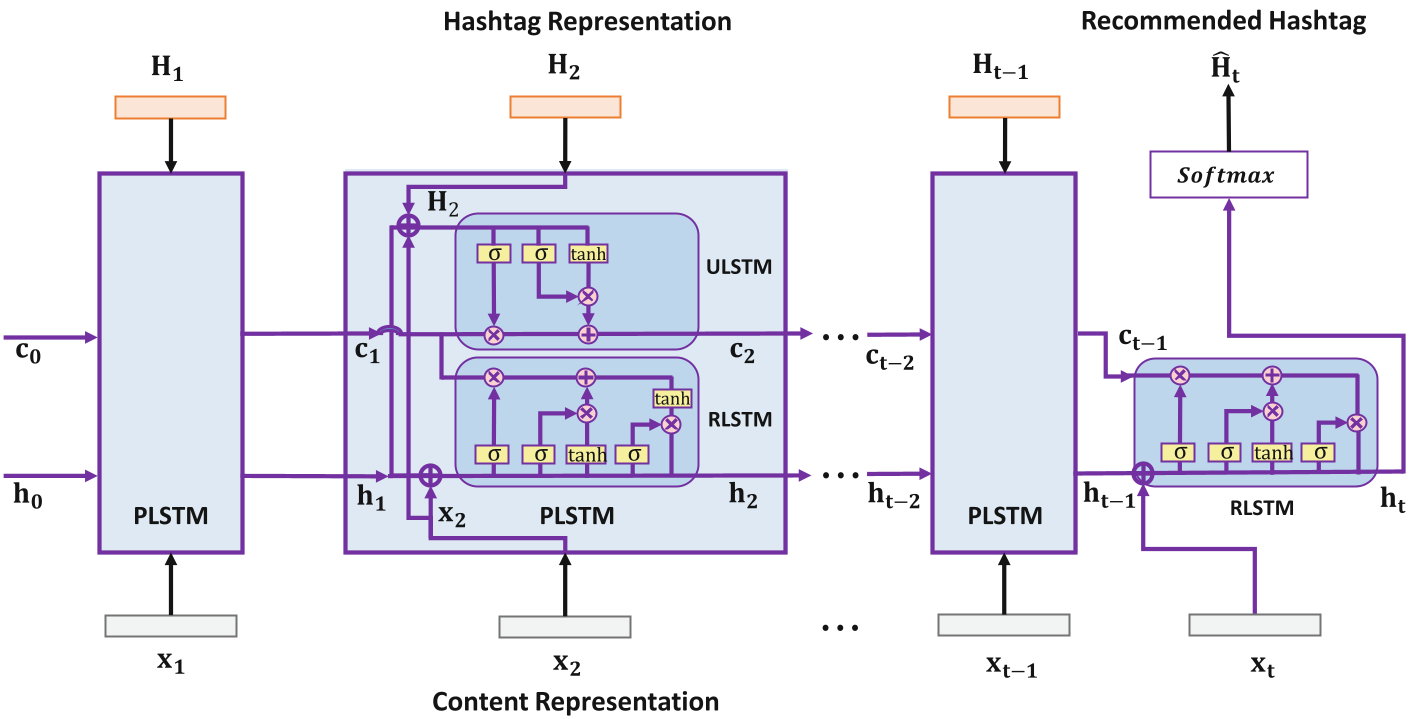 Figure 1: The PLSTM framework highlighting the parallel logic for recommendation and memory updating.
Experiments & Results: Does History Matter?
The model was tested against several heavyweights, including Tweet2Vec and the memory-network-based HMemN2N.
Key Findings:
- Superiority: PLSTM outperformed all baselines. Its Hits@1 (the probability that the top suggestion is correct) reached 46.7%, nearly 10% higher than history-agnostic models.
- The "Long-Tail" of History: A crucial experiment showed that while the most recent 20% of history provides the biggest jump in accuracy, the remaining 80% of "old" history still adds roughly 8-10% in performance.
- Order is Key: When the authors shuffled the order of historical posts, performance dropped. This confirms that the sequence of our thoughts and tags contains unique predictive patterns.
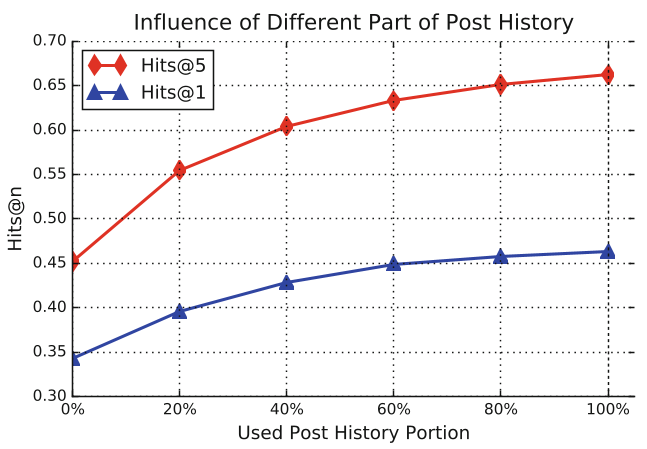 Figure 2: Impact of the post history length. Performance scales as more history is added.
Critical Analysis & Conclusion
Takeaway: The success of PLSTM lies in its "Parallel" design. By separating recommendation from updating, it can efficiently ingest real-time feedback. Furthermore, by encoding hashtags as character sequences, it understands the meaning of a tag rather than just treating it as a categorical label.
Limitations: While powerful, the model relies on a linear sequence. In the future, incorporating graph-based relationships (who the user follows or interacts with) might provide an even richer context than just their own post history.
Future Outlook: This approach paves the way for "Life-long Learning" assistants in social media, capable of maintaining a coherent understanding of a user's digital persona over years of activity.