
Persistence Pays Off: Unlocking the Long-Term Developer Experience in Crowdsourcing
Long-term user experience in soware crowdsourcing platform
This paper presents a qualitative exploratory study investigating the long-term User Experience (UX) of developers on the TopCoder crowdsourcing platform. Using a 12-week quasi-experiment with 10 participants, the study tracks the evolution of UX from anticipated to episodic and finally cumulative experience.
TL;DR
Crowdsourcing platforms like TopCoder are powerhouse engines for software development, but they are notoriously difficult for newcomers. This study tracks 10 developers over 12 weeks to reveal a critical insight: while "bad usability" frustrates users early on, the emotional reward of "task completion" creates a positive cumulative experience that encourages long-term retention and recommendation.
Context & Positioning
In the ecosystem of Software Engineering (SE), crowdsourcing is often viewed through the lens of efficiency and cost-reduction for the requester. This paper shifts the spotlight to the developer. Positioned as an empirical HCI (Human-Computer Interaction) study, it moves beyond "one-off" usability tests to examine how a developer's relationship with a platform matures—or sours—over three months of actual use.
Problem & Motivation: The Newcomer's Wall
Why do so many developers sign up for crowdsourcing platforms only to vanish after their first week? The authors identify a "Newcomer's Wall" characterized by:
- High Cognitive Demand: Platforms like TopCoder host complex "Macro-tasks" that require significant learning curves.
- The Usability-Knowledge Paradox: Users perceive low usability not necessarily because the UI is broken, but because they lack the domain knowledge to navigate it.
- The Abandonment Trap: Initial frustration (negative episodic UX) leads to task desertion before the user can reach the "reward phase."
Methodology: Mapping the Emotional Journey
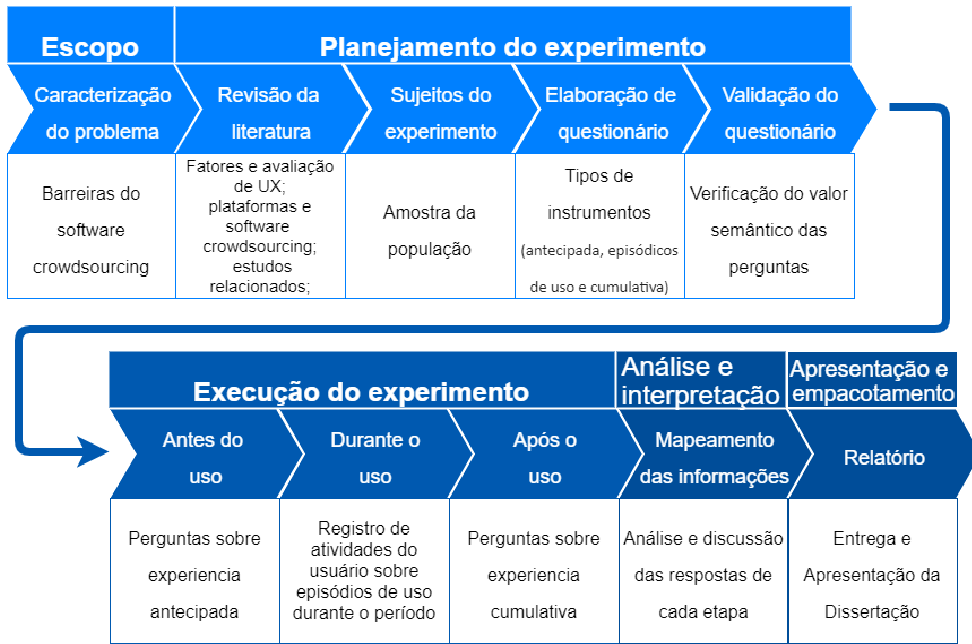
The researchers didn't just ask if the platform was "good." They broke the experience into three temporal dimensions:
- Anticipated UX: Expectations before the first login.
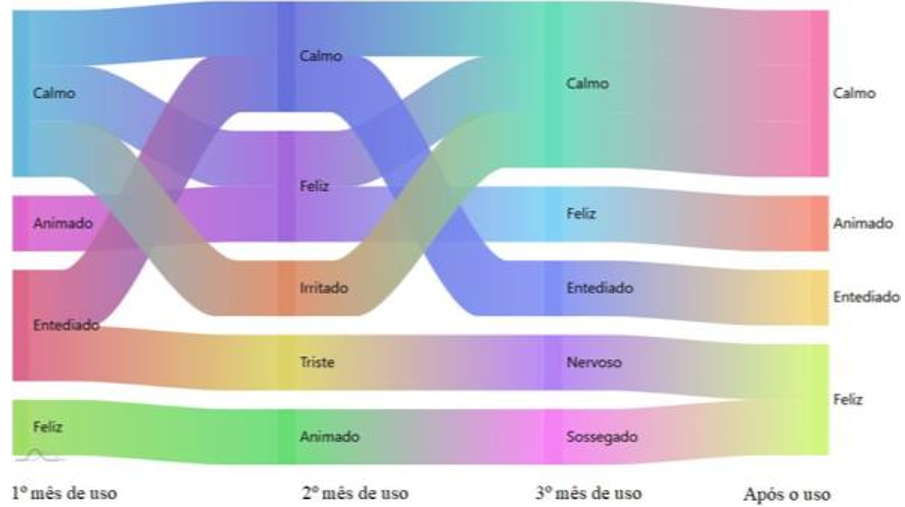
- Episodic UX: Bimonthly check-ins using the Day Reconstruction Method (DRM) and the Pick-A-Mood scale to capture raw, momentary feelings.
- Cumulative UX: The final reflection after 12 weeks of interaction.
Key Insights: The Evolution of Sentiment
The study’s findings are best visualized through the shift in user sentiment. In the beginning, terms like "Nervous" and "Confused" were common. By the end, "Calm" and "Happy" dominated the reports.
1. The Knowledge-Usability Link
Interestingly, as users spent more time on the platform, their complaints about "usability" decreased—not because the platform changed, but because their knowledge increased. The authors argue that in complex dev-tools, Knowledge = Usability.
2. Motivation Factors: Money vs. Mastery
Before the study, participants were motivated by "Collaboration." After the study, the "Reward" (Money) and "Knowledge Acquisition" became the primary reasons to stay.
3. The "Hedonic" Transition
The study validates a core UX theory: Pragmatic qualities (can I find the button?) dominate early experiences, but Hedonic qualities (do I feel accomplished?) define long-term loyalty. Even users who struggled with the interface reported a "satisfactory" experience because they felt proud of submitting a complex task.
Critical Analysis & Conclusion
This work highlights a major missed opportunity for crowdsourcing platforms. If TopCoder or similar services provided personalized onboarding or "Micro-learning" modules to bridge the initial 4-week knowledge gap, they could significantly reduce churn.
Takeaway for Platform Architects: Stop focusing solely on UI polish. Start focusing on "Time-to-First-Success." If a user can successfully submit even a small task early on, the resulting hedonic boost acts as a buffer against future technical frustrations.
Limitations: The sample size (10 students) is small and lacks the diversity of the global, professional "crowd." Additionally, the 12-week timeframe, while long for a study, is still just the "honeymoon phase" for a career developer.
Future Outlook: As AI begins to handle "Micro-tasks," human crowdsourcing will skew even further toward high-complexity "Macro-tasks." Research like this is essential to ensure we don't build platforms that are technically powerful but humanly exhausting.