
TCM2: Fusing Mobile AI and Ancient Wisdom for Ubiquitous Healthcare
Longitudinal Ambient Mobile Sensor Monitoring for TCM-oriented Healthcare Assessments: Framework, Challenges and Applications
This paper proposes "TCM2", a novel mobile healthcare framework that integrates ambient smartphone sensors, big data, and machine learning into Traditional Chinese Medicine (TCM) principles. It enables longitudinal monitoring and automated health assessments for early disease prevention and lifestyle recommendation.
TL;DR
The TCM2 framework is a pioneering effort to bridge the gap between Traditional Chinese Medicine (TCM) and modern pervasive computing. By leveraging smartphone sensors—ranging from the camera for tongue analysis to the microphone for voice quality—the system provides a longitudinal, non-invasive personal health assistant that predicts risks and suggests lifestyle adjustments before diseases manifest.
Problem & Motivation: The Need for Proactive Health
Our current global healthcare landscape faces a dual crisis: an aging population (particularly in China) and a reactive medical model. Western biomedicine excels at treating diagnosable symptoms at the cellular level but often waits until a disease has fully manifested.
The authors argue that TCM’s "preventative" philosophy—detecting imbalances before symptoms emerge—is the ideal candidate for digitalization. However, TCM traditionally relies on the subjective experience of a master practitioner. The bottleneck is the lack of objective, ubiquitous tools that can track a user’s "Qi," "Blood," and "Yin-Yang" balance in their daily environment.
Methodology: The Core of TCM2
The TCM2 framework is built on a tripartite architecture: Data Collection (TCM2DC), Data Analysis (TCM2DA), and an Auto-Recommender (TCM2AR).
1. Multi-Modal Sensing (The Digital "Sense")
Unlike standard fitness trackers that only count steps, TCM2 digitizes the traditional "Four Examinations" of TCM:
- Tongue Evaluation (Md-Te): Uses 3D intensity maps and image processing to analyze color, coating thickness, and fissures.
- Voice Evaluation (Md-Ve): Extracts audio features (pitch, tone, intensity) to detect "Deficient" or "Excess" patterns.
- Pulse & Emotion: Integrates external meridian analyzers and EEG sensors to map physiological signals to psychological stress states.
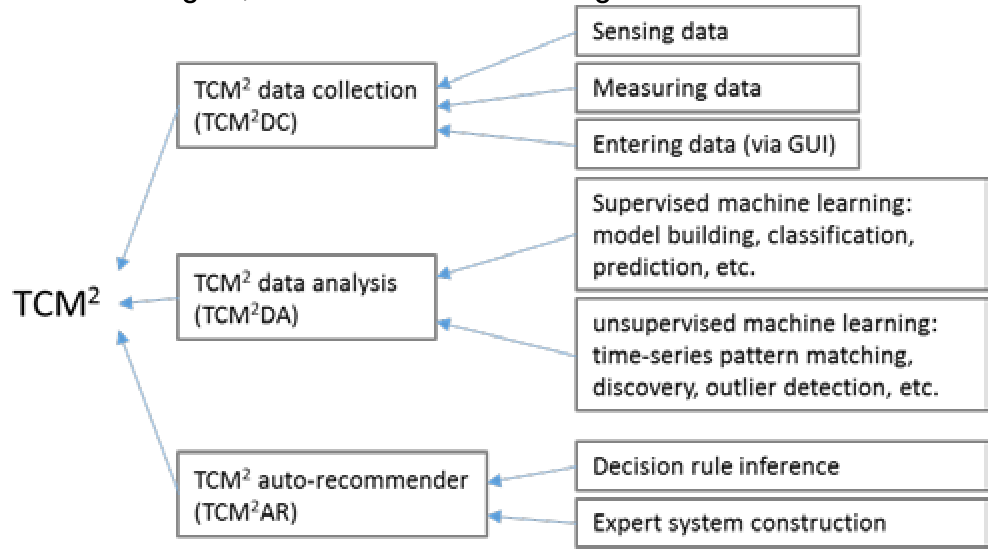 Figure 1: The abstract construct of the TCM2 system, showing the flow from raw sensor data to expert reasoning.
2. Intelligent Reasoning (The Backend)
The system utilizes a client-server cloud architecture. While the smartphone handles lightweight data collection, the Cloud Server runs heavy-duty Machine Learning:
- Supervised Learning: Mapping bio-patterns to TCM class labels using Decision Trees, SVMs, and neural networks.
- Data Stream Mining: Utilizing algorithms like iOVFDF to handle the continuous flow of longitudinal data, allowing the system to update its "understanding" of a user's health in real-time.
- Sub-pattern Discovery: Using NSPRING and UCR-DTW to find specific anomalies (like stress signatures) within long-term EEG or ECG streams.
Experiments & Results: Validating the Insight
The paper highlights several successful "proof-of-concept" applications:
- Pulse Analysis: Achieving up to 86% accuracy in revealing myocardial contractility through P-point value detection.
- Voice & Emotion: Proving that audio pitch/tones can be successfully classified into moods (Happy, Angry, Neutral), which TCM correlates with specific organ health.
- Rule Induction: Utilizing "Bump Hunting" algorithms to generate human-readable decision rules (e.g., identifying risk factors for Diabetes based on multi-variate stream feeds).
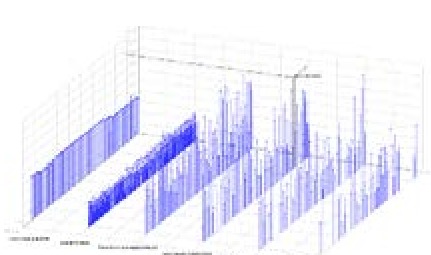 Figure 2: Visualization of input data streams and the performance of various fast-learner algorithms.
Critical Analysis & Conclusion
Takeaway
TCM2 isn't just another health app; it's a computational translation of holistic medicine. Its value lies in its scalability—as new sensors (like blood glucose or hydration sensors) emerge, they can be plugged into the existing TCM2DA framework without a total redesign.
Limitations & Future Work
- Hardware Interface: Currently, pulse analysis requires an external USB device, which hinders the "ubiquitous" goal. Future integration into smartwatch PPG sensors is vital.
- Domain Alignment: The success of the project relies heavily on the "Decision Rules" provided by TCM practitioners. If the initial expert knowledge is flawed, the AI will perpetuate those errors.
- Future Outlook: The authors envision expanding from "General Cases" (prevention) to "Clinical Cases" (prognosis aid for the already ill), potentially revolutionizing how we handle chronic recovery at home.
This framework represents a significant step toward Affordable Healthcare Systems, empowering individuals to take responsibility for their health through the lens of ancient wisdom, powered by modern silicon.