
From Niche to Necessity: A Decade-Defining Study of Social Media in the Enterprise
A longitudinal study of Facebook, LinkedIn, & Twier use
This paper presents a four-year longitudinal study (2008–2011) examining the adoption and perception of Facebook, LinkedIn, and Twitter within a large enterprise (Microsoft). It tracks the evolution of social networking from a niche activity to a near-ubiquitous professional and personal tool, highlighting shifting attitudes toward internal organizational utility.
Executive Summary
TL;DR: This seminal longitudinal study by Archambault and Grudin tracks the "Great Migration" of social networking into the corporate world. Between 2008 and 2011, sites like Facebook and LinkedIn evolved from prohibited distractions to recognized tools for professional networking. The study reveals that as platforms matured, the resistance from management softened, and the perception of these tools as "productivity killers" shifted toward them being essential for strengthening "weak ties."
Strategic Context: Published during the peak of the Web 2.0 explosion, this paper serves as an "existence proof" for how consumer technologies breach the enterprise firewall. It provides a historical baseline for understanding the current ubiquity of platforms like Slack, Teams, and Viva Engage.
Problem & Motivation: The Wall of Resistance
In 2008, the corporate world was at war with social media. IT departments were busy blocking Facebook, fearing it was a wasteland of wasted hours. The authors noted a recurring historical pattern: just as Email in the 90s and IM in the 2000s were initially dismissed as "student toys," social networking faced similar skepticism.
The authors' central insight was that adoption is inevitable. They hypothesized that as employees used these tools at home, they would naturally develop "social media literacy" that provides tangible—though hard to measure—benefits at work, such as finding experts or gathering informal intelligence.
Methodology: The Longitudinal Window
The researchers didn't just look at "power users." They pulled random samples of 1,000 Microsoft employees every year for four years. This allowed them to see not just how many people were using the sites, but how their intentions changed.
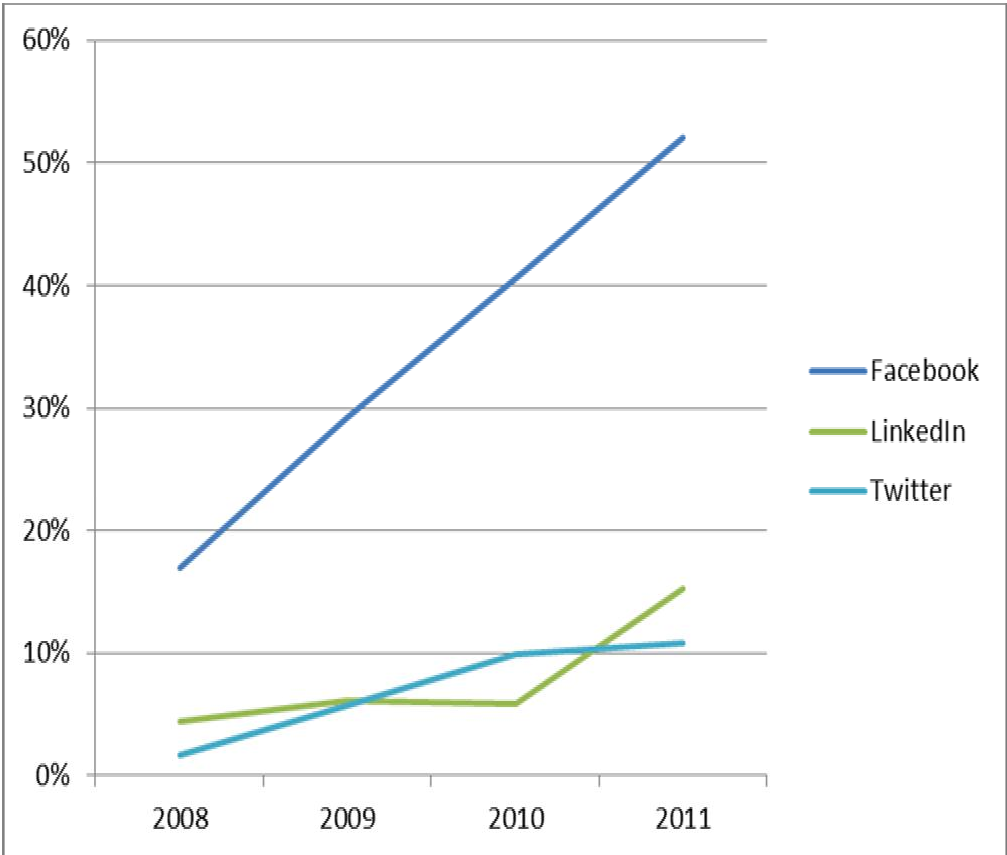 Figure 1: The dramatic rise of daily users, showing Facebook's dominance and LinkedIn's late-stage surge.
Key Findings: The Professionalization of Social Media
1. The LinkedIn Surge
While Facebook reached a saturation point (82% profile ownership by 2011), the most telling shift was in LinkedIn. Daily use of LinkedIn grew by 250% in the final year of the study. Employees realized that LinkedIn served as a "self-updating address book" that they, not the company, owned.
2. The Gender Paradox in Privacy
The study uncovered a fascinating behavioral divergence:
- Women: Reported higher daily usage and were much more proactive about using access controls (46% vs 35% of men), yet they expressed less concern about the risks.
- Men: Set fewer controls but reported higher anxiety about the consequences of social media use.
- Insight: Vigilance in configuration leads to psychological safety in usage.
3. Management’s U-Turn
Perhaps the most surprising finding was the change in managerial attitudes. In 2008, managers were the biggest skeptics. By 2011, 58% of managers agreed that internal networking was beneficial (surpassing the 50% of individual contributors). Leaders began to see social media not as a distraction, but as a way to "pulse" the organization and manage knowledge.
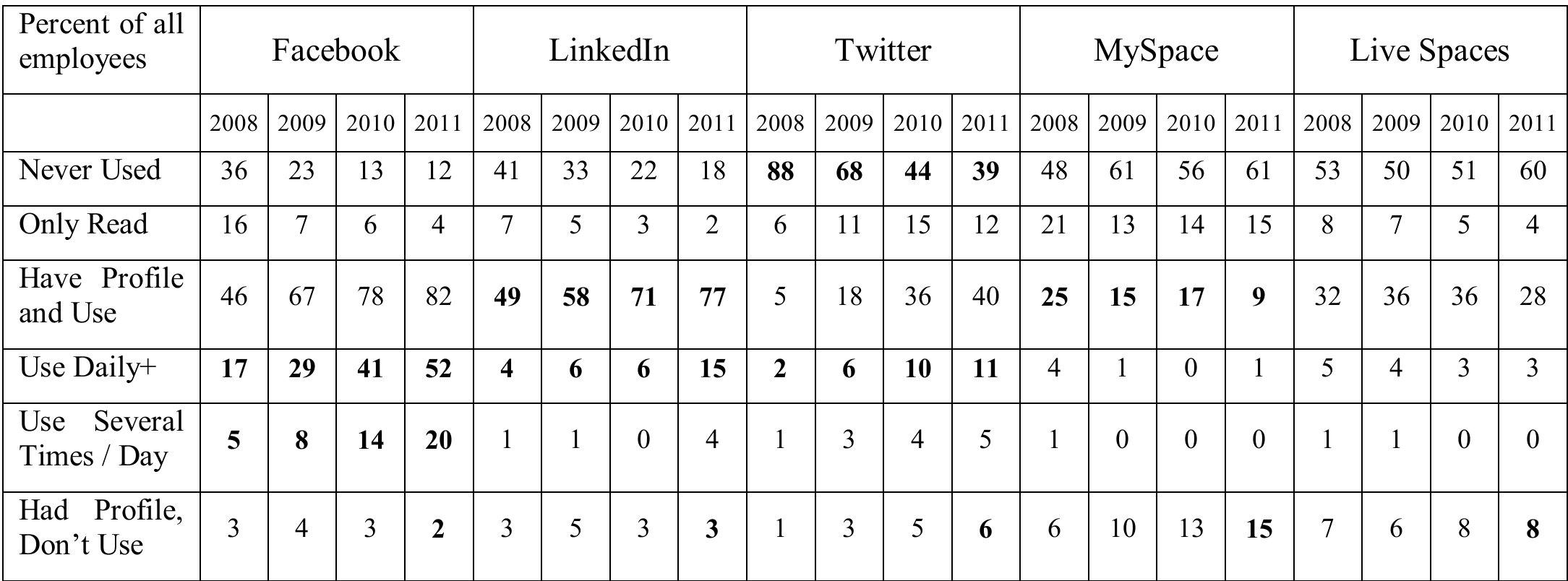 Table 1: The decline of "Never Used" categories across all major platforms.
Critical Analysis & Conclusion
Takeaway: This research proved that the "firewall" is porous. The most successful professional platforms are those that allow for the "curated persona"—allowing users to bridge the gap between their personal lives and professional skills.
Limitations: As the study was conducted within Microsoft, the population represents "early adopters." The results might have been slightly accelerated compared to more traditional industries (like manufacturing or law), though the authors argue the trends are universal.
Future Outlook: The "burnout" mentions in the interviews were a harbinger of the "digital detox" movements seen today. As the authors noted, once a network becomes a "public broadcast channel," its ability to strengthen genuine ties diminishes, paving the way for the niche, specialized communication tools we see in the modern workspace.