
Lookalike English: Decoding the Semiotic Safari of Global Entrepreneurship
Lookalike Professional English
This paper introduces a pedagogical teaching case that utilizes Linguistic Landscaping (LL) to help Master’s students analyze "lookalike English" in entrepreneurial communication. It documents a three-phase fieldwork assignment where students investigate how globalized language practices and innovative business signage create economic and social value in urban environments.
TL;DR
This paper challenges the traditional "monolingual native-speaker" ideal in professional communication. By sending students on a "semiotic safari" through the streets of Antwerp and Ghent, the authors demonstrate how "lookalike English"—signage that may be grammatically "incorrect" but rhetorically powerful—serves as a vital tool for entrepreneurs to signal innovation and social prestige.
Background: Moving Beyond the Classroom
In an era of globalization, communication is no longer linear or stable. The authors argue that the traditional Schumpeterian view of innovation must be complemented by Appadurian scalar dynamics, acknowledging that change in a globalized market is chaotic and non-linear. This teaching case positions Linguistic Landscaping (LL)—the study of signs and language in public spaces—as a bridge between academic theory and the messy reality of global business.
The Motivation: Why "Lookalike" English Matters
Modern students often expect professional communication to happen in perfect, standard English. However, the authors identify a gap:
- Managing Expectations: Real-world business communication is often disruptive, hybrid, and creative.
- Multilingual Resources: Language proficiency isn't just a linear scale (A1 to C2); it involves a toolkit of jargon, registers, and "smatterings" of other languages.
- Lived Experience: Traditional lectures fail to replicate the "visceral" experience of how a shop sign communicates prestige or local identity.
The insight here is a shift from seeing non-native English as "bad English" to seeing it as "Lookalike Language"—a form that displays an awareness of the social capital associated with English, even if the literal meaning is secondary.
Methodology: The Three-Pronged Safari
The assignment is structured into three distinct phases to ensure students move from observation to deep analysis.
1. Pre-Fieldwork Strategy
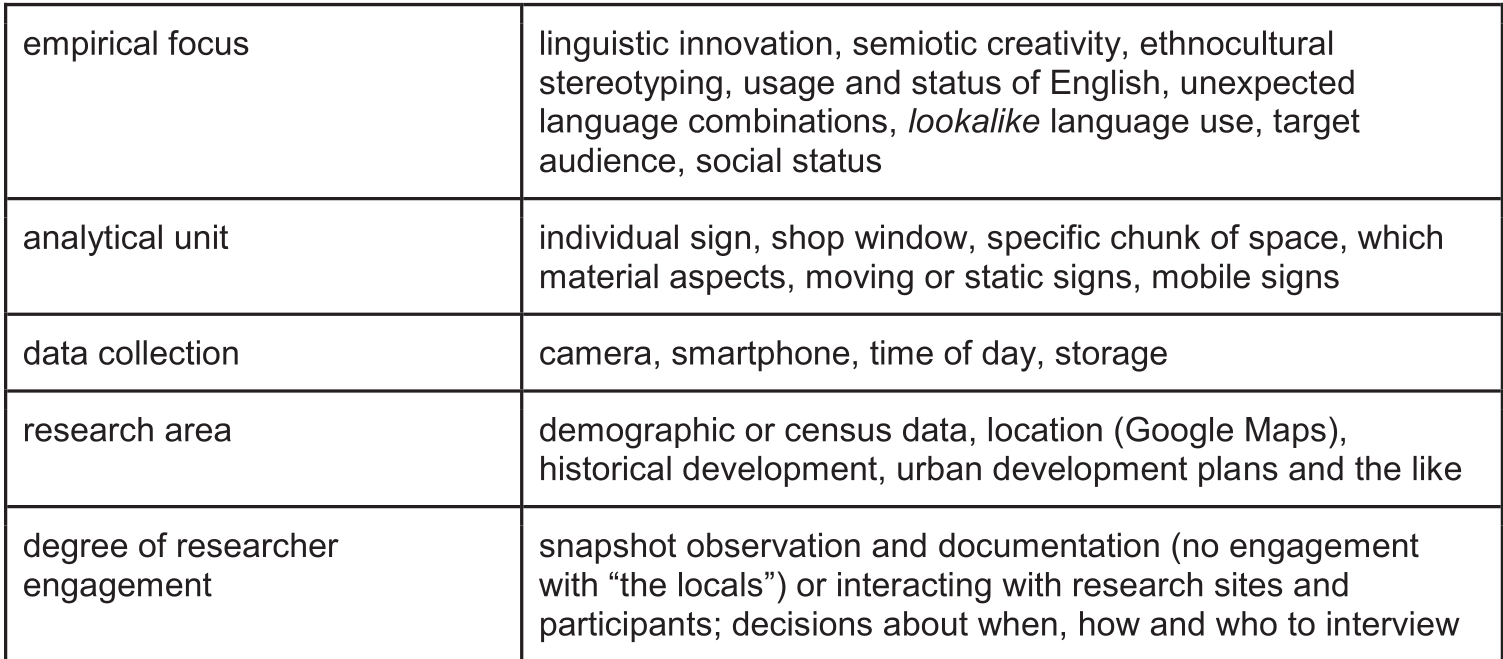
Teams must define their "unit of analysis." Is it a single sign, a whole shop window, or a specific city block? They address pitfalls such as researcher engagement—whether to be silent observers or to interview the entrepreneurs in "walking tours."
2. The Fieldwork (The Safari)
Students document "bits" of English on the streets, capturing photographs of "Lookalike English" like "Angel’s Hairpalace" or "Love Prices." They even live-tweeted their process to create a real-time digital archive of the urban landscape.

3. Data Sessions & Interpretation
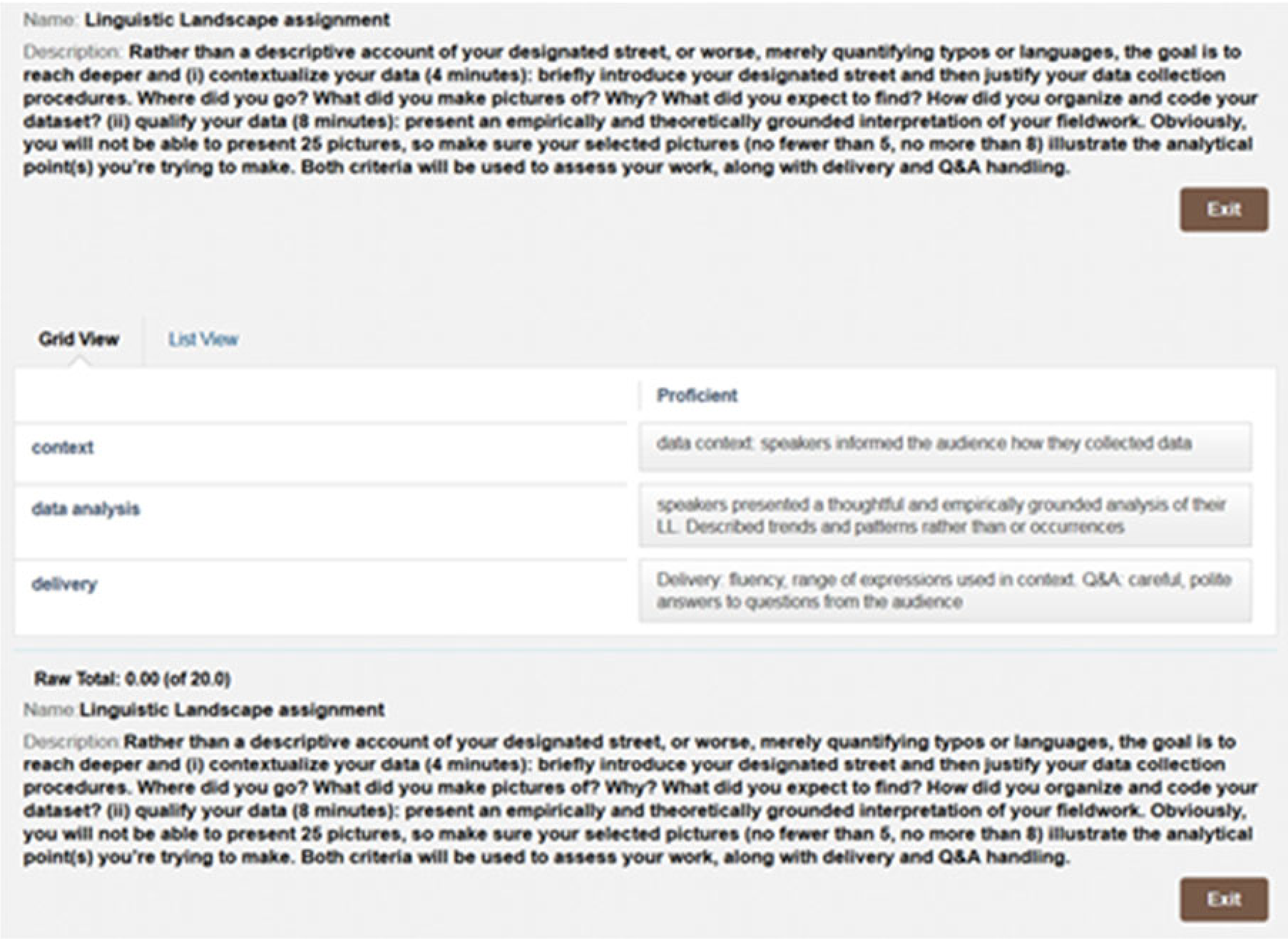
The most critical phase occurs back in the classroom. Instructors push students to differentiate between what a sign denotes (literal meaning: "Product X is on sale") and what it indexes (indirect meaning: prestige, international allure, or "coolness").
Experimental Insights: What Did Students Learn?
The results of the post-hoc interviews were telling. Students realized that:
- English as a Neutral Code: In a bilingual country like Belgium, English can act as a "neutral" bridge between Dutch and French speakers.
- Rhetorical Creativity: "Lookalike" English isn't a failure of education; it's an innovative marketing strategy that highlights "international flair" at a low cost.
- Complexity Management: High-achieving professional communicators must be "adaptive to complexity" and able to interpret needs on the fly.
Critical Analysis: A Constructivist Conclusion
Key Takeaway
The "Linguistic Landscape" is an underutilized methodology in business pedagogy. It reveals the materiality of entrepreneurship—the physical reality of shop windows and signs—as the most visible frontier of innovation.
Limitations & Future Work
The learning experience is "ill-structured" by design. This requires instructors to act more as coaches than lecturers. Future research could extend this "safari" into the digital realm or involve business practitioners directly in the classroom to validate student observations.
In conclusion, becoming a global professional is not for the faint-hearted. It requires the ability to navigate "messy" linguistic environments where the goal isn't always grammatical perfection, but successful rhetorical impact.