
Empowering Homecare: A Low-Cost IoT Health Platform with Social Connectivity
A low-cost IoT-based health monitoring platform enriched with social networking facilities
This paper introduces a low-cost, IoT-based home health monitoring platform that utilizes a Raspberry Pi 3 gateway and Bluetooth Low Energy (BLE) sensors. The system integrates automated biosignal collection with a dedicated cloud-based social networking layer, enabling real-time WebRTC videoconferencing and secure data sharing between patients, doctors, and caregivers.
TL;DR
Researchers have developed a modular, low-cost telecare platform that turns a Raspberry Pi 3 into a sophisticated IoT Gateway. By combining Bluetooth Low Energy (BLE) sensors with a WebRTC-powered social network, the system allows for automated vital sign monitoring and real-time doctor-patient consultation. Crucially, the architecture prioritizes privacy by keeping sensitive health data on the local device rather than the cloud.
The "Closed Loop" Problem in Telemedicine
While remote health monitoring is not a new concept, current market solutions suffer from three major bottlenecks:
- Economic Barriers: Proprietary medical hardware is prohibitively expensive for widespread home adoption.
- Privacy Fragmentation: Storing sensitive vitals on centralized cloud servers creates a large attack surface and erodes user trust.
- Social Isolation: Most monitoring tools are clinical and cold, ignoring the psychological need for interpersonal interaction between patients and their "care circle."
The authors argue that a truly effective mHealth solution must be open, affordable, and social.
Methodology: High-Tech at the Edge
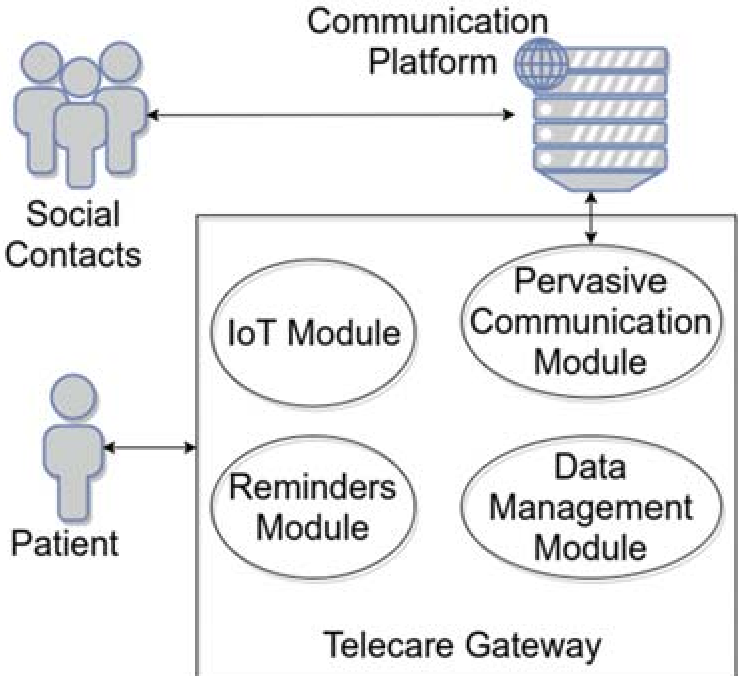
The system architecture is bifurcated into a local Telecare Gateway and a Cloud-based Communication Platform.
1. The Gateway (The Brain)
Based on the Raspberry Pi 3, the gateway handles data acquisition via BLE. It supports sensors for Oxygen Saturation, Blood Pressure, Glucose, and more. A key innovation is the use of the HL7 FHIR (Fast Healthcare Interoperability Resources) specification, which ensures that the locally captured data can be understood by other medical systems if the patient chooses to share it.
2. The Social Layer (The Heart)
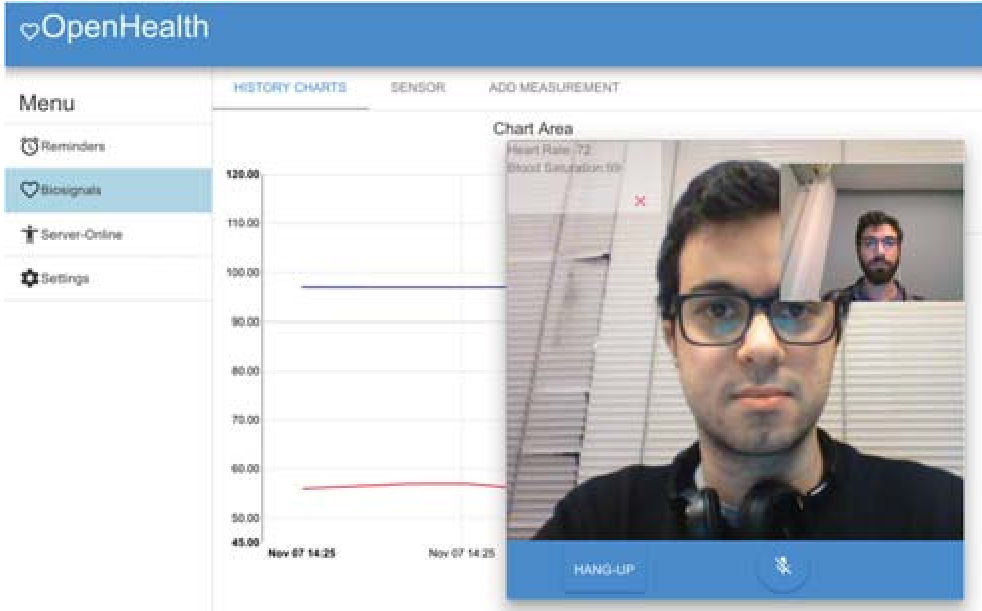
Unlike traditional databases, the cloud component here acts primarily as a signaling server. Using WebSockets and WebRTC, it facilitates Peer-to-Peer (P2P) video calls. This allows a doctor to observe a patient taking a measurement in real-time, or a family member to check in on an elderly relative.
Key Features & Visual Insights
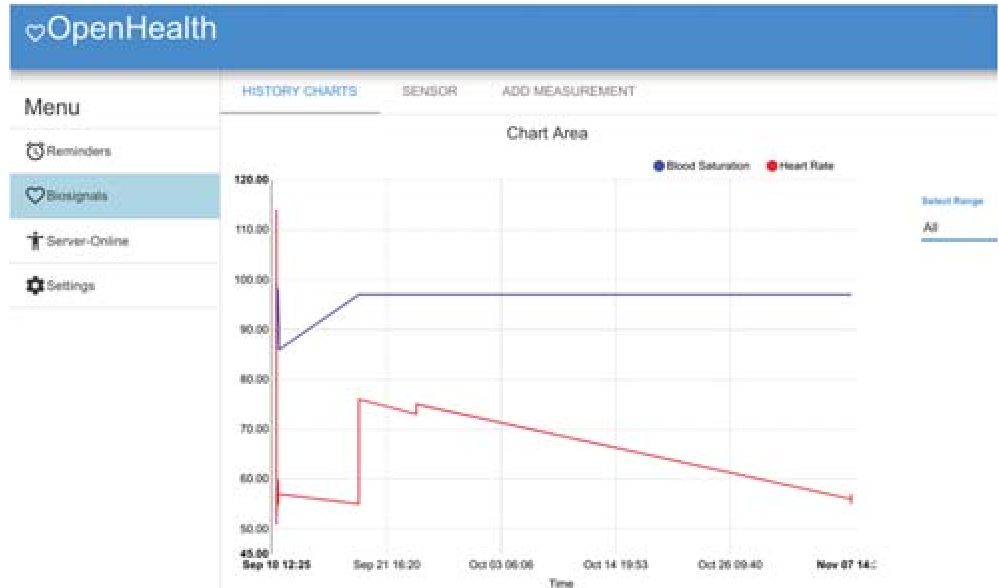
The platform's UI is designed for simplicity, targeting elderly users who may struggle with complex technology. The Data Management Module provides interactive charts directly on the gateway, allowing users to track their progress without needing an internet connection for basic visualization.
During a video call, the specific Pervasive Communication Module allows for "ad-hoc" data sharing. The patient can grant a physician temporary access to their historical data, which is transferred over a secure connection and deleted from the physician's view once the session ends.
Technical Deep Dive: Security and Performance
- Distributed Logic: By moving data management to the edge, the system avoids the "polling" latency of cloud systems and ensures the gateway remains functional offline.
- OAuth2 & Passport: Even though the system is low-cost, it employs industry-standard authentication. Every REST/AJAX request and WebSocket connection is validated against access tokens.
- Asynchronous Signaling: The signaling for WebRTC is event-driven, ensuring high responsiveness during video handshakes.
Critical Analysis & Future Outlook
The paper presents a compelling argument for decentralized health monitoring. By utilizing commodity hardware, they reduce the cost of entry, potentially democratizing telecare for lower-income regions.
Limitations: The prototype currently relies on a Raspberry Pi, which, while flexible, requires a dedicated casing and screen for actual home deployment (a "docking station" approach). Furthermore, the social networking aspect depends on a centralized signaling server, which remains a single point of failure for the communication features.
Future Work: The authors plan to integrate Machine Learning for risk identification and Gamification to encourage patient compliance. Moving forward, the inclusion of wearables and activity trackers could transform this from a reactive monitoring tool into a proactive wellness platform.
Conclusion
This platform proves that we don't need expensive, proprietary hardware to provide high-quality telecare. By leveraging the Internet of Things and Social Networking, the researchers have created a blueprint for a more humanized, secure, and affordable future of healthcare at home.