
AwareDX: Bridging the Sex Gap in Drug Safety with Machine Learning
Using Machine Learning to Identify Adverse Drug Effects Posing Increased Risk to Women
The paper introduces AwareDX (Analysing Women At Risk for Experiencing Drug toXicity), a machine learning framework designed to predict sex-specific risks of adverse drug reactions (ADRs). By leveraging a Random Forest-based propensity score matching approach on the FDA Adverse Event Reporting System (FAERS), the authors identified 20,817 adverse drug effects that disproportionately impact women or men.
TL;DR
Adverse drug reactions (ADRs) are the fourth leading cause of death in the US, but women—who face twice the risk of men—have been historically underrepresented in clinical data. Researchers have developed AwareDX, a machine learning algorithm that filters through "noisy" real-world data to uncover 20,817 sex-specific drug risks. By correcting for reporting biases, AwareDX provides a new roadmap for precision medicine tailored to biological sex.
The "Invisible" Patient: Why Women Face Higher Risks
For decades, clinical trials treated women as a "subgroup," often excluding them entirely due to hormonal complexities. The result? Drugs like Zolpidem (Ambien) remained on the market for 21 years before the FDA realized the dosage needed to be halved for women due to slower metabolic clearance.
While the FDA's FAERS database contains millions of reports, it is riddled with confounding biases. For example, a drug used only for breast cancer will naturally show a "female risk" because of the prescription pattern, not necessarily the drug’s metabolic interaction with biological sex.
Methodology: Engineering Fairness via Propensity Scores
The core innovation of AwareDX is the use of Propensity Score Matching (PSM) driven by a Random Forest (RF) classifier.
- Likelihood Modeling: The RF model predicts the likelihood of a patient being female based on co-medications and age. This essentially "profiles" the biases inherent in the data.
- Balanced Cohort Construction: Using these scores, the algorithm matches female reports with male reports of similar "profiles," effectively creating a synthetic clinical trial that is sex-balanced and controlled for co-variates.
- Disproportionality Analysis: Once the cohorts are balanced, the algorithm calculates the reporting odds ratio (logROR) to determine if a sex-specific risk is statistically significant.
 Figure 1: The AwareDX workflow—from raw FAERS data to sex-balanced cohort analysis.
Key Findings: More Than Just Synthetic Bias
The algorithm's ability to separate biological signal from data noise was validated against known genetic mechanisms.
- Bias Mitigation: AwareDX reduced the disparity in proportional reporting ratios by 79.2%, proving that common "sex differences" in old data were often just artifacts of how drugs were prescribed.
- The Precision Advantage: The method achieved 100% precision in its validation sets. It correctly identified that the gene ABCB1 causes different risks in men (from simvastatin) versus women (from risperidone).
- New Risks Uncovered: The study flagged Anakinra (a rheumatoid arthritis drug) as posing severe, previously unknown risks: diverticular disorders in men and vascular inflammations in women.
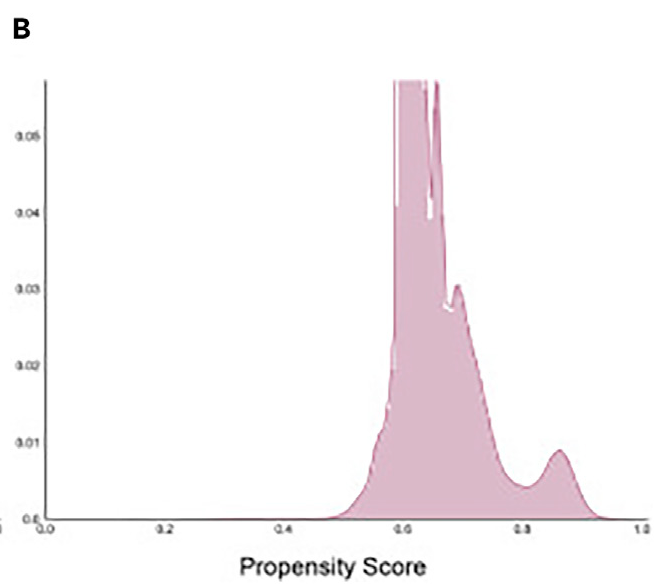 Figure 2: The distribution of propensity scores shows how the Random Forest model successfully identifies the "femaleness" of reports based on confounding variables.
Clinical Implications
The result of this study is a massive resource of over 20,000 ADEs involving 792 unique drugs. The data suggests that:
- Women are more vulnerable to musculoskeletal, skin, and eye-related drug disorders.
- Men are more vulnerable to blood, lymphatic, and neoplastic (cancer-related) disorders.
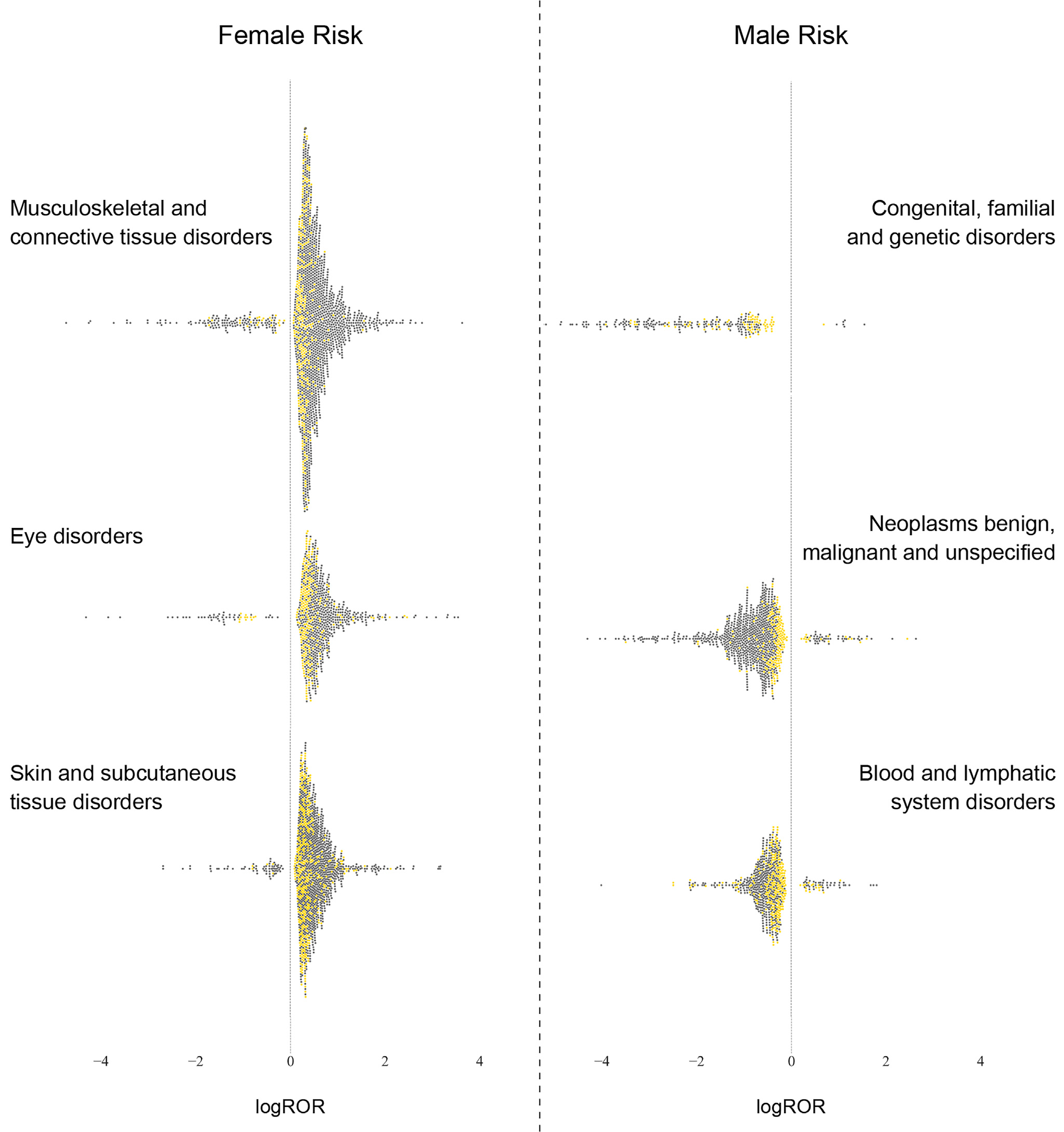 Figure 3: Variation in sex risks across different System Organ Classes (SOC).
Critical Insight & Conclusion
AwareDX demonstrates that "more data" is not always "better data." In pharmacovigilance, the raw data is biased by the very social and medical structures we are trying to study. By using machine learning as a "filter" rather than just a "classifier," the authors have turned a biased database into a goldmine for precision medicine.
The project highlights a future where drug dosages are not "one size fits all" but are calibrated by the unique metabolic and genetic landscape of the patient's sex.
Takeaway: AwareDX is a vital tool for drug discovery and repositioning, ensuring that the safety of a drug is as rigorously understood for women as it has been for men.