
Automated Speech Analysis: A New Frontier for Autism Screening in South Asia
Machine Learning Based Automated Speech Dialog Analysis Of Autistic Children
This research presents an automated speech dialog analysis system designed to screen for Autism Spectrum Disorder (ASD) in children aged 1.5 to 3 years. By utilizing a multi-stage pipeline involving silence thresholding, Voice Activity Detection (VAD), and two Convolutional Neural Networks (CNNs), the system achieves 78% accuracy in utterance classification and 72% in distinguishing autistic traits from speech patterns.
TL;DR
Early detection of Autism Spectrum Disorder (ASD) significantly improves intervention outcomes, yet diagnostic tools often fail to account for regional and linguistic diversity. This research introduces a machine-learning-based pipeline that analyzes naturalistic audio recordings of Sri Lankan children to detect speech deficiencies. Combining signal processing with Convolutional Neural Networks (CNN), the system differentiates between typically developing and autistic speech patterns with a promising 72% accuracy.
Problem & Motivation: The Gap in Early Diagnosis
In Sri Lanka, nearly 82% of parents report speech delay as the first sign of ASD, yet the gap between noticing a symptom and receiving a diagnosis remains wide due to a lack of accessible screening tools and cultural hurdles.
Traditional automated vocal analysis tools are primarily built for English-speaking populations. The researchers recognized that language is not just a collection of words but a cultural pattern of pitch, tone, and conversation flow. To address this, they focused on Speech Deficiencies (SD)—including blabbering, neologism (creating new words), and echolalia—as quantifiable markers for a localized screening tool.
Methodology: The Three-Stage Analysis Pipeline
The authors propose a rigorous processing flow to transform raw, noisy environmental audio into clinical insights.
1. Segmentation and Silence Filtering
Naturalistic recordings (often 2-10 hours long) are messy. The team used energy-level thresholding to isolate "High Energy Clusters" (HEC). Using an iterative approach, they segmented the audio into 2-second windows—the optimal duration to capture syllables while minimizing background noise.
2. Utterance Classification (NN-1)
The system uses Mel-Frequency Cepstral Coefficients (MFCCs) to represent audio. Unlike standard Fourier Transforms, MFCCs mimic human pitch perception, making them ideal for identifying child vocalizations.
- Architecture: A 5-layer CNN including ReLU activation and dropout layers.
- Output: Classifies audio into 7 categories, including meaningful words, meaningless babbling, vegetative sounds, and adult speech.
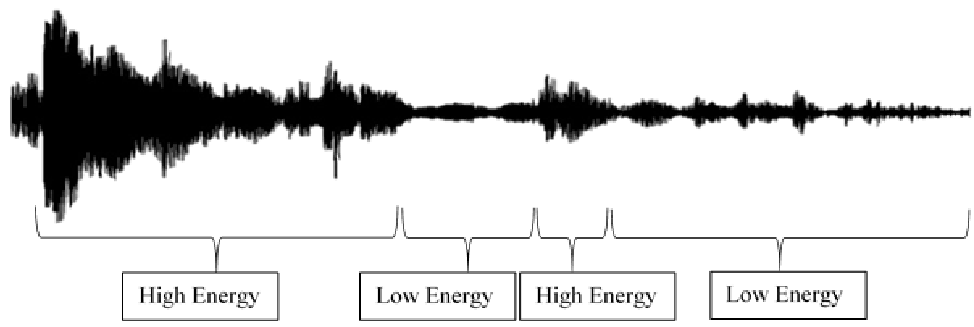 Fig 1: The iterative algorithm for identifying vocal activity and filtering silence.
3. Speech Pattern Recognition (NN-2)
This is where the clinical diagnosis happens. The system looks at the ratio and frequency of the classified utterances. It analyzes parameters such as:
- Child-to-adult speech rate.
- Total duration of meaningful speech per 10-minute window.
- Presence of "auxiliary" or vegetative noises.
Experiments & Results: Navigating Real-World Data
The results from the primary classifier (NN-1) were highly successful, achieving an accuracy of 78% and a precision of 86%. The model proved remarkably effective at distinguishing between adult and child voices and identifying silence.
However, the final diagnostic model (NN-2) faced greater challenges. While it reached 72% testing accuracy, its precision was lower (58%) due to a limited and imbalanced dataset—a frequent hurdle in clinical studies involving children.
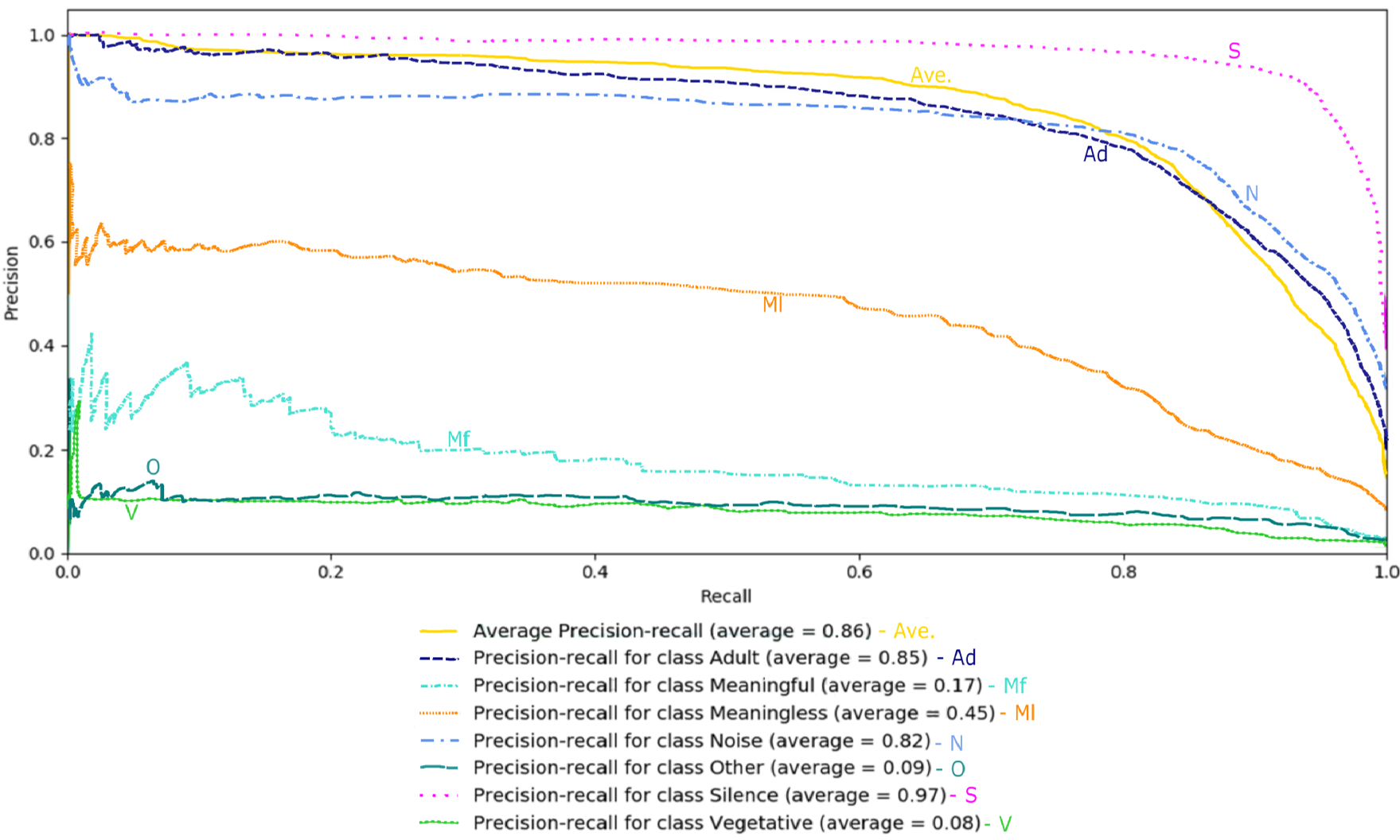 Fig 2: Precision-Recall curve for the Utterance Classifier, showing robust performance across diverse audio types.
Critical Analysis & Conclusion
The Takeaway
The study proves that machine learning can provide a "first-line defense" in ASD screening. By focusing on speech patterns rather than just language content, the tool becomes more resilient to linguistic differences, making it potentially applicable to other South Asian dialects.
Limitations & Future Work
The primary bottleneck is data scarcity. Cultural hesitation in sharing recordings of autistic children resulted in a small training set for the diagnostic network (NN-2). The researchers aim to:
- Expand data collection across Sri Lanka to build a more diverse dataset.
- Address the "imbalanced class" problem where noise and silence overwhelm meaningful child speech in the training data.
- Develop a mobile application for parents, democratizing access to early intervention.
This work sets a vital precedent for using technology to solve healthcare disparities in developing regions, moving autism screening from the clinic directly into the home.