
Automated Facilitation: Harnessing CBR for Crowd-Scale Consensus
Machine learning-based consensus decision-making support for crowd-scale deliberation
This paper introduces a machine learning-based Consensus Decision-Making Support (CDMS) framework for crowd-scale deliberation using Case-Based Reasoning (CBR). Integrated with the COLLAGREE platform, it automates the role of a human facilitator to navigate complex online discussions and reach consensus efficiently.
TL;DR
Online social democratic systems often descend into chaos without a skilled facilitator. This paper proposes a Machine Learning-based Consensus Decision-Making Support (CDMS) framework that uses Case-Based Reasoning (CBR) to automate facilitation. By transforming past successful interventions into a reusable "case base," the system can identify positive contributions and suppress "flaming" with 98% accuracy, significantly reducing the burden on human moderators.
The Bottleneck of Human Facilitation
In the era of digital democracy, platforms like COLLAGREE enable thousands of citizens to participate in urban planning and policy-making. However, a major bottleneck exists: the Facilitator.
Human facilitators act as the "navigators" of discussion. They must:
- Extract semantic structures from a mountain of text.
- Maintain a 24/7 presence to prevent toxic behavior (flaming).
- Guide the crowd from divergence (ideation) to convergence (consensus).
The authors argue that this process is unsustainable for humans due to information overload and emotional bias. The insight here is that facilitation is often an exercise in experience reuse—experienced facilitators look for patterns they have seen before and apply proven strategies.
Methodology: Case-Based Reasoning (CBR)
Instead of relying on rigid rules, the authors adopt a CBR paradigm, which solves new problems by adapting solutions from similar past cases.
1. Case Composition
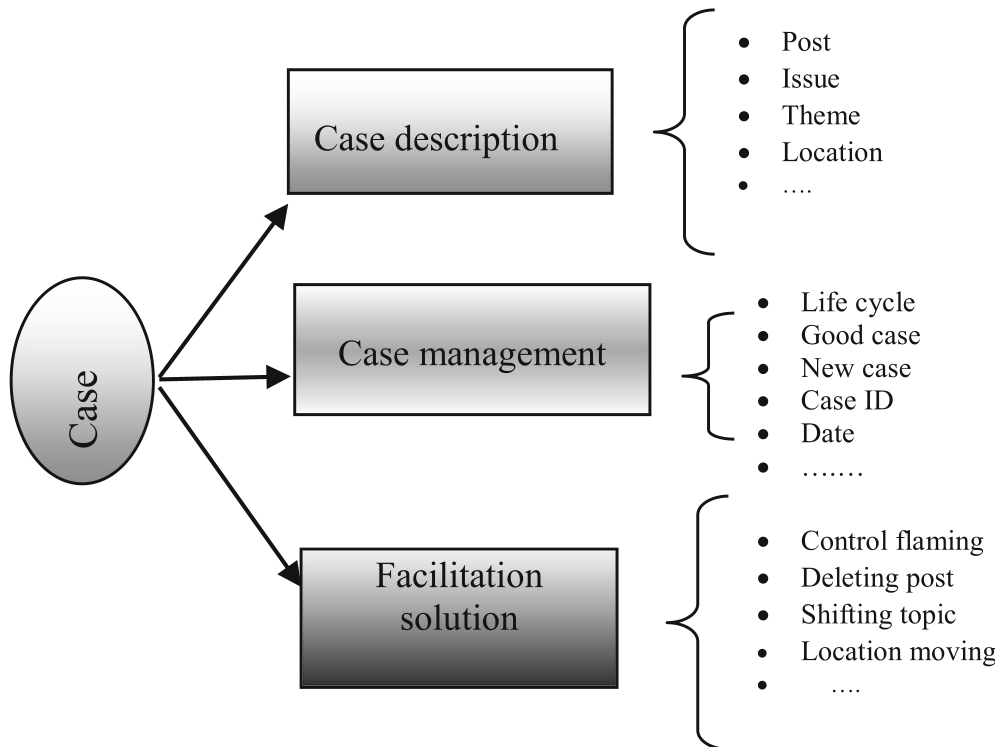
A "case" in this system is more than just a piece of text; it is a structured object containing:
- Case Description: Information about the post (content, keywords, author, and forum phase).
- Case Management: Metadata like IDs and timestamps.
- Facilitation Solution: The "Gold Standard" action (e.g., promoting a positive post or hiding a negative one).
2. The Similarity Engine
To match a live post to a stored case, the system uses a Global Similarity Algorithm. It calculates local similarities for standard attributes (like "Ranking") using Nearest Neighbor and handles free text using Information Extraction (IE) and Maximum Entropy models.
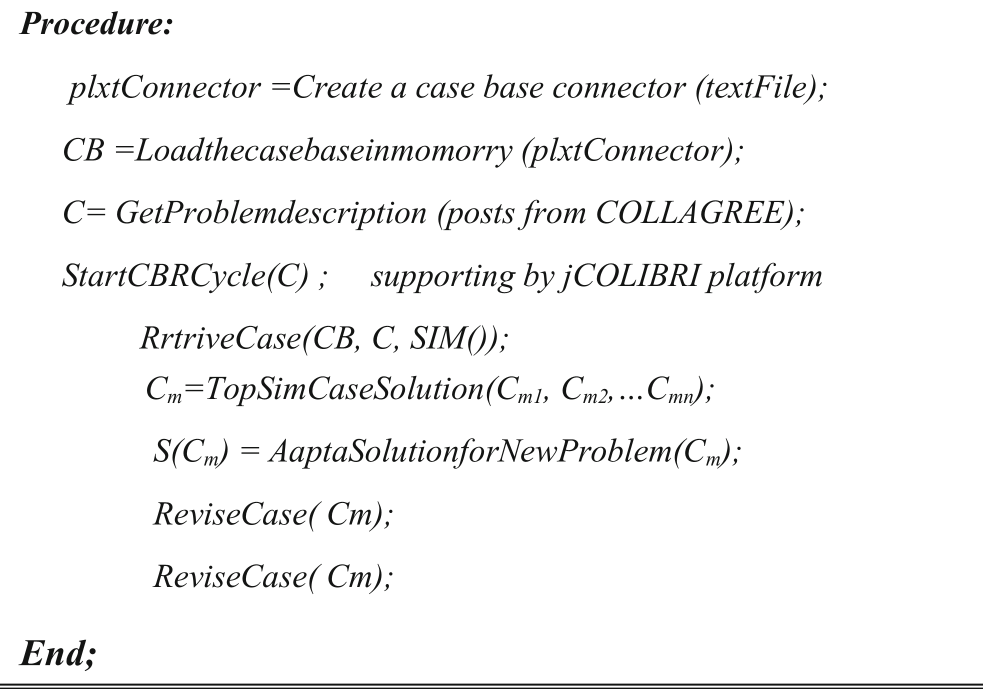
3. Implementation via jCOLIBRI
The researchers built the system on jCOLIBRI, a Java-based CBR framework. This allows the system to load "case bases" into memory and execute the Retrieve Reuse Revise Retain cycle in real-time.
Experimental Evidence
The team collected data from three major forums (including "Nagoya City Planning" and AI ethics conferences).
- Positive Cases: Posts that drive the discussion forward.
- Neutral Cases: Standard objective comments.
- Negative Cases: Distractive or toxic "flaming" posts.
Key Results
In offline validation, original facilitators reviewed the CBR agent's decisions. The system achieved a 98% accuracy rate in suggesting the correct facilitation action. This suggests that the semantic features captured in the case structure are highly representative of real-world facilitation needs.

Critical Analysis & the Path Ahead
While the 98% accuracy is impressive, the authors acknowledge several hurdles:
- Cold Start Problem: CBR requires a pre-existing "case base." The paper notes the difficulty of collecting "Negative Cases" because people tend to be polite in professional forums, leaving the system untrained for high-conflict scenarios.
- Manual Authoring: Currently, cases are created manually from CSV data. To scale, the system needs Automated Case Authoring using sentiment analysis.
- Domain Adaptation: Can a case base built for "City Planning" work for "Criminal Justice"? The authors suggest Transfer Learning as the next frontier to solve this cross-domain challenge.
Conclusion
This research represents a pivotal shift from simple "moderation" to "intelligent collective intelligence support." By treating facilitation as a machine learning problem, we move closer to a world where digital democracy can scale without the fatigue of human gatekeepers.