
Decoding Gender through Chemistry: A Machine Learning Leap in Hair Analysis
Machine Learning to Identify Gender via Hair Elements
This paper introduces a supervised machine learning approach to identify human gender by analyzing trace elements in hair tissues. Utilizing Instrumental Neutron Activation Analysis (INAA) to quantify chemical components, the researchers achieved high-precision gender classification using decision tree algorithms like J48.
TL;DR
Researchers have developed a method to identify human gender with over 95% accuracy using the chemical composition of hair. By combining Instrumental Neutron Activation Analysis (INAA) with supervised machine learning (J48 Decision Trees), this study moves beyond traditional skeletal analysis to provide a robust, non-invasive forensic tool.
Background: Beyond Bones and Teeth
In forensic science, identifying gender is the first step toward reconstructing an identity. For decades, this has meant measuring pelvic bones or skull structures. But what happens when the body is incomplete?
Hair is a biological "time capsule." It grows slowly, lacks high metabolic activity, and incorporates elements from our blood and environment. This paper explores the biochemical signature of gender—asking if the trace elements in our hair (like Zinc, Mercury, or Strontium) are distinct enough to tell "he" from "she."
Methodology: The Atomic Profile of Hair
The authors collected hair samples from 131 students and used two distinct data categories:
- Chemical Features: Concentrations of elements (O, C, Ca, Zn, etc.) determined via INAA—a nuclear technique that provides high sensitivity for ultra-trace elements without destroying the sample markers.
- Morphological & Lifestyle Features: Hair color, length, type (smooth/wavy), and even environmental factors like sea baths or household smoking habits.
Workflow Architecture
The researchers implemented a pipeline starting from nuclear irradiation to data mining using the Weka suite.
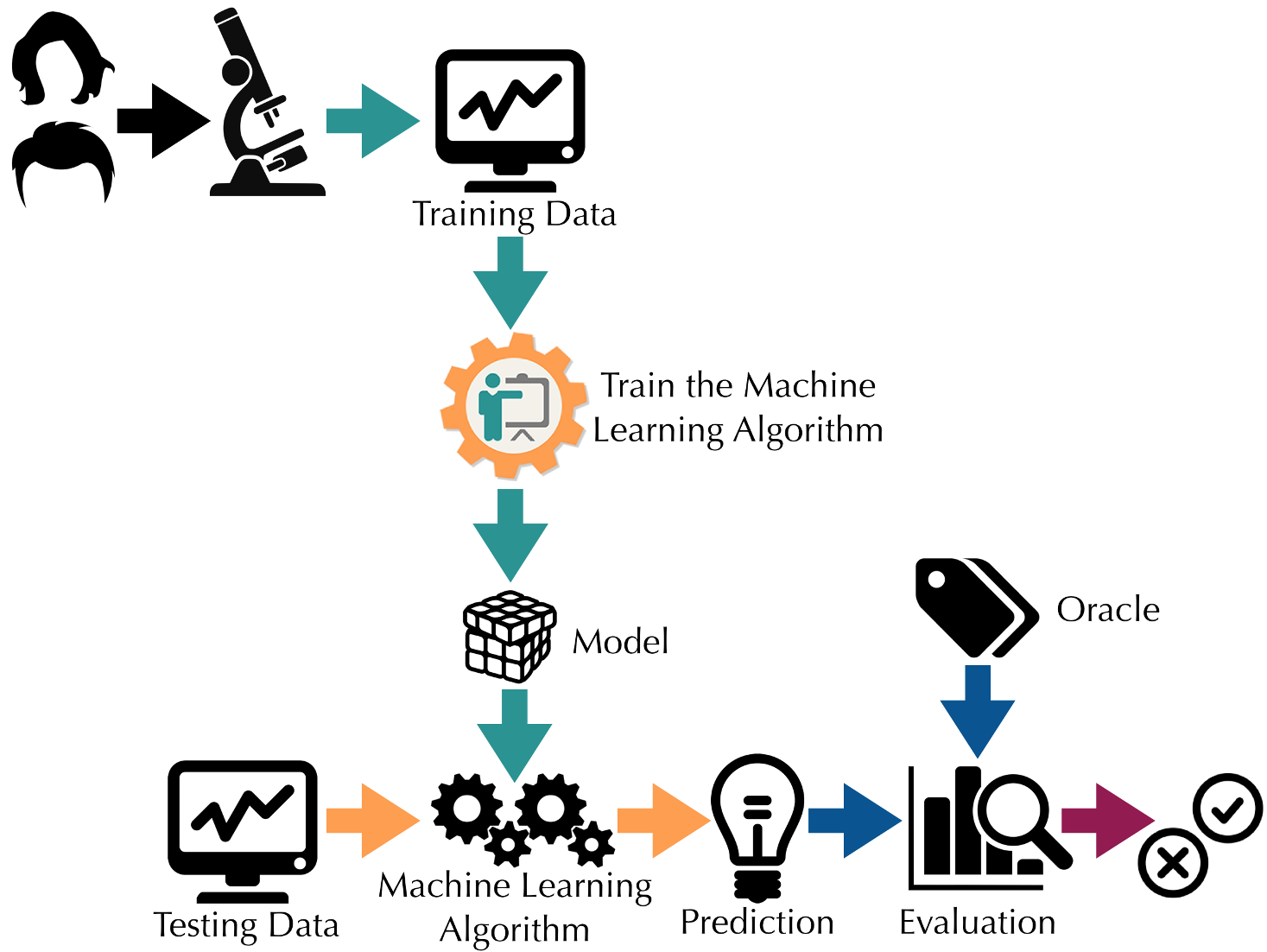
The core intelligence lies in the J48 Decision Tree—an implementation of the C4.5 algorithm—which uses Information Entropy to determine which chemical or physical features provide the most "information gain" for gender classification.
Experimental Insights
The study compared three variants of the J48 algorithm:
- J48 Standard: The baseline statistical classifier.
- J48graft: A variation that attempts to add nodes (grafting) to reduce prediction errors.
- J48consolidated: A method that builds a single tree from multiple subsamples for stability.
Performance Results
The standard J48 algorithm emerged as the champion. It proved particularly strong at identifying males, where the recall reached a staggering 98.1%.
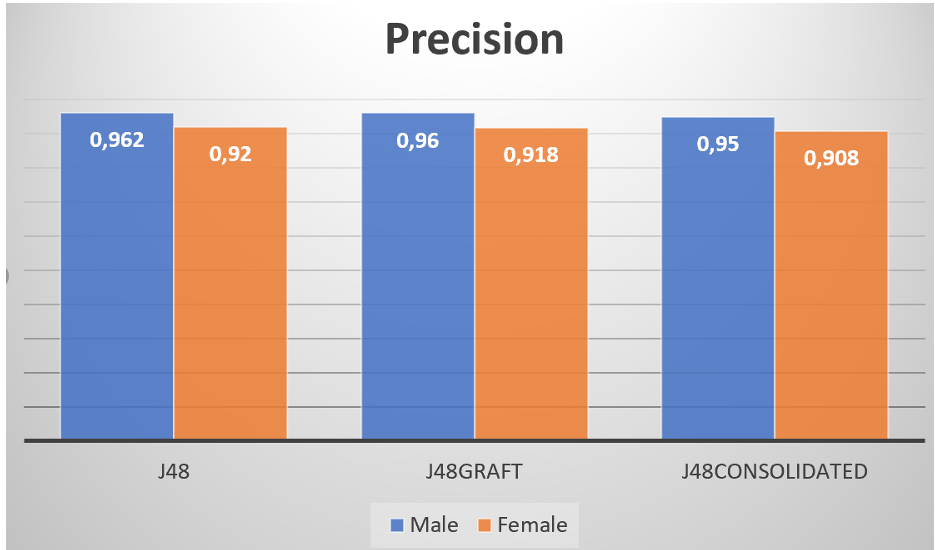 Fig 2: Precision levels for gender classification across different J48 variants.
Why Does It Work?
While the paper focuses on the "What," the underlying "Why" is rooted in biochemistry. Difference in element concentration (such as S, Zn, Mn) are less affected by environment and more by hair structural composition. The variance in other elements acts as an environmental-biological fingerprint. The J48 algorithm successfully identifies the threshold at which these variances become gender-specific.
Critical Analysis & Conclusion
Takeaway
The success of this method represents a paradigm shift for forensic identification. It provides a viable path for gender identification in cases where only hair samples are available, offering high reliability (Avg. Precision 0.954).
Limitations & Future Work
- Sample Bias: The dataset was restricted to a specific age group (15-19) in Rome. Future studies must validate if these elemental markers hold true across different geographical locations and age brackets.
- Complexity: INAA requires a nuclear reactor (TRIGA), which isn't available in every forensic lab. Integrating these insights with more accessible methods like ICP-MS could be a future goal.
- Deep Learning: The authors plan to apply Deep Learning and Principal Component Analysis (PCA) to refine the feature set and potentially further increase accuracy.
Ultimately, this work demonstrates that the "identity" of a person is written not just in their genes or their face, but in the very atoms of their hair.