
Intelligent Student Health Monitoring: An SVM-Powered IoT Framework
A new machine learning-based healthcare monitoring model for student’s condition diagnosis in Internet of Things environment
This paper introduces an IoT-based student healthcare monitoring model that integrates biological and behavioral data through a three-layer architecture (IoT, Cloud, and Monitoring). Utilizing the Support Vector Machine (SVM) algorithm, the system achieves a state-of-the-art accuracy of 99.1% in diagnosing student health conditions.
TL;DR
This research presents a robust Internet of Things (IoT) monitoring model designed to track the health of students living independently. By merging real-time sensor data with historical behavioral indicators and utilizing a Support Vector Machine (SVM), the system achieves a remarkable 99.1% accuracy in identifying health risks. This work moves healthcare from reactive chronic disease management to proactive, continuous biological and behavioral surveillance.
Problem & Motivation: Beyond Chronic Disease
Traditional healthcare monitoring has long been siloed, focusing primarily on elderly patients with chronic conditions like cardiovascular disease or diabetes. However, students represent a unique demographic where health deterioration often manifests through both biological (heart rate, temperature) and behavioral (sleep patterns, activity levels) changes.
The authors identify three critical gaps in prior work:
- Offline Bottlenecks: Many systems process data in batches rather than in real-time.
- Missing Context: Behavioral data (e.g., alcohol consumption, sleep) is often neglected in favor of strictly medical metrics.
- Lack of Predictive Response: Systems act as data loggers rather than automated diagnostic tools that can trigger emergency services.
Methodology: The Three-Layer Architecture
The proposed model is structured into three distinct layers to ensure scalability and reliability.
1. The IoT Layer (Data Collection)
This layer acts as the sensory nervous system. It captures:
- Historical Data: Managed via a smartphone app where parents input baseline health records.
- Real-time Data: Collected via wearable sensors and body area networks (BAN) to monitor vital signs like blood pressure and heartbeat.
2. The Cloud Layer (Intelligence)
The heart of the system where raw data becomes actionable insight. The process involves:
- Normalization: Scaling diverse data types (e.g., age, cholesterol levels) into a 0-1 range.
- SVM Classification: The core engine that distinguishes between "Sensitive" (critical) and "Not Sensitive" health states.
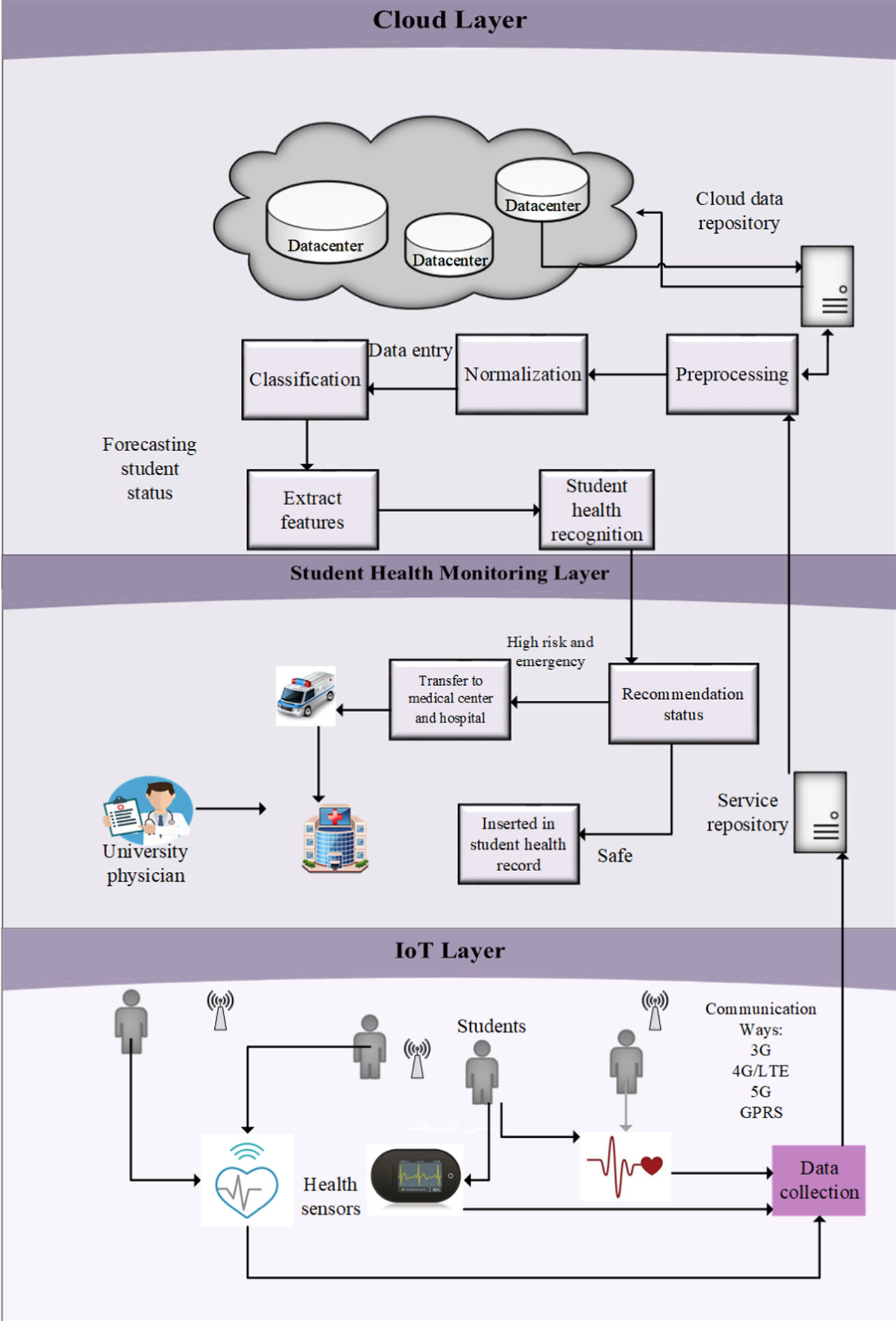 Figure 1: The conceptual IoT framework for smart student healthcare monitoring.
3. The Monitoring Layer (Action)
Depending on the SVM output, the system performs automated tasks:
- Low Risk: Logs data to the student's digital health record.
- Medium Risk: Informs the school physician.
- High Risk (Sensitive): Triggers an immediate alert to the nearest medical center via mobile networks (5G/4G).
Experimental Results: Why SVM Reigns
The researchers benchmarked the SVM against three common machine learning baselines: Decision Tree (DT), Random Forest (RF), and Multilayer Perceptron (MLP).
The study utilized a dataset of 1,100 instances with 18 distinct attributes (including lifestyle factors like cigarette/alcohol use and TSH levels).
| Metric | SVM | Decision Tree | Random Forest | MLP |
|---|---|---|---|---|
| Accuracy | 99.1% | 95.1% | 92.4% | 93.0% |
| Recall | 99.5% | 94.7% | 92.4% | 93.0% |
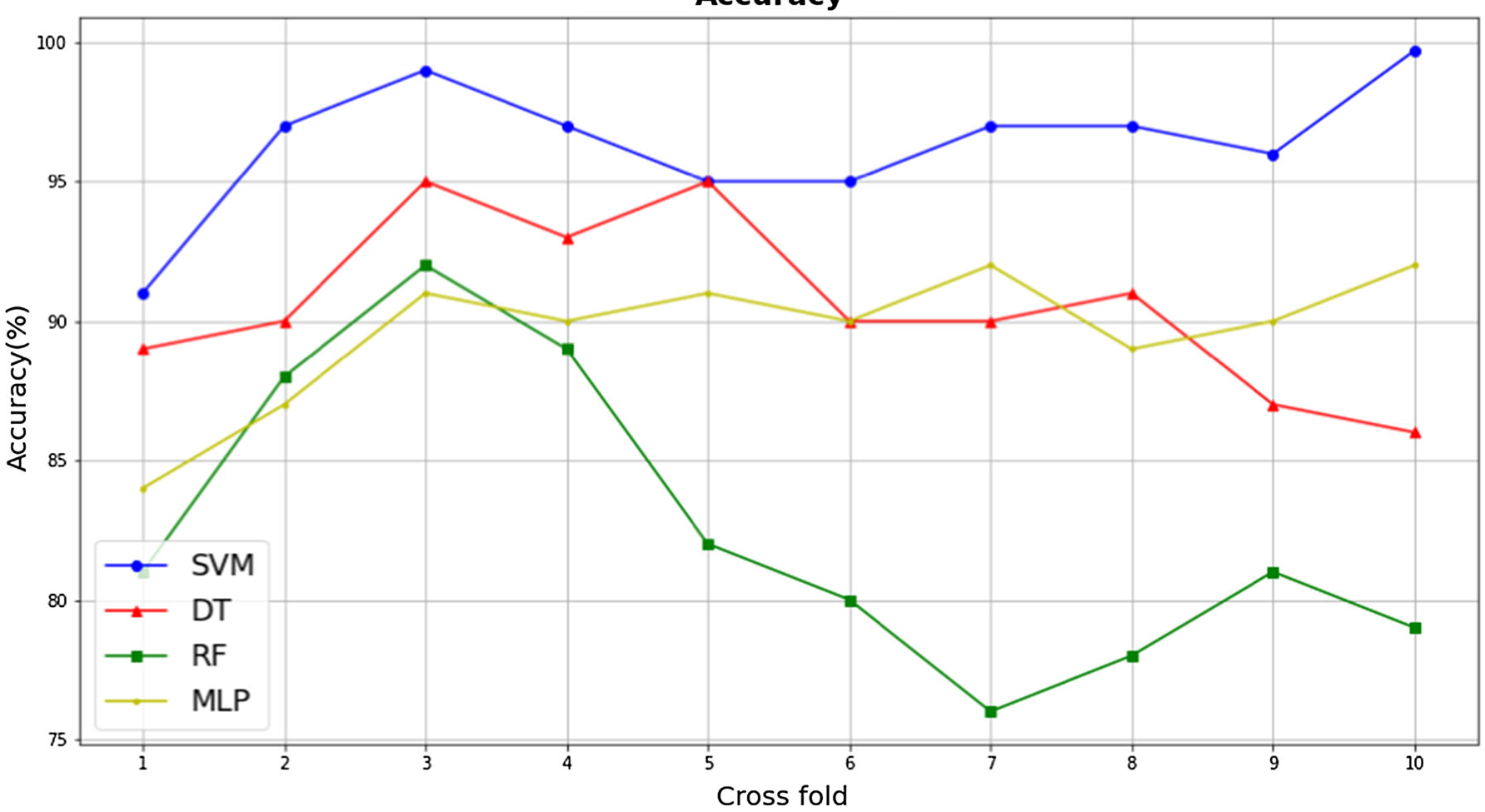 Figure 2: Accuracy comparison across different Machine Learning algorithms.
The Inductive Bias of SVM—finding the optimal hyperplane that maximizes the margin between classes—proved exceptionally effective for this specific feature space. It demonstrated higher robustness to outliers compared to the ensemble methods (RF) or neural networks (MLP) in this medium-sized dataset.
Deep Insight & Future Outlook
The primary contribution of this paper is the validation of multi-modal health features. By including attributes like "Sleep Hours" and "Fasting Blood Sugar" alongside "Heartbeat," the model captures a more holistic view of student well-being.
Critical Perspective: While the 99.1% accuracy is impressive, the dependence on a Cloud-only processing layer introduces potential latency issues in 5G-congested environments. The authors correctly identify that the next evolution must involve Edge-based data processing, moving the SVM inference closer to the wearable device to ensure sub-millisecond response times in life-threatening scenarios.
Takeaway for Practitioners: In the IoT era, the bottleneck is no longer data collection, but the integration of heterogeneous data types. This study confirms that for structured medical datasets, classical high-margin classifiers like SVM can still outperform complex Deep Learning models while requiring significantly less computational overhead.