
SVM-Powered Gait Analysis: Decoding Stair Ascent to Predict Knee Osteoarthritis Severity
Abstract-Several studies have demonstrated that pathologic movement changes in knee osteoarthritis (OA) may contribute to disease progression. The aim of this study was to investigate the association between movement changes during stair ascent and pain, radiographic severity, and prognosis of knee OA in the elderly women using machine learning (ML) over a seven-year follow-up period. Eighteen elderly female patients with knee OA and 20 healthy controls were enrolled. Kinematic data for stair ascent were obtained using a 3D-motion analysis system at baseline. Kinematic factors were analyzed based on one of the popular ML methods, support vector machines (SVM). SVM was used to search kinematic predictors associated with pain, radiographic severity of knee OA, and unfavorable outcomes, which were defined as persistent knee pain as reported at the seven-year follow-up or as having undergone total knee replacement during the follow-up period. Six patients (46.2%) had unfavorable outcomes at the seven-year follow-up. SVM showed accuracy of detection of knee OA (97.4%), prediction of pain (83.3%), radiographic severity (83.3%), and unfavorable outcomes (69.2%). The predictors with SVM included the time of stair ascent, maximal anterior pelvis tilting, knee flexion at initial foot contact, and ankle dorsiflexion at initial foot contact. The interpretation of movement during stair ascent using ML may be helpful for physicians not only in detecting knee OA, but also in evaluating pain and radiographic severity
This study presents a machine learning framework using Support Vector Machines (SVM) to analyze 3D kinematic movement during stair ascent in elderly women. The model achieves high performance in detecting Knee Osteoarthritis (OA) (97.4% accuracy) and predicting pain levels, radiographic severity, and 7-year prognosis.
TL;DR
Researchers have developed a machine learning approach using Support Vector Machines (SVM) to analyze how elderly women climb stairs, achieving a staggering 97.4% accuracy in detecting Knee Osteoarthritis (OA). Beyond mere detection, the model successfully predicts radiographic severity and long-term prognosis (7-year follow-up), identifying specific movement markers—like pelvic tilt and ankle dorsiflexion—that signal disease progression.
Contextual Positioning
In the landscape of orthopedic research, this study shifts the focus from simple "level-ground walking" to the more strenuous "stair ascent." While most prior works rely on isolated biomechanical markers (like the Knee Adduction Moment), this paper leverages the high-dimensional pattern recognition capabilities of SVM to provide a holistic diagnostic and prognostic tool.
The "Why": Why Stair Ascent and Why ML?
Knee OA is a degenerative hurdle for millions of elderly women. The "pain point" in current clinical practice is twofold:
- Sensitivity: Walking on flat ground often fails to trigger the pathologic compensations seen in early-stage OA.
- Complexity: Human movement produces a "high-dimensional" dataset (angles of the hip, knee, ankle, and pelvis over time) that is too complex for traditional linear statistics to fully grasp.
The authors' insight was that Stair Ascent acts as a "stress test" for the knee, and SVM is uniquely suited to find the "maximum-margin hyper-plane" that separates healthy movement from pathologic patterns in these complex datasets.
Methodology: The SVM Framework
The researchers captured kinematics using a 6-camera Vicon 370 system. The core of the technical pipeline involved:
- Feature Selection: Using "Backward Elimination" to prune 100+ kinematic variables down to the most influential predictors.
- Kernel Trick: Applying a Gaussian radial basis function (RBF) to handle non-linear relationships between joint angles and pain.
- Validation: Since the cohort was small (38 subjects), they employed Leave-One-Out Cross-Validation (LOOCV) to ensure the model's robustness and generalizability.
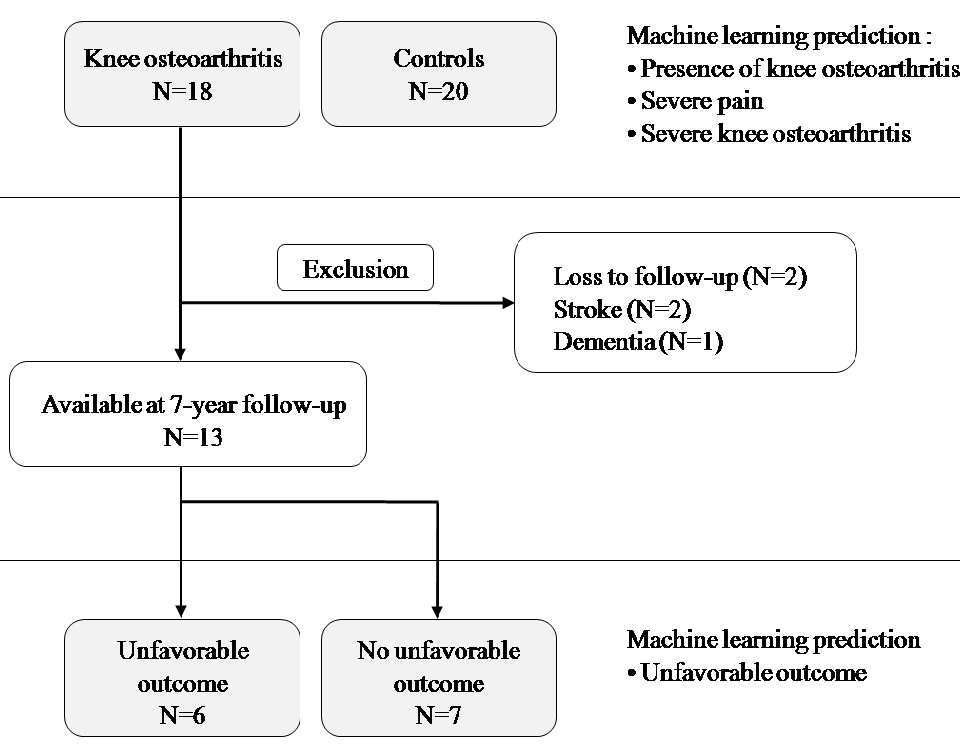 Figure 1: The ML pipeline from participant inclusion to SVM prediction.
Key Results & Biomechanical Insights
The model identified four "Red Flag" movement signatures:
- Increased Time: Slower stair ascent speed.
- Maximal Anterior Pelvis Tilting: Compensation for weak knee extensors.
- Reduced Knee Flexion at Foot Contact: A "stiffening" strategy to avoid pain.
- Reduced Ankle Dorsiflexion at Foot Contact.
| Task | SVM Accuracy | Baseline (Miyazaki et al.) |
|---|---|---|
| OA Detection | 97.4% | 71.1% |
| Pain Prediction | 83.3% | 66.7% |
| Progness (7-Year) | 69.2% | 69.2% |
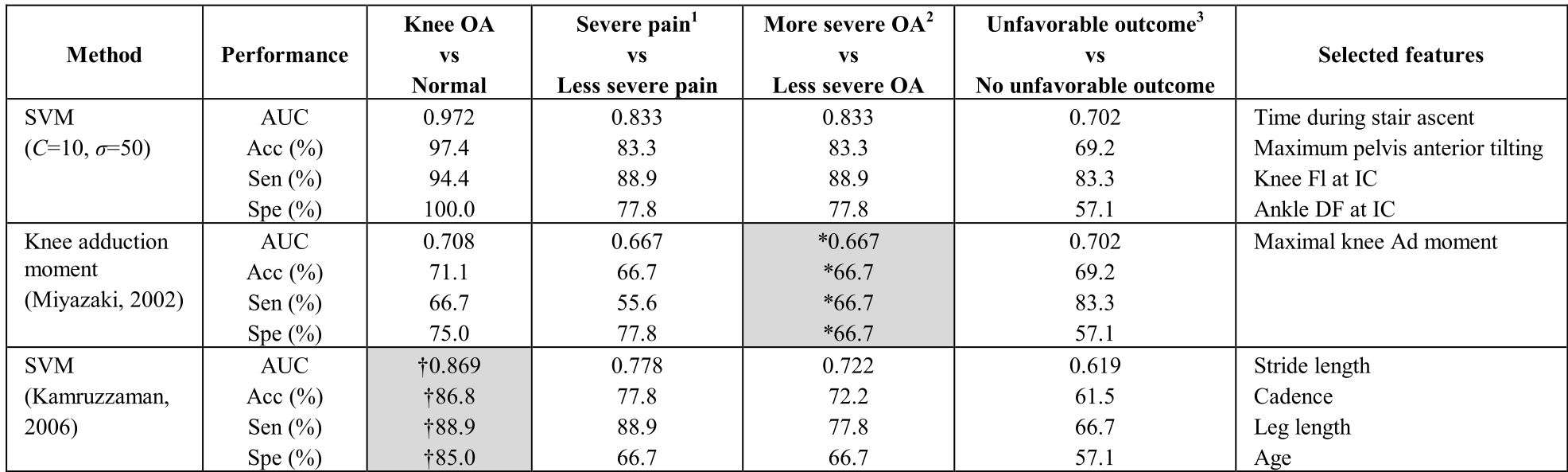 Figure 2: Superiority of the SVM approach against traditional biomechanical markers.
Critical Analysis & Future Outlook
The study's most profound contribution is the 7-year follow-up. Predicting who will eventually require a Total Knee Replacement (TKR) based on a single gait session years prior is a "holy grail" for preventative sports medicine.
Limitations:
- The sample size is small (n=18 OA patients), which necessitates larger-scale validation.
- The study is gender-specific (women only), though this is justified given the higher prevalence of OA in females.
The Takeaway: We are moving toward a future where "Machine Learning-based Cinematography" in a clinic could provide a patient with a "risk score" for their knee health, much like a blood test for cholesterol, allowing for early intervention before irreversible damage occurs.