
Beyond Keywords: Using Machine Learning to Fuse Multi-Level Linguistic Intelligence in IR
Combining linguistic indexes to improve the performances of information retrieval systems: a machine learning based solution
The paper introduces a supervised machine learning approach to merge multiple linguistic indexes (morphological, syntactic, and semantic) for Information Retrieval (IR). By using neural networks to fuse results based on document ranks and query characteristics, the system achieves a more stable and balanced performance than any single index.
Executive Summary
TL;DR: This research tackles the inconsistency of NLP-enhanced Information Retrieval by moving away from "one-size-fits-all" indexing. Instead, it maintains 12 parallel indexes (covering everything from stems to semantic synonyms) and uses a Neural Network to decide which indexes to trust based on the specific DNA of each query.
Background Positioning: Published in the mid-2000s (RIAO), this work is a precursor to modern "Learning to Rank" (LTR) and ensemble retrieval techniques. It shifts the focus from "which index is best?" to "how can we intelligently combine them?"
The "NLP Paradox" in Retrieval
For decades, researchers have tried to inject linguistic "smarts" into search engines. If a user searches for "knife," the system should know "knives" is a match (Morphology) and "cleaver" might be relevant (Semantics).
However, prior work often showed contradictory results. Sometimes stemming helps; sometimes it introduces noise. The authors identified a key bottleneck: Prior systems were too rigid. They applied the same linguistic weights to an 8-word complex query as they did to a 1-word simple query, ignoring that some queries benefit from syntax while others only need basic keywords.
Methodology: The Parallel Indexing Architecture
The authors' solution is an elegant "expert ensemble" approach. Instead of mashing all linguistic data into one index, they create 12 specialized experts:
- Morphological Experts: Lemmas, Stems, Grammatically tagged terms.
- Syntactic Experts: Noun phrases, Bigrams, Trigrams, Complex terms.
- Semantic Experts: WordNet synonyms, Proper names, Morpho-semantic variants.
The Fusion Brain
At the heart of the system is a Neural Network that takes two types of inputs for every document-query pair:
- Rank Evidence: Where does this document sit in each of the 12 result lists?
- Query Metadata: 32 features including query length, the average number of word senses (ambiguity), and the frequency of terms in the collection.
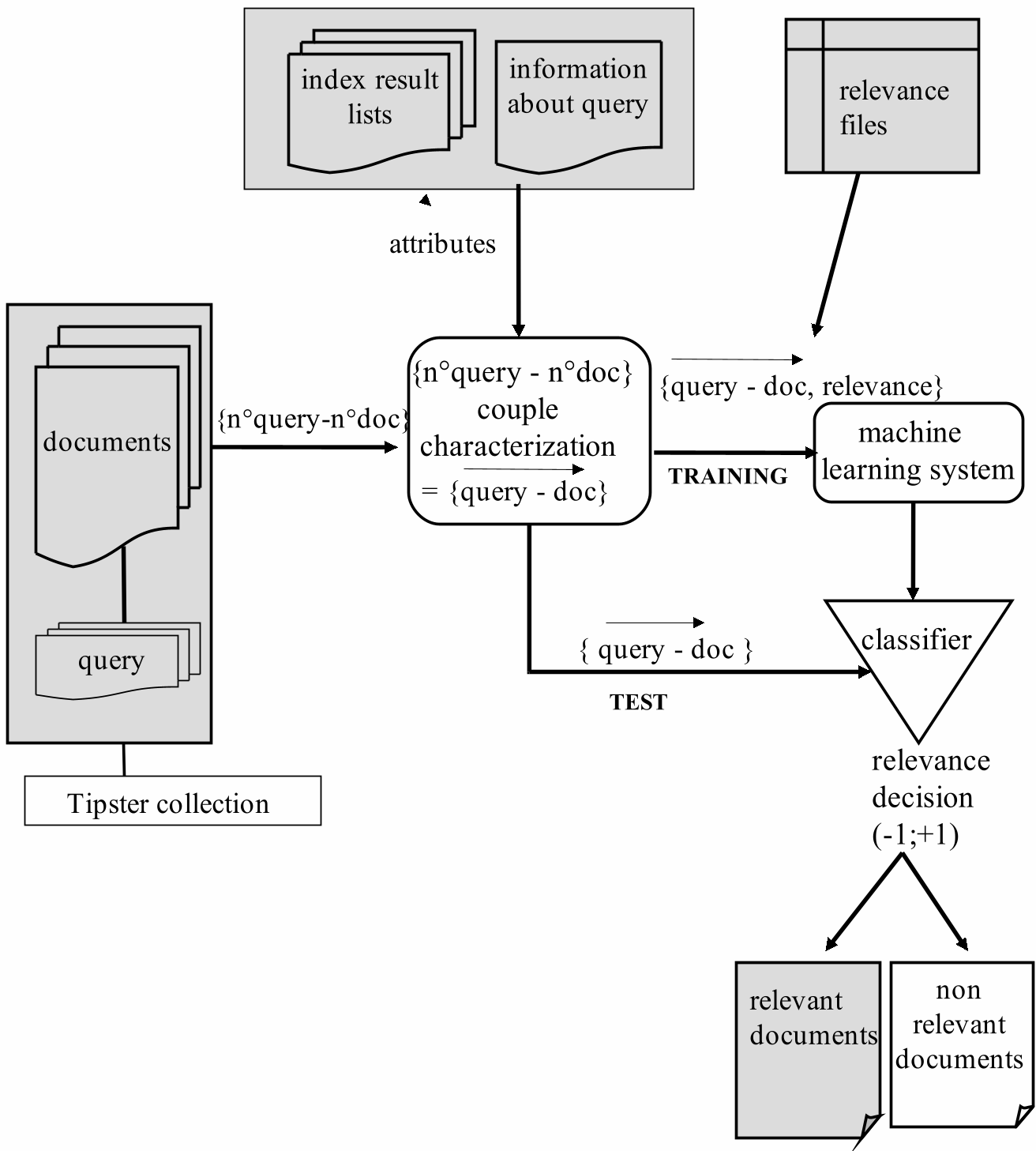 Figure 1: The dual-stage architecture—characterizing the query and then classifying document relevance via neural inference.
Experimental Results: Stability is the Real Winner
While many papers chase 1% gains in Precision, this work highlights a more important metric: Stability.
By comparing their fusion method against the "Stemming" baseline (historically the hardest individual index to beat), they found that while absolute recall might slightly dip, the F-measure improved by 12.33%.
| Metric | Stem Index (Baseline) | Fusion Method | Improvement |
|---|---|---|---|
| F-measure | 30.53 | 34.30 | +12.33% |
| Std. Deviation | 16.09 | 3.92 | -75% (Variance) |
The most striking result is the standard deviation. A standard system is a "rollercoaster"—perfect for one query, a failure for the next. This neural fusion acts as a smoother, ensuring the system performs reliably regardless of query difficulty.
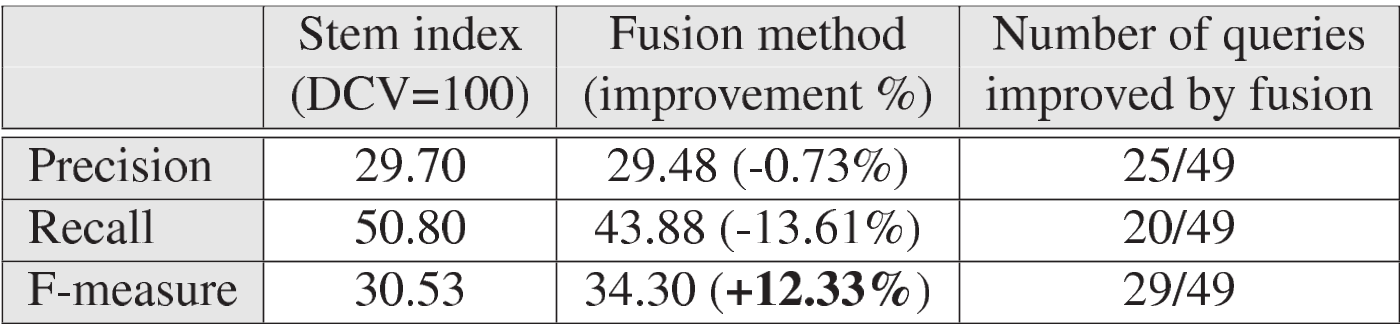 Table 2: Notice the "Number of queries improved" column—the fusion method beats the baseline on the majority of test cases.
Critical Insights & Future Outlook
The "Aha!" moment of this paper is found in Section 4.3.3: Query context matters. When the authors stripped away the "Query Characterization" attributes (the metadata about the query itself), the performance gains nearly vanished.
Takeaways for the Modern Engineer:
- Late Fusion > Early Fusion: Combining result lists (late fusion) allows for more flexibility than trying to build a single "super-index."
- Query-Awareness is Non-Negotiable: A retrieval system's strategy must change based on what the user is asking.
- Limitations: The current model uses a binary decision (Relevant/Not). For modern production systems, this would need to be evolved into a scoring regressor to allow for a more nuanced final ranking.
This work serves as a foundational reminder that in the world of unstructured text, "meaning" is multi-layered, and our retrieval systems should be too.