
Unmasking the Invisible: Using AI to Combat Money Laundering in Non-Banking Correspondents
Machine Learning Methodologies Against Money Laundering in Non-Banking Correspondents
This paper introduces an unsupervised machine learning framework to detect money laundering anomalies within Non-Banking Correspondents (NBCs) in Colombia. By utilizing Isolation Forest and One-Class SVM algorithms on real-world transactional data, the study identifies suspicious patterns that circumvent traditional banking oversight.
TL;DR
Financial inclusion often comes with a hidden cost: vulnerability. While Non-Banking Correspondents (NBCs) like drugstores and gas stations allow millions in developing nations to access banking, they have become a prime target for money laundering. This research leverages unsupervised machine learning—specifically Isolation Forest, One-Class SVM, and K-Prototype clustering—to detect suspicious financial flows without the need for pre-labeled data.
The "Last Mile" Vulnerability: Why NBCs?
Non-Banking Correspondents (NBCs) act as financial intermediaries in areas where traditional bank branches are scarce. However, their reliance on cash transactions and the lack of robust Anti-Money Laundering (AML) schemes make them an ideal "washing machine" for illegal proceeds.
The core problem highlighted by Garcia-Bedoya and Guevara is regulatory bypass. Traditional monitoring focuses on large-scale bank transfers, while launderers use NBCs to perform "micro-laundering"—frequent, smaller transactions that stay just under the radar of automated reporting systems (like Colombia's SARLAFT).
Methodology: Detecting the Unknown
Since "money laundering" labels are rarely available in raw datasets, the researchers utilized Unsupervised Learning.
1. Data Synthesis and OCR
The researchers faced a common real-world hurdle: incomplete digital records. They used the Google Vision API (OCR) to digitize thermal receipts, eventually manually transcribing data to ensure 100% accuracy for a dataset of over 52,000 records.
2. The Algorithmic Duo
- Isolation Forest: Instead of profiling "normal" behavior, this algorithm strategically isolates anomalies. Since outliers are "few and different," they are partitioned sooner in a tree structure.
- One-Class SVM: This model defines a hyperspace boundary around the dense region of "normal" transactions. Anything falling outside this boundary is flagged as an outlier.
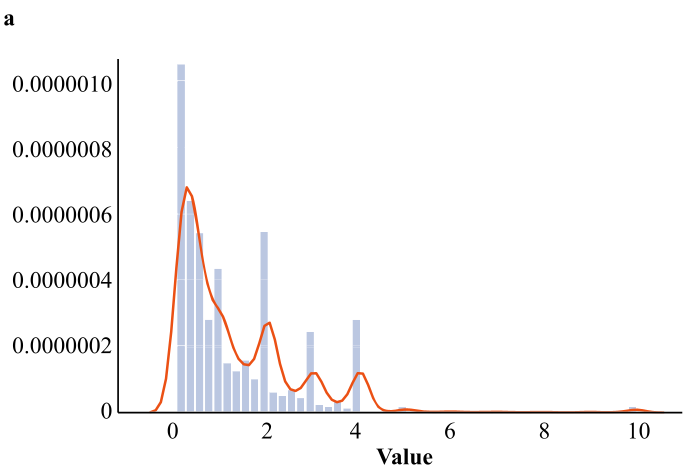 Fig 1: The workflow from data acquisition to anomaly scoring.
Key Insights from Experiments
The results revealed a startling pattern of "Closed Values." Most legitimate transactions involve odd numbers (due to bills or specific debt amounts), but suspicious transactions overwhelmingly used rounded numbers (e.g., 4,000,000 or 9,999,999 pesos).
- The 10-Million Ceiling: A significant cluster of transactions was found at 9,999,999 pesos—exactly one peso below the mandatory reporting limit to the Financial Information and Analysis Unit (UIAF).
- Temporal Anomalies: K-Prototype clustering identified accounts being used consistently every 35 hours over long periods—a pattern highly uncharacteristic of human retail banking but typical for automated or "smurfing" laundering operations.
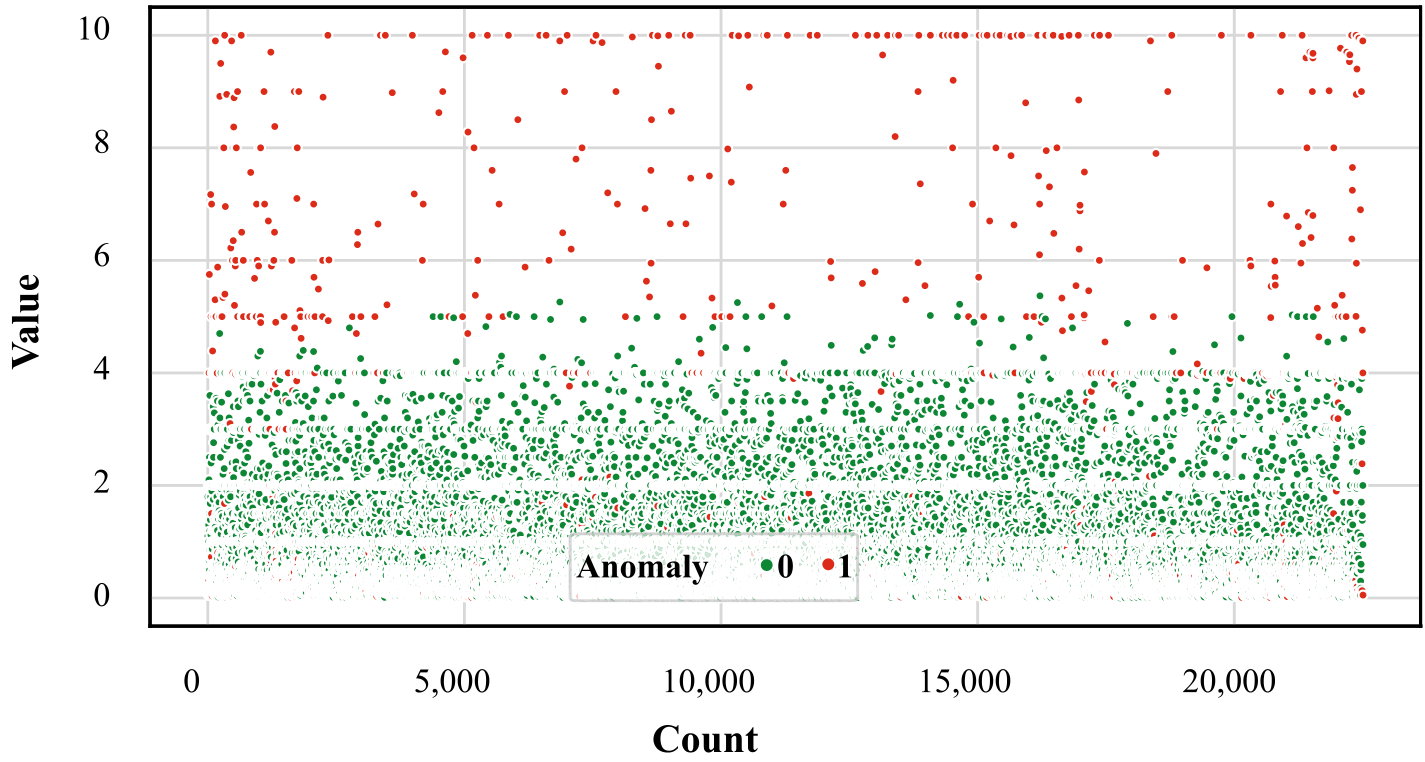 Fig 2: Visualization of the One-Class SVM results, highlighting anomalous points (outliers) across the value spectrum.
Critical Analysis & Future Outlook
This work demonstrates that statistical value is not the only feature of crime. In Fig 2 and Fig 3 of the paper, we see that anomalies are not just the "largest" transactions; they are found across the entire value range. This proves that simple rule-based filters (e.g., "flag everything over $X") are insufficient.
Limitations: The current approach is static. Criminal organizations evolve their "typologies" rapidly. Future work should integrate Directed Acyclic Graphs (DAGs) or Bayesian Networks to model the uncertainty and evolving nature of these networks.
Final Takeaway
As financial systems become more decentralized, AML strategies must move to the edge. Unsupervised ML provides the only viable path to identifying "unknown unknowns" in the vast, cash-heavy landscape of global Non-Banking Correspondents.