
Bridging Botany and AI: An Ontology-Based Approach to Leaf Classification
Machine learning techniques for ontology-based leaf classification
The paper introduces an ontology-based leaf classification system that integrates botanical taxonomy with machine learning. It utilizes a novel Scaled Centroid-Contour Distance (CCD) code and neural networks to achieve automated identification of leaf lobation, tooth patterns, and vein structures, reaching a 94.26% accuracy in tooth type recognition.
TL;DR
This research presents a hierarchical classification framework that aligns machine learning techniques with the formal language of botany. By introducing a Scaled CCD (Centroid-Contour Distance) code and multi-stage neural networks, the system can "read" a leaf much like a botanist does—identifying lobation, measuring apex angles, and recognizing microscopic tooth patterns and vein textures with high precision (over 94% accuracy).
The Gap: Why Geometric Features Aren't Enough
In the early 2000s, plant identification systems focused heavily on raw shape descriptors like Moment Invariants (MIs) or Angle Code Histograms (ACH). While mathematically sound, these features are "black boxes" to botanists. They lack semantic meaning and often fail to distinguish between species that share similar global shapes but differ in local details like the serration of the margin or the complexity of the veins.
The authors argue that for a system to be truly practical, it must map low-level image data to the botanical ontology (the structured vocabulary of plant anatomy).
Methodology: The Three-Stage Recognition Pipeline
1. The Scaled CCD Code (Lobation & Margin Detection)
The core innovation is the Scaled CCD code. Traditional CCD curves (measuring distance from center to contour) are sensitive to rotation and noise. The authors process this signal through four steps:
- Smoothing: Using a Gaussian function to remove noise.
- Segmentation: Identifying where the smoothed curve crosses the original.
- Multi-Scale Merging: By varying a scale parameter , the system merges small segments (teeth) to find large-scale features (lobes).
- Coding: Generating a 7-bit code where the first two bits represent the basic shape and the subsequent bits represent tooth presence.
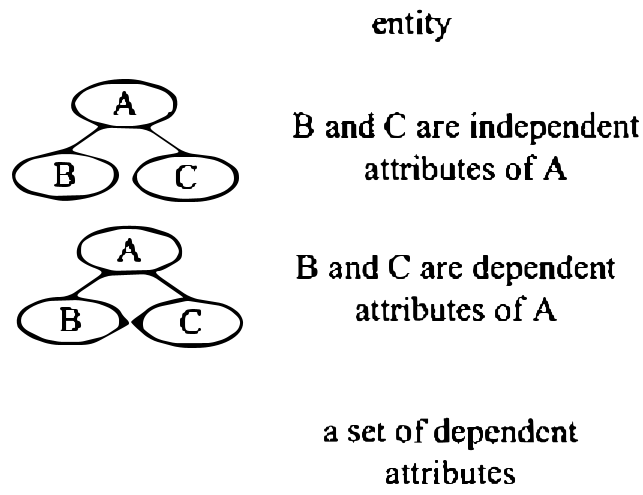 Figure 1: The botanical ontology used to guide the machine learning features.
2. Neural Networks for "Tooth" Recognition
Once the system identifies a leaf as "toothed," a secondary Feed Forward Neural Network (FFNN) takes over. Instead of analyzing the whole leaf, it focuses specifically on the local segments containing the teeth.
3. Vein Extraction and Texture Analysis
For "look-alike" species, the leaf vein pattern is the final "fingerprint." The authors employ a two-stage extraction:
- Global Thresholding: To find the primary vein structure.
- ANN Fine-Checking: A window-based neural classifier that examines local intensity variations to extract high-order (minor) veins that are often lost in standard image processing.
Experimental Results & Performance
The superiority of the CCD-based neural approach is evident in the tooth classification results. When compared to traditional descriptors like Fourier Coefficients or Moment Invariants, the raw CCD segment features achieved the highest accuracy.
| Feature Category | Hidden Nodes | Accuracy (%) |
|---|---|---|
| CCD of toothed segment | 100 | 94.26 |
| Fourier Coefficients | 100 | 85.71 |
| Moment Invariants | 30 | 69.52 |
| Chain Code | 100 | 42.86 |
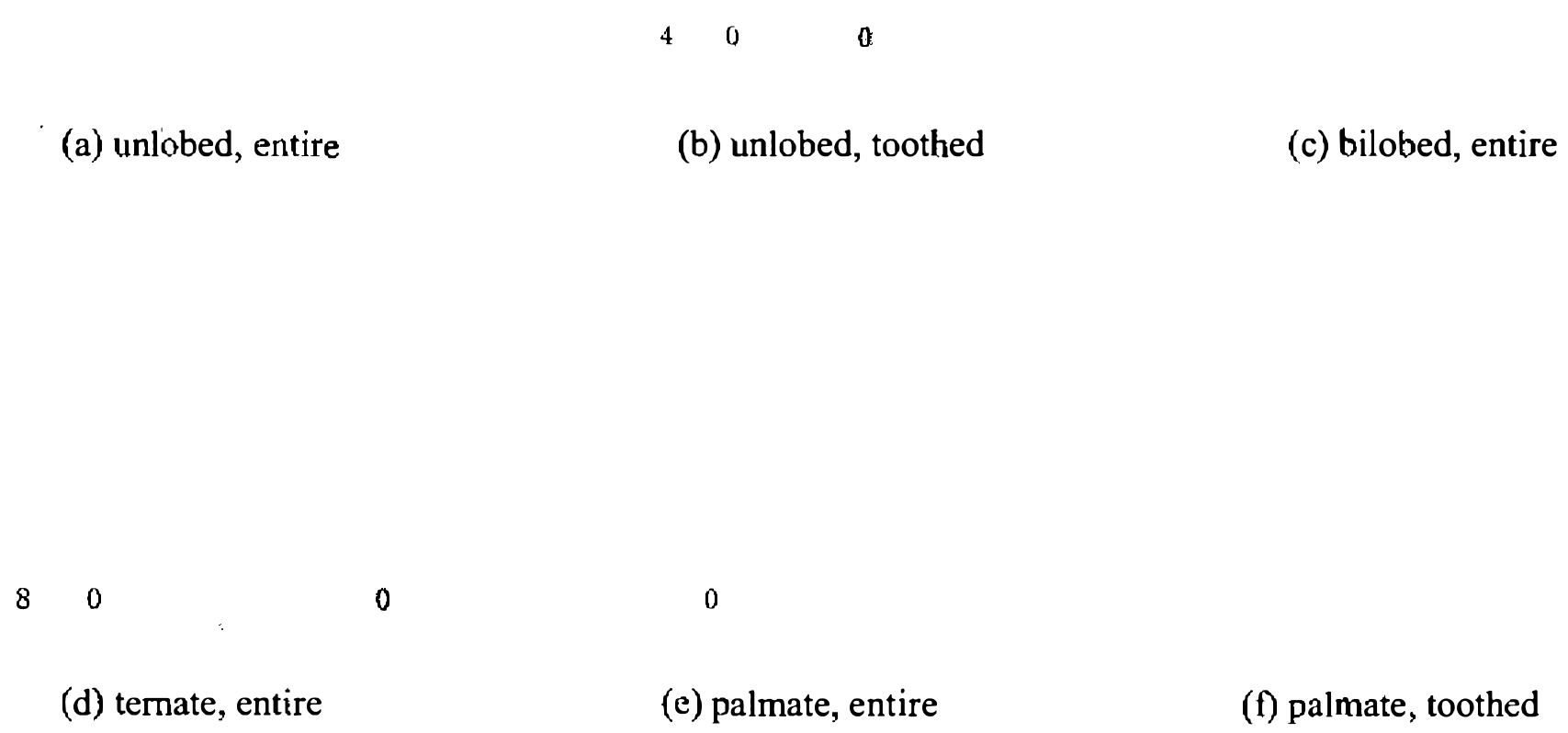 Figure 2: Examples of leaves processed by the system, showing their generated CCD codes and semantic annotations.
Critical Insight: The Value of Semantic Alignment
The brilliance of this work lies in its Inductive Bias. By forcing the machine learning model to operate within the constraints of botanical ontology, the authors reduced the search space and increased the model's reliability. Instead of asking the model "What species is this?", they ask "How many lobes? What type of teeth? What vein pattern?". This hierarchical questioning mirrors human expertise.
Limitations and Future Outlook
While the system is robust for unlobed and lobed leaves, it may struggle with highly complex compound leaves or overlapping specimens. The authors suggest that Relevance Feedback—allowing botanists to correct the system in real-time—will be the next step in refining these classification rules.
Conclusion
This paper serves as a foundational example of how domain knowledge (Ontology) can be fused with statistical learning (Neural Networks) to solve complex biological identification tasks. It moves beyond simple "image matching" toward a system that understands the "anatomy" of its subject.