
Proactive Population Health: Fusing Climate Analytics with EHR via Machine Learning
The Development of Machine Learning Infused Outpatient Prognostic Models for tackling Impacts of Climate Change and ensuring Delivery of Effective Population Health Services
The paper introduces a Machine Learning (ML) infused prognostic framework that integrates climate data from NOAA with Sanjeevani Electronic Health Records (EHR). By employing Apriori and Naive Bayesian algorithms, the system identifies high-risk senior citizen cohorts vulnerable to extreme heat events to facilitate proactive healthcare delivery.
TL;DR
As global temperatures rise, heat-related mortality is becoming a critical public health crisis. This paper presents a framework that transforms climate change from a disaster management problem into a data-driven health intervention. By integrating NOAA weather SDKs with the Sanjeevani EHR platform, the researchers use Association Rule Mining (Apriori) to identify high-risk senior citizen cohorts before a heat wave strikes.
Background & Motivation: The Climate-Health Gap
Current medical informatics systems are largely siloed from environmental reality. While doctors track a patient's pulse and blood pressure, they rarely Have real-time visibility into the external thermal stressors those patients face.
The authors highlight a grim reality: in places like India, a mere 0.5°C increase in summer mean temperature can jump the probability of mass heat-related mortality by over 2.5 times. The motivation here is "Human and AI symbiosis"—using predictive modeling to provide actionable insights to NGOs and government agencies before the fatality counts begin to rise.
Methodology: From Weather Forecasts to Clinical Cohorts
The core of the system is the synthesis of environmental data and de-identified health encounters.
1. Data Ingestion
The system leverages the NOAA SDK to fetch localized weather forecasts. Simultaneously, the Sanjeevani EHR extracts patient episodes involving symptoms like headache, dehydration, or renal stress.
2. Association Rule Mining (The "How")
The researchers utilize the Apriori Algorithm to perform pattern mining. By treating health observations at specific temperatures as "transactions," they find frequent itemsets.
- Logic: If temperature > 100°F AND Patient contains {Low BP, Drowsiness}, THEN High Risk for {Heat Exhaustion}.
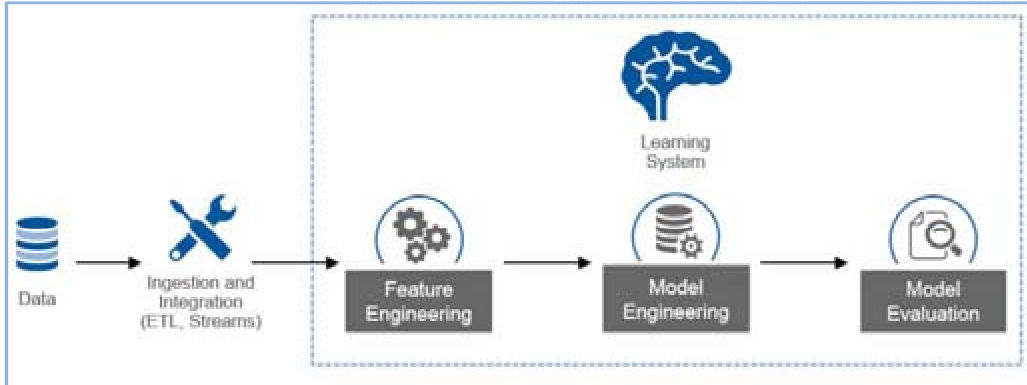 Fig. 5: Life Cycle for Development of the Machine Learning System
Experimental Insights: Proving the Link
The paper references the devastating 2010 Ahmedabad heat wave as a benchmark. Data shows a clear correspondence where standardized heat wave days (population-weighted) directly correlate with spikes in mortality.
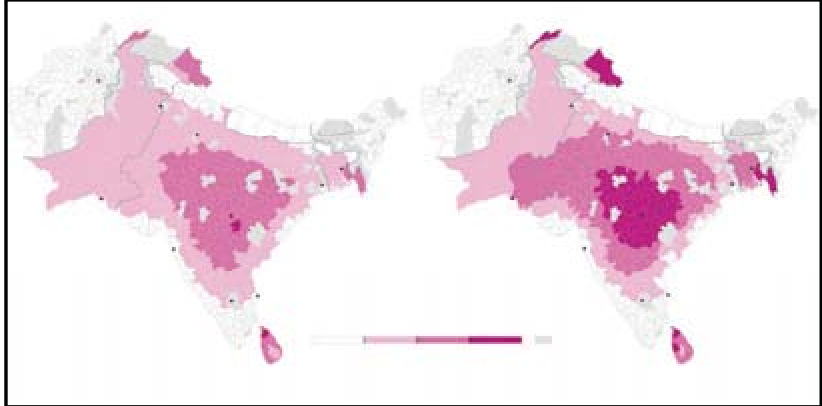 Fig. 3: Standardized population-weighted heat wave days and heat-related mortality.
The ML model’s output demonstrates high confidence levels in its rules. For instance, the rule frozenset({'heat cramps', 'Headache'}) -> heat exhaustion achieved a Confidence of 1.0, validating that specific symptom clusters are near-certain precursors to life-threatening heat stroke in specific populations.
Critical Analysis & Conclusion
Takeaway
The true value of this work lies in its preventative capability. By forecasting "risk zones," the system allows clinics to prioritize house calls for the most vulnerable elderly patients before emergency rooms become overwhelmed.
Limitations & Future Work
While the Apriori algorithm is effective for rule discovery, it can be computationally expensive on massive datasets. The authors suggest that future iterations could incorporate more complex deep learning models to handle non-linear relationships between humidity, urban heat islands, and chronic pre-existing conditions.
The path forward is clear: Climate data is health data. This paper provides the architectural blueprint for the next generation of environmentally aware EHRs.