
Decoding Our Inner Circles: Why Demographic Heterogeneity Matters in Phone-Based Sensing
Machine Learning for Phone-Based Relationship Estimation: The Need to Consider Population Heterogeneity
The paper presents a machine learning framework to estimate interpersonal relationship categories (e.g., family, friend, colleague) using passive smartphone sensor data. By integrating communication logs with demographic and semantic location data, the authors achieve a 71% accuracy (0.68 F1 score) in relationship prediction.
TL;DR
Can your phone guess who your "Significant Other" is versus a "Colleague" just by your location and texting habits? This paper proves it can, with 71% accuracy. However, it delivers a stern warning to the AI community: if you train your model only on college students, it will likely fail in the real world. By leveraging Auto-sklearn and SHAP, the researchers demonstrate that the context of communication—where you are and how old you are—is just as important as the frequency of the messages themselves.
The "Student Sample" Trap: A Crisis of Generalizability
For years, ubiquitous computing research has suffered from a "convenience bias." Most datasets are collected from university students—a group that is demographically narrow and behaviorally unique. The authors of this study argue that this leads to "false optimism." A model that learns how a 20-year-old interacts with their parents will be hopelessly lost when trying to identify the social circle of a 50-year-old.
Methodology: Beyond Simple Pings
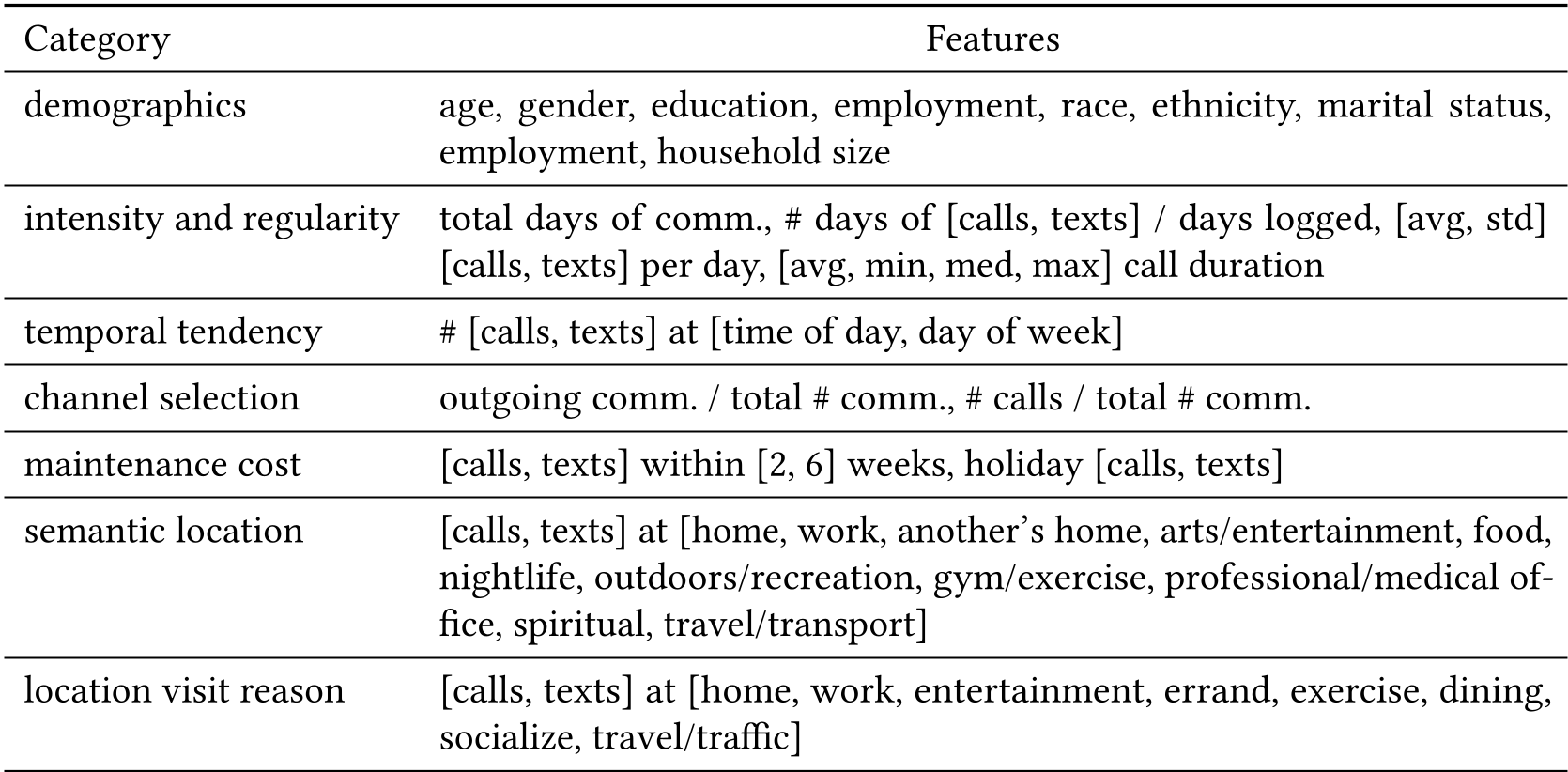
The researchers didn't just look at how many times you called someone. They contextualized every interaction using three distinct feature blocks:
- Communication Dynamics: Intensity, regularity, and temporal tendencies (e.g., late-night texting).
- Demographics: Age, gender, and employment status.
- Semantic Location: Identifying if a call was made from "home," "work," or while "running errands."
To keep the science "honest," they used Auto-sklearn, an automated machine learning framework that searches for the best model ensemble without human "thumb-on-the-scale" tuning.
Key Insight: The Interaction of Age and Location
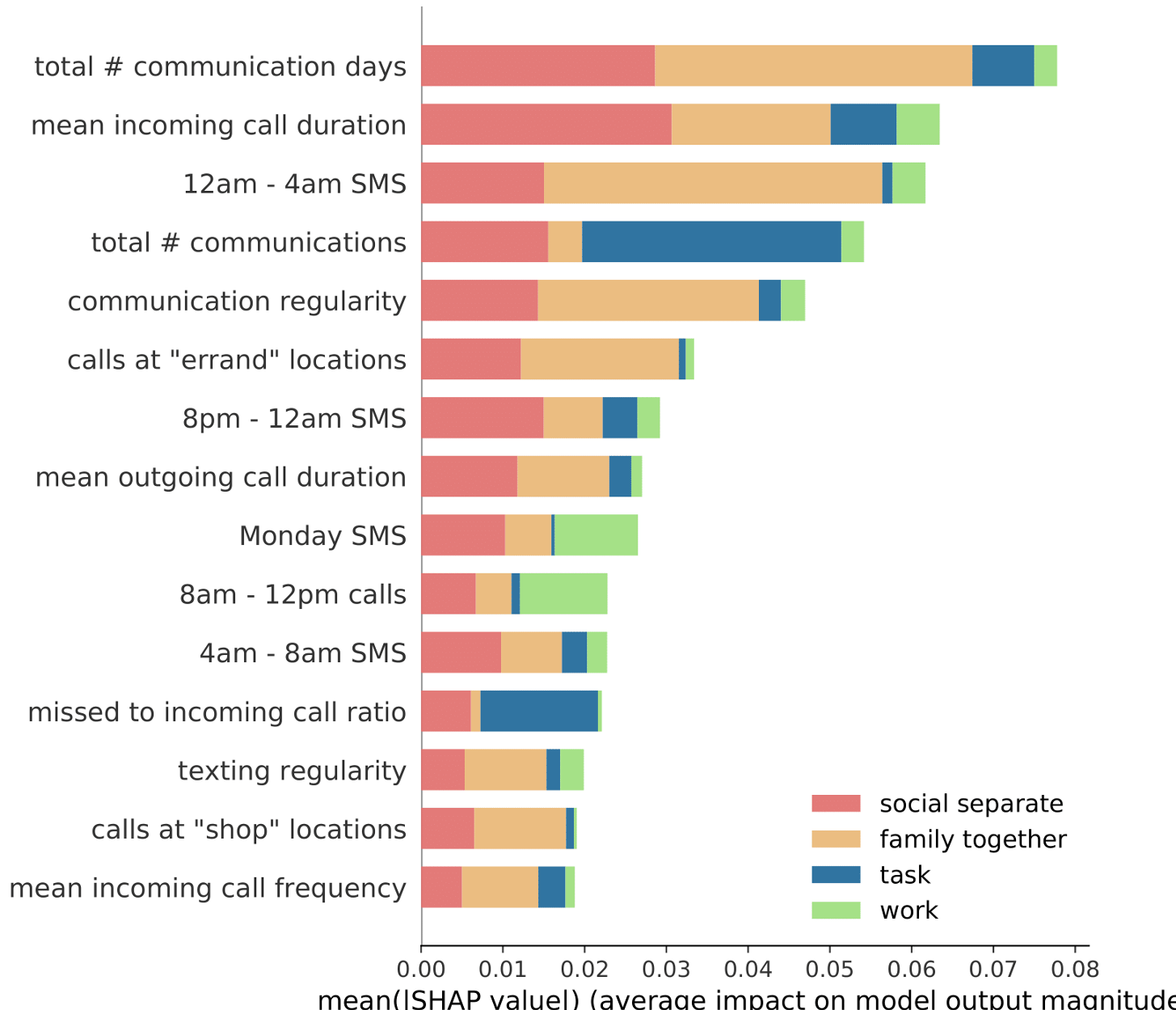
The study’s SHAP (Shapley Additive Explanations) analysis revealed fascinating "behavioral fingerprints":
- The "Work" Fingerprint: High Monday activity and calls between 8 AM and 12 PM.
- The "Family Together" Fingerprint: Communication spikes while the user is at "shops" or "running errands"—likely coordinating household needs.
- The Age Shift: As participants age, they favor calls over texts and reduce late-night digital activity.
The Experiment: Cross-Quartile Validation
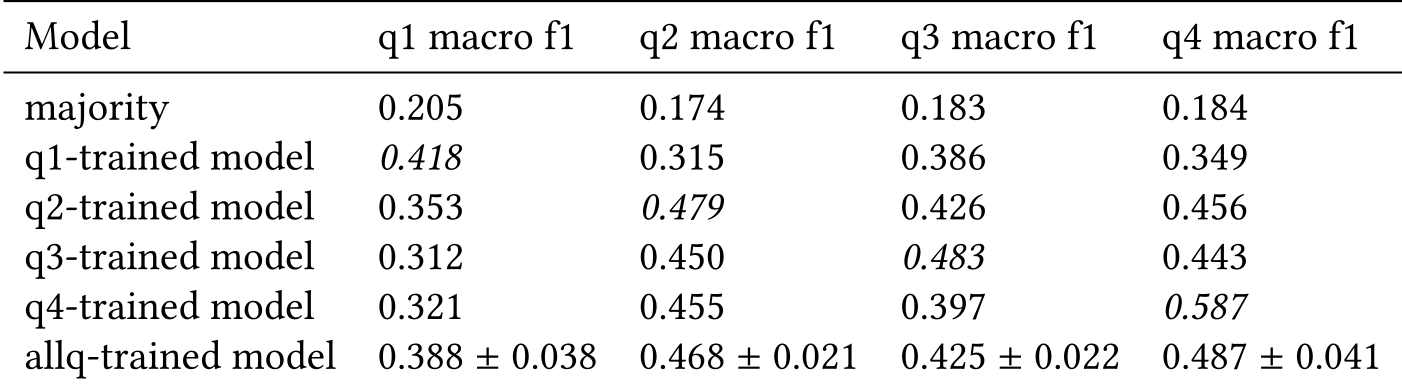
The most damning evidence against current research practices came from the subgroup experiment. The team split the population into four age quartiles.
- The Result: The model trained on the youngest group (Q1) was the worst at predicting relationships for everyone else.
- The Lesson: Diversity in training data isn't just a "nice-to-have"; it's a mathematical requirement for accuracy. The "All-Quartile" (Heterogeneous) model consistently outperformed specialized models when tested against the general population.
Critical Analysis & Future Outlook
While the study boasts a larger-than-average sample size (n=189), the authors acknowledge a gender skew (85% female), which remains a limitation.
Takeaway for the Industry: This research is a call to action for developers of digital mental health interventions. If an app is going to recommend "reaching out for support" during a depressive episode, it must correctly identify who the user's support system actually is. This requires models that understand that a "Friend" to a 20-year-old looks very different from a "Friend" to a 60-year-old.
Moving forward, the field must adopt standardized benchmarks and AutoML to ensure that we aren't just "overfitting to the campus."