
Cloud-Edge Synergy: Revolutionizing Microgrid Economic Dispatch with Machine Learning
Machine-Learning-Based Real-Time Economic Dispatch in Islanding Microgrids in a Cloud-Edge Computing Environment
This paper introduces a supervised learning-based framework for real-time economic dispatch in islanding microgrids, utilizing a Cloud-Edge computing architecture. The method employs Particle Swarm Optimization (PSO) in the cloud to label historical operational data, training a Random Forest (RF) model that is then deployed to edge devices for low-latency, real-time energy management.
TL;DR
Researchers have developed a data-driven framework that treats optimal dispatch as a supervised learning problem. By using Cloud resources to solve complex optimizations offline and deploying Random Forest models to Edge devices, they achieved real-time decisions that outperform traditional Model Predictive Control (MPC) by up to 11% in cost efficiency, without requiring high-accuracy weather or load forecasts.
Motivation: The Uncertainty Dilemma
Islanding microgrids—often found in remote areas—face a balancing act: they must synchronize intermittent wind/solar power with fluctuating loads using only local Energy Storage Systems (ESS) and diesel generators.
Existing solutions typically fall into two categories:
- MPC-based: Require "rolling optimization," which is computationally expensive for edge controllers and highly sensitive to prediction errors.
- MDP/RL-based: Often fall into local optima or suffer from the "curse of dimensionality" in complex state spaces.
The authors' insight was simple yet powerful: Why try to predict the future in real-time when we can learn the "intuition" of an optimal solver from the past?
Methodology: Decoupling Complexity
The proposed framework utilizes a Cloud-Edge architecture to split the labor:
1. Cloud-Side: The "Teacher" (Labeling & Training)
In the cloud, where computational power is abundant, the system takes historical IoT data and runs Particle Swarm Optimization (PSO). This process determines what the perfect dispatch decision would have been for a given set of conditions. These "optimal labels" are then used to train a Random Forest (RF) model.
2. Edge-Side: The "Student" (Real-time Inference)
The lightweight, trained RF model is pushed to the edge (near the microgrid). When new data arrives, the edge device doesn't solve an optimization problem; it simply performs a regression inference. This provides immediate dispatch commands for the ESS and diesel units.
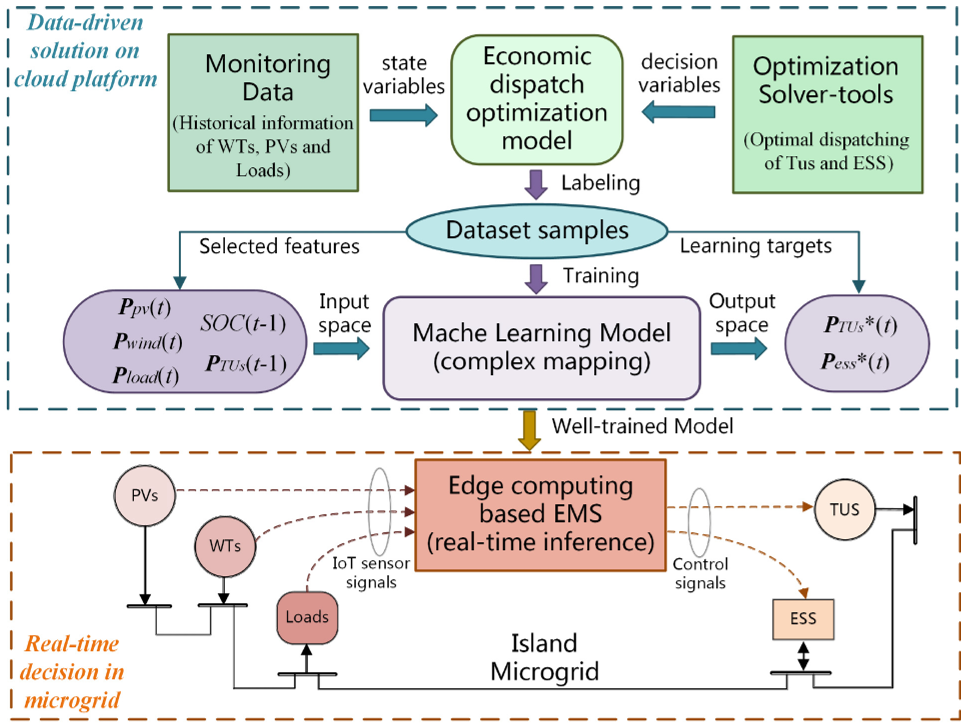 Fig 1: The proposed Cloud-Edge computing architecture for microgrid energy management.
Why Random Forest?
The choice of Random Forest over deep neural networks is strategic. RF is:
- Lightweight: Easily runs on low-power edge hardware.
- Robust: Naturally resists overfitting, which is crucial when dealing with noisy sensor data from remote microgrids.
- Non-parametric: It effectively captures the non-linear relationship between State of Charge (SOC) and generation costs without needing a rigid mathematical model of the battery's degradation.
Experimental Results & Performance
The model was tested against a real-world dataset from a 3-month period. The primary benchmark was an MPC-based controller under varying levels of prediction error.
Key Findings:
- Cost Near-Optimality: The ML model's cost (2648.6), where one has perfect foreknowledge of the future.
- Error Resilience: While MPC cost spiked by 11% when forecasts were inaccurate, the ML model remained stable because it learns patterns rather than relying on point-forecasts.
- Speed: Inference occurs in milliseconds, facilitating true real-time stability in islanded environments.
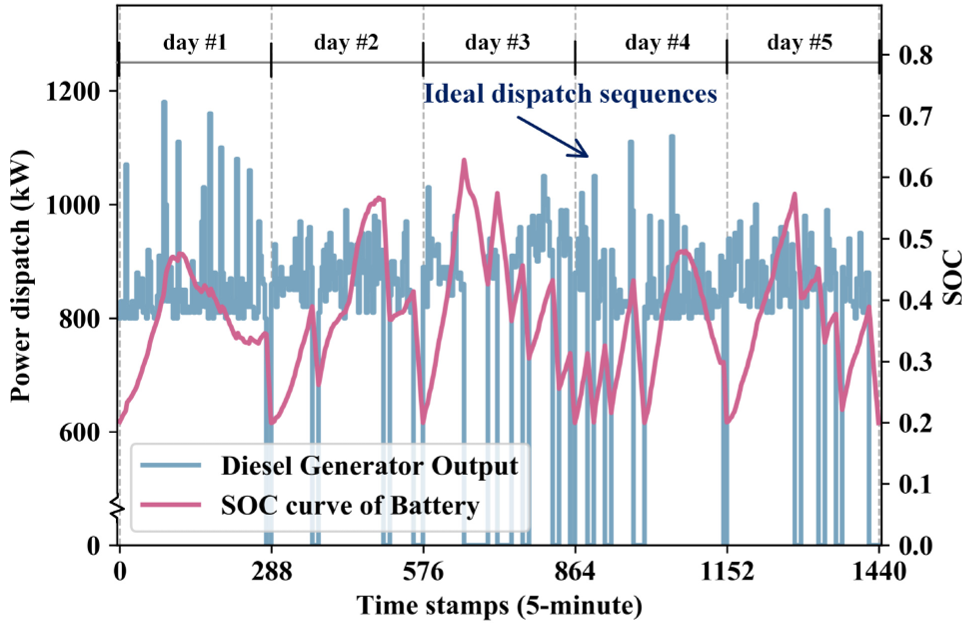 Fig 2: Comparison of cumulative operational costs over 15 test days.
Critical Perspective & Conclusion
This paper marks a shift from predict-then-optimize to sense-then-react (informed by training). By moving the "heavy lifting" of optimization to the cloud, the authors have made high-end energy management accessible to low-cost edge hardware.
Limitations: The current approach relies on the assumption that historical data covers most operational "modes." In the event of a "Black Swan" event (unprecedented weather), the model might struggle. Future work incorporating Graph Neural Networks (GNNs) could help the model understand the physical topology of the grid, potentially improving its ability to generalize to new microgrid configurations.
Summary: For engineers and researchers in the Smart Grid space, this work provides a robust blueprint for deploying AI in environments where latency and prediction uncertainty are the primary bottlenecks.