
Mapping the DNA of Human Interaction: A Deep Dive into Machine Learning-Based User Behavior Analysis
A survey for user behavior analysis based on machine learning techniques: current models and applications
This paper provides a comprehensive survey of User Behavior Analysis (UBA) leveraging Machine Learning (ML). It introduces a novel dual-feature categorization (topic-based and relevance-based) and a similarity metric to visualize 127 key papers across four primary domains: Cybersecurity, Networks, Safety and Health, and Service Delivery Improvement.
Executive Summary
TL;DR: This foundational survey systematiclly organizes the fragmented field of User Behavior Analysis (UBA). By evaluating 127 landmark papers through a multi-dimensional lens of topic and reputation, the authors provide a "living map" for how ML understands, models, and predicts human actions across Cybersecurity, Smart Grids, and Healthcare.
Academic Positioning: This work serves as a high-level taxonomy and evaluation framework. It bridges the gap between raw data science and domain-specific applications, moving beyond simple "what is UBA" to "how do we quantify the value of UBA research."
Problem & Motivation: The Heterogeneity Trap
User Behavior Analysis (UBA) has evolved from its 1950s psychological roots into a data-driven powerhouse. However, because it is applied to everything from detecting bank fraud to optimizing bus routes, the field has become a "tower of Babel." ML experts often don't understand the domain constraints (like battery life in mobile sensors), and domain experts struggle to choose between HMMs, RNNs, or SVMs.
The authors identify a critical vacuum: the lack of a standardized similarity metric that considers not just the "what" (category) but the "how" (algorithm) and the "how good" (reputation).
Methodology: The Core Framework
The paper’s brilliance lies in its dual-feature extraction system:
- Topic-Based Features: Categorization by Primary (e.g., Cybersecurity) and Secondary (e.g., Access Control) domains, alongside specific ML Algorithms (Supervised, Markov, Clustering, etc.) and Data Types (Web Logs, Mobile Sensors, GPS).
- Relevance-Based Features: A sophisticated scoring mechanism that weights Paper Reputation (35%), Max Author Reputation (25%), Innovation (20%), Novelty (10%), and Data Quality (10%).
Visualizing the Research Landscape
The authors use t-SNE (t-Distributed Stochastic Neighbor Embedding) to compress 9-dimensional similarity data into a 2D map. This allows researchers to see "clusters" of research—for instance, how smartphone-based authentication works differ fundamentally from computer-based web log analysis.
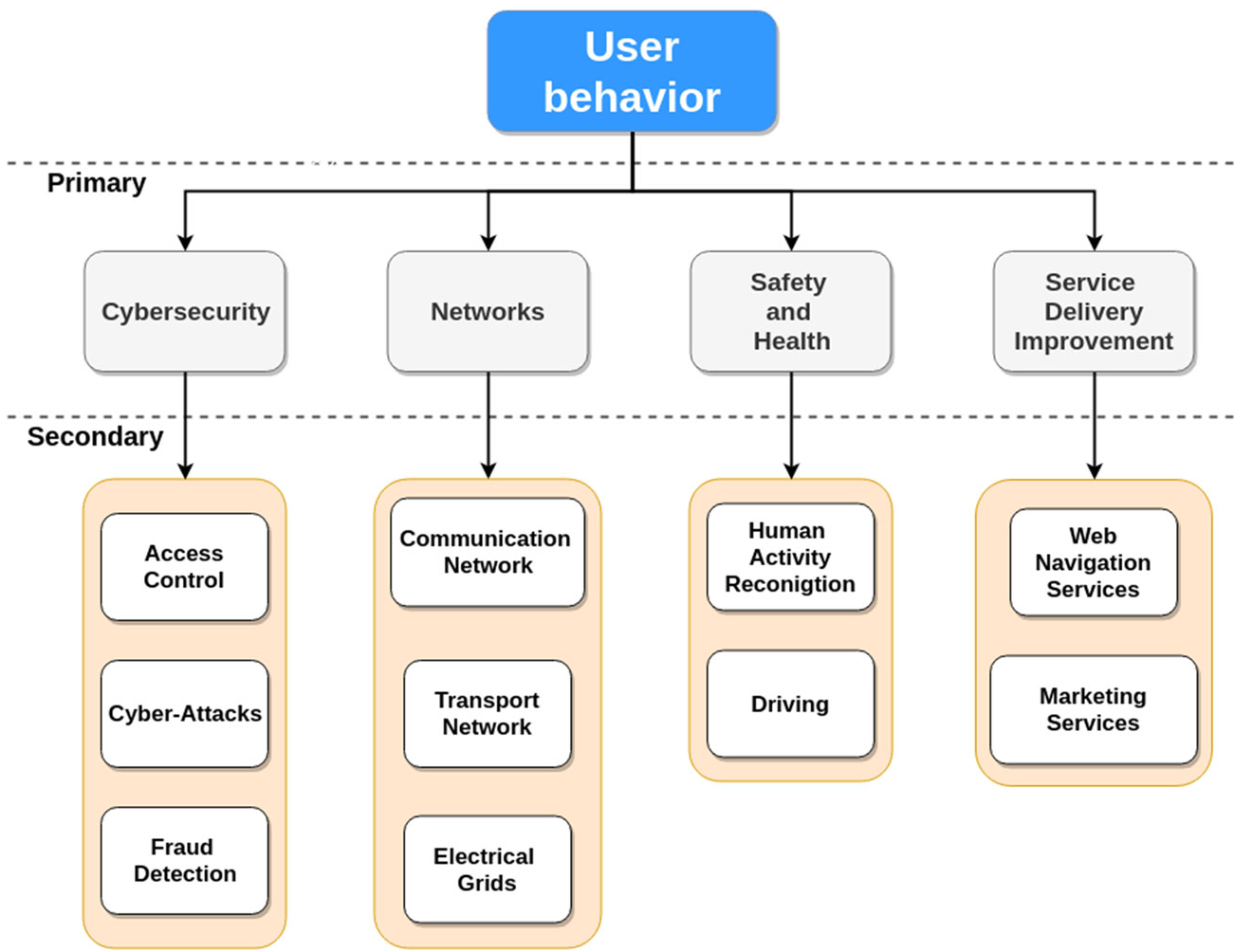 Figure 1: The hierarchical classification of User Behavior Analysis domains.
Domain Insights & Results
The survey breaks down the state-of-the-art across four pillars:
- Cybersecurity: The shift from static passwords to Continuous Authentication. Using smartphone sensors (gyroscope, accelerometer) to build a "behavioral biometric" profiles that detect impostors in real-time.
- Networks: Optimization of Smart Grids and Transport. By analyzing usage patterns, models can predict peak electrical demand or optimize bus routes dynamically.
- Safety & Health: Dominance of Human Activity Recognition (HAR). Using smart home sensors to detect subtle changes in elderly routines that might signal cognitive decline.
- Service Delivery: Moving from generic recommendations to Individualized Marketing. This involves solving the "cold-start" problem using transfer learning and social network graphs.
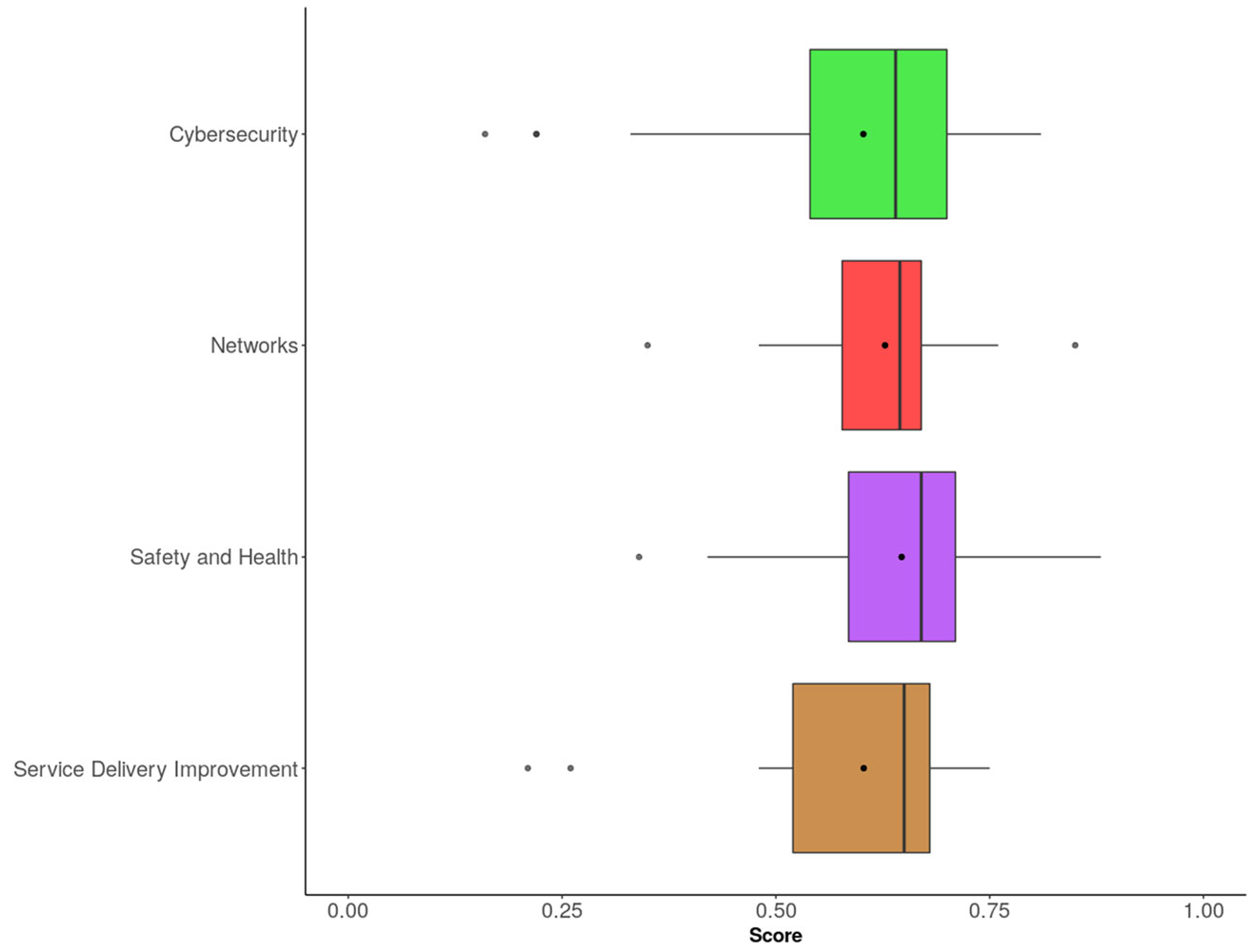 Figure 2: Distribution of Reputation Scores across primary categories, showing that Safety and Health research often maintains the highest data quality and innovation scores.
Critical Analysis & Future Outlook
Takeaway: The "gold standard" of UBA is moving toward non-intrusive, real-time modeling. The most successful papers cited are those that handle messy, imbalanced, and non-stationary real-world data rather than clean, simulated datasets.
Limitations: The "Innovation" score remains somewhat subjective, and the survey (published in 2021) does not fully capture the recent explosion of Large Language Models (LLMs) in behavioral simulation and reasoning.
Future Directions: We are entering the era of Behavioral IoT. The next frontier is the "Symbiosis" of UBA with Cloud/Edge computing, where your smartwatch doesn't just track your steps, but predicts your health and security risks in local real-time, preserving privacy while maximizing utility.