
MLInvestRisks: Transforming Virtual IT Investment through Machine Learning
Assessing the Investment Risk of Virtual IT Company Based on Machine Learning
The paper introduces a specialized Machine Learning (ML) module designed to assess investment risks for Virtual IT Companies. By evaluating 23 distinct risk parameters, the system leverages eight classification algorithms—specifically highlighting Support Vector Classifier (SVC), Random Forest, and K-Nearest Neighbors—to achieve a high-precision forecasting accuracy of up to 98%.
TL;DR
Assessing the viability of a "Virtual IT Company" is notoriously difficult due to the ethereal nature of its assets and decentralized operations. This paper presents a robust ML-driven module that analyzes 23 specific risk parameters. By utilizing a combination of expert scoring and high-performance classifiers like SVC and Random Forest, the authors achieved an impressive 98% prediction accuracy, pinpointing the most lucrative projects while weeding out high-risk failures.
The Challenge of the "Virtual" Landscape
In the modern digital economy, virtual enterprises—organizations formed by integrating distributed resources via computer networks—are becoming the norm. However, the reason for project failure is often uncertainty.
Traditional risk assessment falls short because:
- Data Scarcity: Virtual firms lack the physical history of traditional brick-and-mortar companies.
- Complexity: Risks range from "Exchange rate of Hryvnia" to "Loss of product relevance" and "Staff qualification gaps."
- Subjectivity: Relying solely on human intuition leads to inconsistent outcomes.
Methodology: Bridging Expertise and Algorithms
The authors didn't just throw raw data at a model. They created a structured pathway:
- Expert Consensus: 10 experts evaluated 20 projects based on a 10-point and 5-point scale to build a high-quality "Ground Truth" database.
- Parametric Justification: 23 parameters were selected, covering Financial (inflation, liquidity), Operational (technology flaws, supply chain), and Bureaucratic risks.
- Multi-Model Tournament: Eight classifiers were tested, including Logistic Regression, AdaBoost, and Gaussian Naive Bayes.
The Core Architecture
The system follows a logic where expert evaluations feed into a training database, which then powers three champion models (SVC, Random Forest, and KNN) for new project testing.
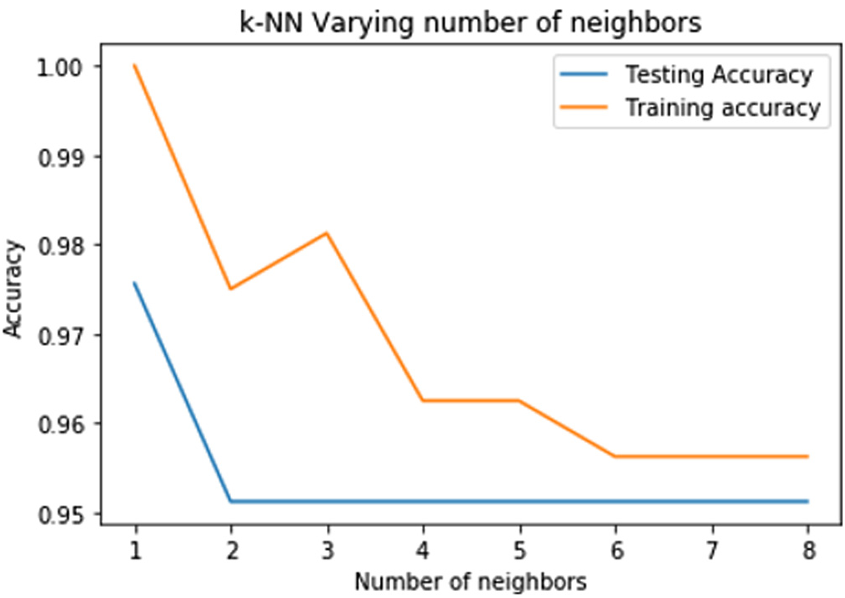 Figure 1: The Sequence Diagram of the MLInvestRisks module, showing the interaction between experts, databases, and ML classifiers.
Deep Dive into the Top Performers
The paper highlights three specific algorithms that outperformed the rest through cross-validation:
- Support Vector Classifier (SVC): By maximizing the margin between project "classes" (fit vs. unfit), SVC reached an AUC (Area Under Curve) of 0.91, indicating excellent discriminative power.
- Random Forest: This ensemble of 320 decision trees proved highly effective at handling the non-linear relationships between risks like "Staff Work" and "Final Profit."
- K-Nearest Neighbors (KNN): Using a approach with distance-weighting, this model provided a localized view of project similarities.
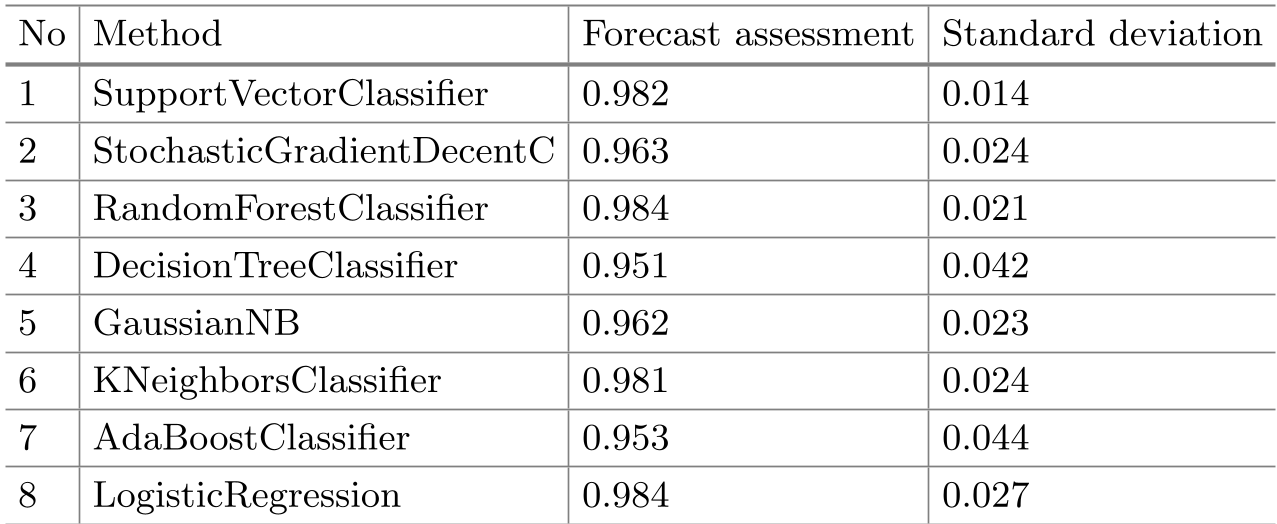 Table 1: Forecast assessment of the eight tested methods. SVC, Random Forest, and KNN lead the pack with 0.98 accuracy.
Key Insights: Which Factors Matter?
Interestingly, the study performed a correlation analysis against the "Fit" parameter (the success of the investment).
- Negative Impactors: Factors like "Staff Work" (-0.23) and "Demand and Outlet" (-0.19) showed the strongest negative correlation with a project being "fit," suggesting that labor instability and market demand remain the primary killers of virtual IT ventures.
- Clean Data: The standard deviation (std) across parameters was remarkably low, signifying that the expert scoring was consistent and the dataset was "clean," requiring minimal pre-processing.
Critical Analysis & Conclusion
This research proves that even "subjective" risks can be quantified and predicted if the initial expert-scoring framework is robust.
Takeaways for the Industry:
- Hybrid Intelligence: The success of the 98% accuracy score is not just the algorithm—it's the 10-expert grounding that provided the initial "labels."
- Project P8 vs. P1: While different models suggested different winners (SVC/Random Forest chose P8, KNN chose P1), the authors conclude that P8 is the superior choice due to its "medium impact" rating and lower human-factor risk frequency.
Limitations: The study is heavily focused on the Ukrainian regulatory environment. Future work should test this module against international datasets (e.g., Silicon Valley or EU-based startups) to see if the weight of these 23 parameters shifts across different jurisdictional risk profiles.
Final Verdict: This is a solid step toward "Algorithmic Venture Capital," where ML acts as a sanity check for human investors in the high-stakes world of IT startups.