
Beyond Static Labels: Semantic Virtual Assistants in Cultural Heritage
Visitor Assistant Tools Based on Machine Learning Approaches in Cultural Heritage Contexts
The paper introduces a "Virtual Personal Assistant" for Cultural Heritage (CH) settings, leveraging a semantic engine to transform unstructured domain text into a queryable conceptual map. This machine learning approach enables natural language interaction between visitors and artworks, significantly enhancing the educational and experiential quality of museum visits.
TL;DR
This research presents a machine learning-based Virtual Personal Assistant (VPA) designed to turn "silent" museum exhibits into interactive educators. By converting unstructured text into a structured Conceptual Map using a semantic inference engine, the system allows visitors to have real-time, natural language conversations with artworks.
Contextualizing the AI in the Gallery
In the modern Cultural Heritage (CH) landscape, the goal is no longer just preservation, but engagement. The authors position this work as a bridge between the Internet of Things (IoT) hardware layers and the end-user experience. Unlike simple chatbot interfaces, this system focuses on the semantic relationship between entities (e.g., authors, periods, and techniques), ensuring that the assistant actually "understands" the context of a visitor's query.
The Problem: The Ambiguity of Language
The primary hurdle in digital museum guides is word sense. A visitor asking about a "period" might be referring to a historical era or a artistic movement. Conventional systems often struggle with this ambiguity. The authors argue that a deep, domain-specific knowledge base is required to provide precise answers, which most generic AI systems lack without specialized fine-tuning.
Methodology: Building the Conceptual Map
The core innovation lies in the learning process that transforms raw text (PDFs, Word docs) into a formal logic network.
1. The Semantic Net & Grammar Rules
The system utilizes an enhanced version of WordNet, extending it with domain-specific terminology for art and history. It categorizes words into synonyms and defines relations like meronymy (part-of) and hyponymy (kind-of).
2. Semantic Inference Engine
This is the "brain" of the operation. It performs:
- Morphological Analysis: Breaking down sentence structures.
- Named-Entity Recognition (NER): Identifying figures like "Leonardo da Vinci."
- Word Sense Disambiguation (WSD): Assigning context-appropriate meanings to ambiguous terms.
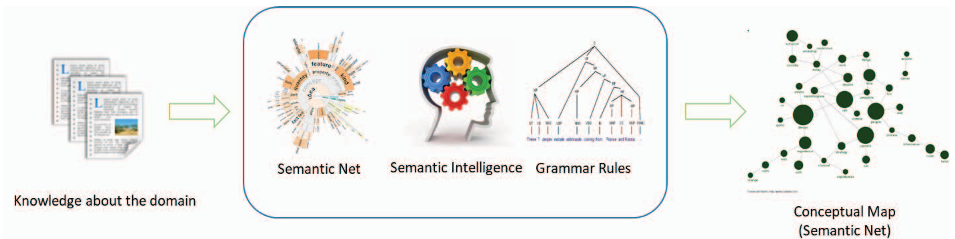 Figure 1: The architecture of the learning process.
Turning Questions into Answers
Once the knowledge is mapped, the Answering System takes over. It uses a structured query understanding module to convert a spoken or typed question into a semantic representation, which is then matched against the Conceptual Map.
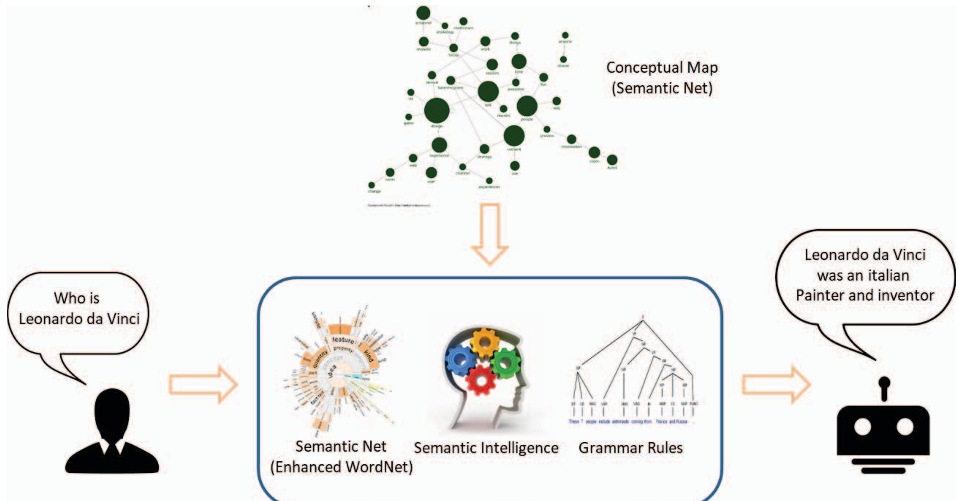 Figure 2: Workflow from user query to spoken answer.
Search and Relevance
The search engine doesn't just look for keywords; it extracts relations. For a query like "Who is Leonardo da Vinci?", it isolates the "is" relation and the "Leonardo" entity, weight-matching them against the stored map to generate a human-like response: "Leonardo da Vinci was an Italian painter."
Experimental Insights
The authors evaluate the system using Recall and Precision. A crucial takeaway from their study is that domain restriction is a feature, not a bug. By narrowing the focus to a specific exhibition, the precision of the semantic relations increases, reducing the "hallucinations" or errors often found in broader AI models.
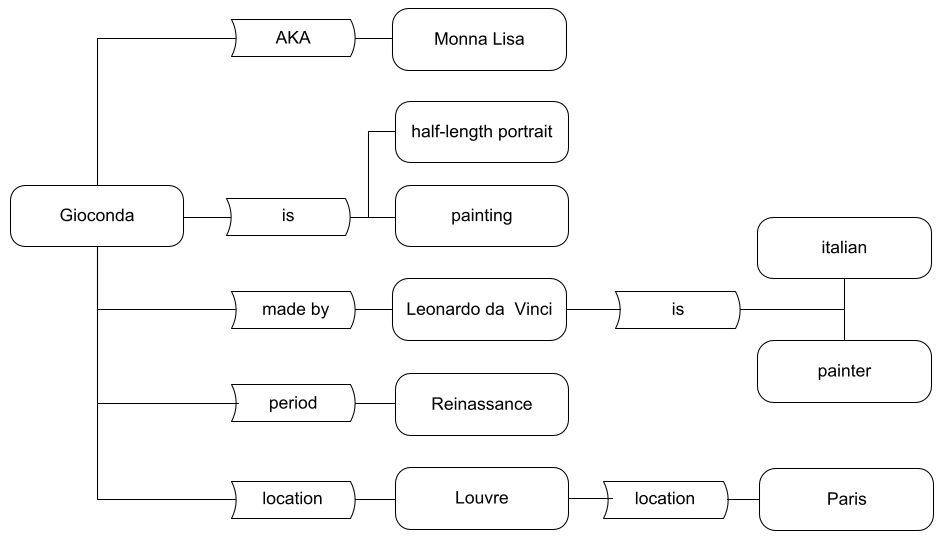 Figure 3: Representation of a domain-specific Conceptual Map for Cultural Heritage.
Future Outlook and Limitations
While the system is robust for domain-specific tasks, its current reliance on manual knowledge base preparation (gathering the initial texts) remains a bottleneck. Future iterations could involve automated web-scraping and real-time integration with speech-to-text APIs like Google Cloud or Amazon Alexa to provide a more seamless hands-free experience for visitors.
Conclusion
This work demonstrates that the transition from a "talking guide" to a "thinking assistant" depends on the strength of the underlying semantic model. By focusing on conceptual mapping rather than just information retrieval, the authors provide a scalable framework for making culture more accessible and interactive.