
MADS/F-Race: Scaling Automated Algorithm Configuration with Adaptive Racing
MADS/F-race: mesh adaptive direct search meets F-race
The paper introduces MADS/F-Race, a hybrid optimization framework for automated algorithm configuration (ACP). It combines Mesh Adaptive Direct Search (MADS) for continuous parameter optimization with F-Race to efficiently manage the stochasticity of algorithm evaluations.
TL;DR
Determining the optimal parameters for complex algorithms is a "stochastic nightmare" due to noise in performance measurements. This paper proposes MADS/F-Race, a hybrid that merges the robust global search of Mesh Adaptive Direct Search (MADS) with the statistical efficiency of F-Race. By adaptively discarding poor configurations early, it finds better settings faster than traditional fixed-evaluation methods.
Background & Positioning
In the world of Algorithm Configuration (ACP), we aim to find parameter settings that generalize well to unseen instances. This work sits at the intersection of continuous optimization and statistical hypothesis testing. While methods like I/F-Race already exist, MADS/F-Race introduces a more structured, mesh-based search space exploration that is particularly robust for non-smooth, black-box landscapes.
The Problem: The Cost of Stochasticity
When evaluating a randomized algorithm, a single run is rarely enough. Most researchers use a "fixed" approach:
- Run configuration exactly times.
- Compute the average.
- Compare with configuration .
The Catch: If is too small, the noise hides the truth. If is too large, you waste weeks of CPU time on configurations that were obviously bad after the first few runs.
Methodology: The MADS/F-Race Hybrid
The core innovation is the replacement of the static "evaluation" step in MADS with an F-Race.
1. Mesh Adaptive Direct Search (MADS)
MADS operates on a discretization of the search space called a mesh. It alternates between:
- Search Step: Randomly sampling points on the mesh.
- Poll Step: Systematic search around the current "incumbent" (best-known point).
2. The Statistical Race
Instead of running every point times, all points in the current MADS iteration enter a race. After each instance evaluation, the Friedman test (a non-parametric family-wise test) checks for significant differences. If a configuration is statistically "slower" or "worse" than the leader, it is eliminated immediately.
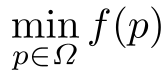 The optimization target: minimizing the expected cost over the parameter space .
Experimental Insights: When does it shine?
The authors tested the hybrid on Ant Colony Optimization (ACO) and Local Search algorithms for TSP and QAP.
Key Result: Robustness over Tuning
One might argue: "Why not just tune the number of evaluations () for MADS(fixed)?" The authors proved through Leave-One-Out Cross-Validation that even if you tune on 71 domains, it may still fail on the 72nd. MADS/F-Race, however, requires no such tuning and consistently delivers SOTA-level performance.
The "Stochasticity Factor"
The research revealed a crucial insight: MADS/F-Race performs best when the Variation Coefficient (the ratio of standard deviation to mean) of the problem is high. In "flat" landscapes where most parameters yield similar results, the advantage of racing is diminished, but in "rugged" landscapes, it is a game-changer.
 Figure 1: Comparison of variation coefficients across problem types—higher variability correlates with a stronger MADS/F-Race performance.
Critical Analysis & Conclusion
Takeaway
MADS/F-Race is a "plug-and-play" configurator. It eliminates the need for the user to guess how many times to re-run an algorithm to get a stable mean.
Limitations
- Domain Restriction: Currently focuses on numerical/continuous parameters.
- Evaluation Re-use: The current implementation does not re-use previous evaluations across different MADS iterations, which could be a source of further optimization.
Final Thought
As AI systems become more complex and their "energy cost" for evaluation rises, adaptive statistical methods like MADS/F-Race will be essential to ensure we aren't burning GPU cycles on configurations that are statistically destined to fail.