
Magic Mantle: Reclaiming Privacy via Social VPNs and Federated Authentication
Magic mantle using social VPNs against centralized social networking services
This paper introduces Magic Mantle, a decentralized social networking service (DSNS) that leverages Social VPNs as a privacy layer over centralized SNSs. By extending the open-source SoftEther VPN, the system allows users to securely share private data (via NFS, chat, etc.) within trusted small groups while using existing platforms like Facebook for public interactions.
TL;DR
Magic Mantle is a hybrid decentralized social network (DSNS) that acts as a "privacy cloak" over centralized services like Facebook or Twitter. By utilizing a Social VPN (based on an extended SoftEther VPN), it allows friends to build a private, encrypted "LAN over the Internet" for sharing files and services with Zero Sign-On convenience, keeping sensitive data entirely away from centralized corporate servers.
Context: The Decentralization Paradox
We love the convenience of centralized SNSs for finding long-lost friends, but we hate the privacy violations and the loss of data sovereignty. Purely decentralized networks (DSNS) often fail because they are hard to use and lack the massive user base needed for discovery.
The authors of "Magic Mantle" recognize that we don't need to replace Facebook—we need to augment it. Their insight is to use centralized SNSs for what they are good at (public identity and discovery) while moving private interaction to a decentralized, encrypted overlay: the Social VPN.
Methodology: Bridging the Web and the Network Layer
The core of Magic Mantle is a clever integration of three distinct layers:
- Identity Layer: Uses OAuth from Facebook/Google to prove who you are.
- Network Layer: Uses SoftEther VPN to create a Layer 2/3 tunnel between friends.
- Application Layer: Uses a custom Apache module to enable "Zero Sign-On," where the application knows who you are simply by your VPN-assigned domain name (e.g.,
bob.vpn1).
The Authentication Flow
To solve the "password fatigue" of traditional VPNs, the authors developed a federated flow:
- User logs into a "Login App" (a hub-managed portal) via Facebook.
- The portal generates a short-lived X.509 certificate.
- A browser add-on automatically configures the VPN client with this certificate.
- Result: One click, and the user is inside a private, encrypted circle of trust.
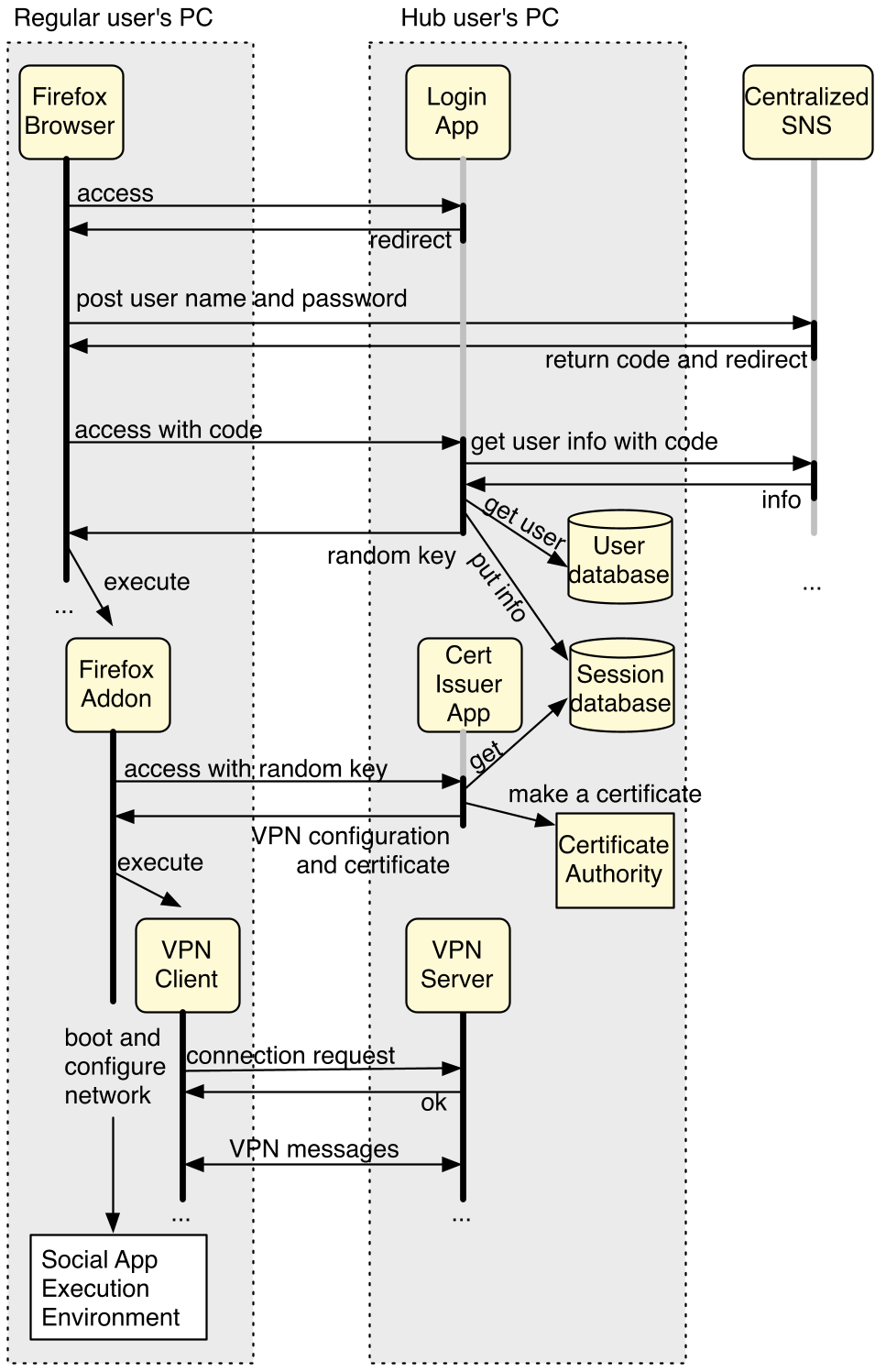 Figure 1: The multi-phase authentication process bridging SNS identity to VPN connectivity.
The "Zero Sign-On" Secret Sauce
In a typical private network, once you're "in," you still have to log into the internal Wiki or File Server. Magic Mantle eliminates this. When the DHCP server assigns an IP, it registers a DNS record like pc1.alice.vpn1. The custom Apache module on the server side performs a reverse DNS lookup on incoming requests. If the IP matches alice.vpn1, the application automatically populates the REMOTE_USER variable, logging Alice in instantly.
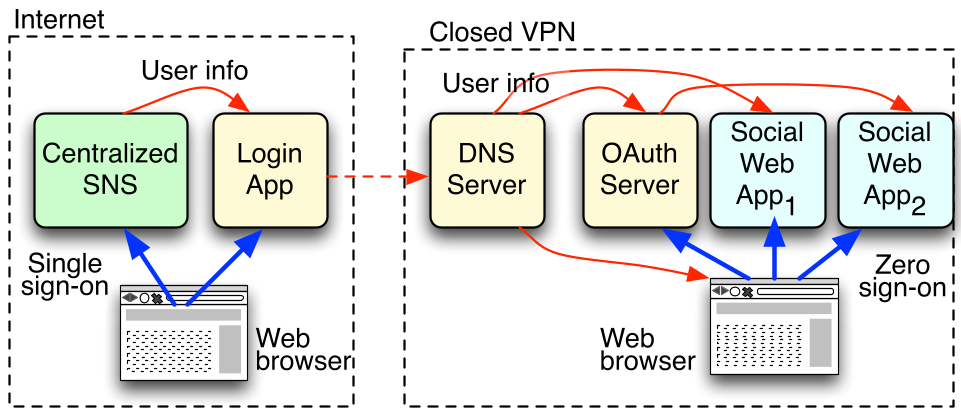 Figure 2: Realizing Zero Sign-On for internal Web applications via DNS mapping.
Experiments: Performance in the Real World
Testing over Fiber-to-the-Home (FTTH) lines in Japan, the system demonstrated that the "Hub" model is highly viable:
- Throughput: Achieved ~40 Mbps for TCP traffic.
- Latency: Round-trip times in the VPN were only slightly higher than base Internet latency (~38ms vs ~20ms).
- Usability: High-bandwidth tasks like NFS file sharing and real-time interactive games (Frozen Bubble) performed well, proving that a standard home PC has enough power to act as a "Social Hub" for hundreds of friends.
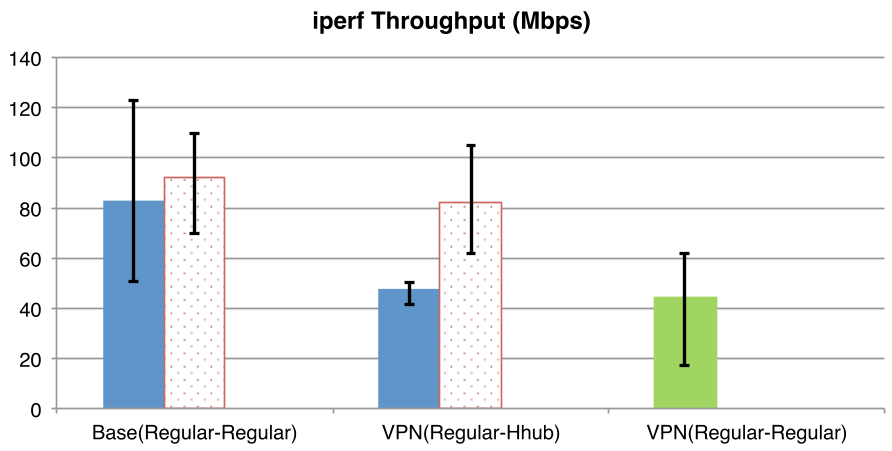 Figure 3: TCP Throughput comparison showing the efficiency of the SoftEther-based relay.
Critical Analysis & Takeaways
Why it works: Most decentralized projects try to reinvent the wheel (new protocols, new apps). Magic Mantle succeeds by reusing legacy protocols (NFS, SMB, HTTP) and making them "social" through automated VPN management.
Limitations:
- Trust in the Hub: The "Hub User" (the group leader) can technically see all packets passing through the virtual hub. While the authors suggest using TLS/IPsec inside the tunnel, it puts a heavy trust burden on the community leader.
- Relay Bottleneck: Currently, traffic between two regular users must pass through the Hub, which could limit performance if the Hub has a slow upload speed.
Conclusion
Magic Mantle provides a pragmatic blueprint for the future of social networking. By decoupling "social discovery" from "data storage," it offers a way to enjoy modern social features while keeping private life strictly on personal hardware. For developers, the takeaway is clear: Network-level decentralization is often more powerful than App-level decentralization.