
MagicSeg is an open-world semantic segmentation pipeline that leverages Diffusion Models, LLMs, and Grounded-SAM to automatically generate high-fidelity synthetic datasets. By introducing counterfactual image pairs and a category random sampling strategy, it achieves SOTA results on PASCAL VOC (62.9%), PASCAL Context (26.7%), and COCO (40.2%) under open-vocabulary settings.
TL;DR
MagicSeg is a revolutionary pipeline that solves the "data starvation" problem in open-world semantic segmentation. Instead of manual labeling, it uses LLMs to imagine scenes, Diffusion Models to paint them, and Interactive Segmentors (SAM) to label them. Its secret sauce? Counterfactual pairs—generating the same scene without the target object—which teaches the model exactly what to look for through contrastive learning.
Background & Motivation
Current open-world segmentation models (like CLIP-based architectures) are masters of recognition but amateurs at localization. They know what a "majestic brown owl" looks like, but pinpointing every pixel of its wing requires fine-grained masks that don't exist in massive image-text datasets like LAION.
The authors identify a critical gap:
- Manual Annotation is too slow for the "long-tail" of open-world categories.
- GAN-based Synthesis lacks diversity.
- Diffusion-based pseudo-labels (from attention masks) are often too noisy.
MagicSeg’s Insight: If we can generate a scene with an object and the exact same scene without it, we can teach a model to segment by understanding the difference between "something" and "nothing."
Methodology: The Generative Quadruplet
The MagicSeg pipeline operates in two main stages: Dataset Generation and Strategic Training.
1. Counterfactual Generation
The system starts with a vocabulary (e.g., 1205 classes from LVIS). It uses ChatGPT to craft rich, descriptive prompts. Then, it generates two images:
- Positive Image (): Contains the target object (e.g., a school bus).
- Counterfactual Image (): The same scene, but the prompt "school bus" is replaced by "nothing."
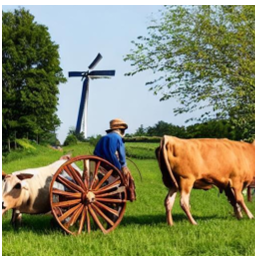 Fig 1: The generation pipeline utilizing ChatGPT, Stable Diffusion, Grounding DINO, and SAM.
By using Grounding DINO to detect the object and SAM to refine the mask, the authors ensure the synthetic labels are far more precise than raw diffusion attention maps.
2. Category Random Sampling
When training on 1200+ categories, using the full vocabulary for every image is computationally expensive and leads to gradient imbalance (too many "negative" signals). MagicSeg introduces Category Random Sampling, selecting only 100 categories (including the ground truth) for each training iteration. This maintains focus while exposing the model to a wide variety of "negatives" over time.
Experiments & Results
MagicSeg was evaluated across four major benchmarks: PASCAL VOC, PASCAL Context, COCO, and LVIS.
| Metric | PASCAL VOC | COCO | LVIS | | :--- | :---: | :---: | :---: | | Baseline (Grounded-SAM) | 61.8% | - | 0.5% | | MagicSeg (Ours) | 62.9% | 40.2% | 4.9% |
The jump in LVIS (a 1200+ class dataset) is particularly impressive, showing nearly a 10x improvement over the zero-shot baseline in complex scenarios.
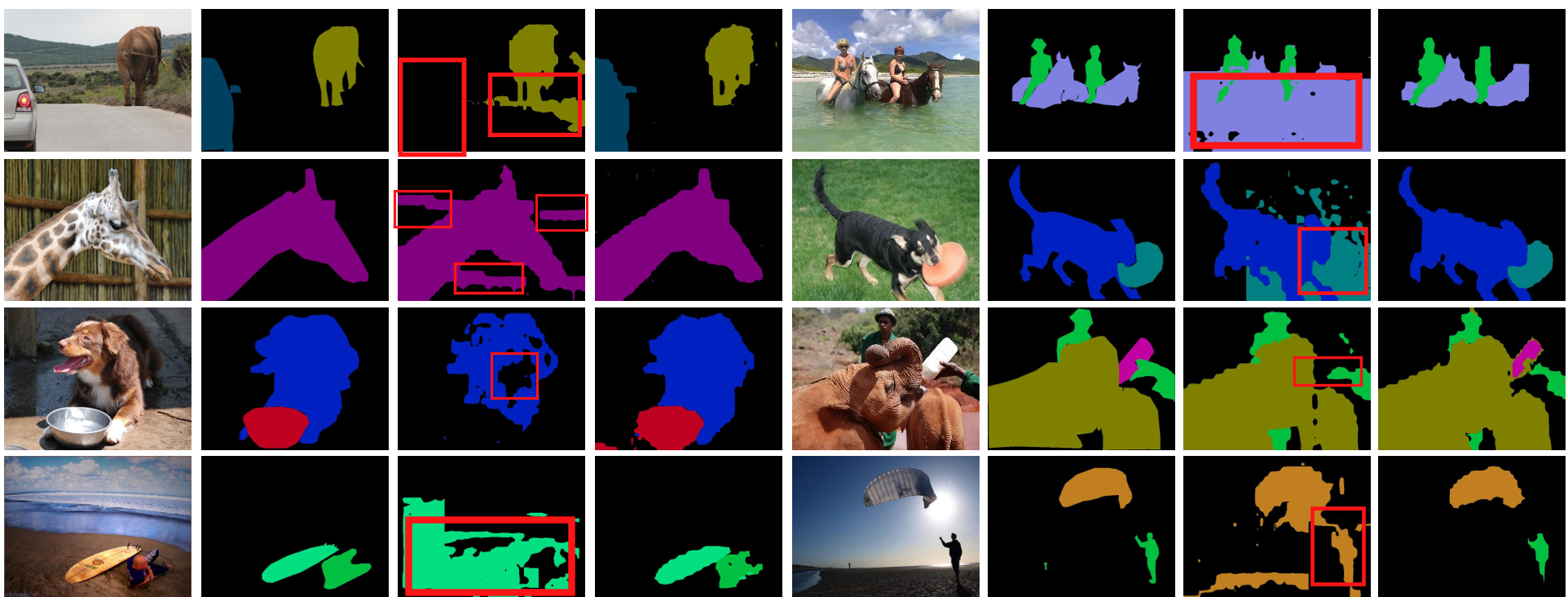 Fig 2: MagicSeg vs. GroupViT. Note the superior detail on small objects and complex boundaries.
Critical Insight: Why Counterfactuals Matter?
The ablation studies provide a fascinating look at the Counterfactual Contrastive Loss (). When using simple prompts like "a photo of a bus," counterfactual training actually hurts performance. Why? Because "a photo of nothing" is just a blank/noisy void.
However, with MagicSeg's rich prompts (describing complex backgrounds), the "nothing" image preserves the context (trees, road, sky). This forces the model to learn that the segmentation mask must specifically cover the delta between the two images, effectively denoising the pseudo-masks produced by SAM.
Conclusion & Future Outlook
MagicSeg successfully bridges the gap between unsupervised open-world learning and fully supervised segmentation. It treats the world as a "controllable laboratory" where data can be synthesized on demand.
Limitations:
- Hidden Objects: Synthetic images may contain un-vocalized objects that aren't masked (e.g., the model generates a dog, but there's also a tree and a car that aren't in the prompt).
- Generation Quality: The system is only as good as Stable Diffusion's ability to render complex geometries.
Overall, MagicSeg proves that for the next generation of AI perception, the ability to simulate is just as important as the ability to observe.