
Majority Dynamics: How Social Network Geometry Shapes the "Wisdom of Crowds"
Majority dynamics and aggregation of information in social networks
The paper investigates the "Majority Dynamics" model in social networks, where individuals iteratively update their opinions based on their neighbors' preferences. It proves that efficient information aggregation (converging to a correct consensus) occurs if the size of the smallest "social type" in the network grows to infinity, as demonstrated by applying sharp threshold theorems for non-Boolean functions.
TL;DR
Can social interaction actually make us worse at making decisions? This paper explores Majority Dynamics, where voters change their minds to match their friends. The researchers discover that "Information Aggregation"—the ability of a group to pick the "better" of two options—depends not just on the number of voters, but on the symmetry of the social network. If a small, obscure cluster of people has too much relative influence, the group can be steered into a permanent, wrong consensus.
Background: The Condorcet Problem
In 1785, the Marquis de Condorcet proved that if every individual has a chance of being right, a group majority will eventually be right with nearly certainty as the group grows. But there’s a catch: Condorcet assumed people vote independently. In the real world, we talk, we argue, and we peer-pressure each other. This paper asks: Does this social "echo chamber" effect break the wisdom of crowds?
The Motivation: When Influence Becomes a Bottleneck
The authors’ core intuition is that social networks aren't just sets of connections; they are geometric structures. If a network is highly symmetric (like a grid or a complete graph), every person's influence is naturally limited. However, if a network has "special" nodes—voters who occupy unique positions—they might exert a disproportionate influence that prevents the group from aggregating the signals of the majority effectively.
Methodology: Social Types and Sharp Thresholds
The authors categorize voters into Social Types (equivalence classes based on graph automorphisms). If two voters are of the same type, they "look" the same to the rest of the network.
The Dynamics
The process follows a simple iterative rule:
- Initiation: Everyone starts with a noisy signal of the "true" best alternative.
- Interaction: In each round, every voter adopts the plurality opinion of their neighbors:

- Voting: After rounds, a population-wide plurality vote is held.
The Insight
The authors use heavy-duty mathematical machinery—specifically Fourier Analysis of Boolean Functions—to prove that as long as every social "role" is filled by many different people (i.e., the smallest social type size is large), the group will almost certainly reach the correct conclusion.
Experimental Insights: Where Aggregation Fails
The most striking part of the paper is the "Lack of Aggregation" proof. They construct a graph (The "Failure Case") where a small cluster of voters () is connected to everyone in a large group (). If this small cluster happens to start with the wrong opinion (which happens with a constant probability), they can "flip" the larger group before has a chance to aggregate its own correct signal.
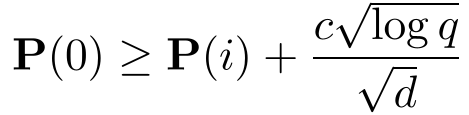
Key Results on Expander Graphs: In "Expander" graphs—networks that are very well-connected and lack bottlenecks—the authors find that the dynamics are even more powerful. If the initial bias toward the truth is high enough, the population doesn't just reach a majority; it reaches unanimity.
Critical Analysis & Future Outlook
Takeaway
For a society to be "wise," it’s not enough to have many people; you must have a network where influence is distributed across many people of the same "type." Massive social hierarchies or "bottleneck" influencers are mathematically proven to be risks to the accuracy of the collective.
Limitations
The model assumes fairness (the system doesn't prefer one answer over another) and monotony (having more supporters always helps). In the real world of social media, algorithms are often neither fair nor monotonic—they can amplify specific "wrong" signals based on engagement rather than truth.
Future Work
This research opens the door to studying "Robustness" in social networks. How many "malicious" agents would it take to break a transitive graph? Could we design digital social networks that maximize the probability of efficient information aggregation by encouraging specific structural symmetries?
Senior Editor's Note: This paper is a masterclass in applying discrete mathematics to sociology, proving that the "structure" of our conversations is just as important as the "content" of our thoughts.