
Beyond Silicon Valley: The Hidden Reality of Necessity-Driven Entrepreneurship in Detroit
10905_Making a Living My Way Necessity-driven Entrepreneurship in Resource-Constrained Communities.
This research investigates "necessity-driven entrepreneurship" in Detroit, a resource-constrained urban context in the US. By interviewing 26 micro-entrepreneurs, the authors reveal how social technologies are adapted to prioritize community, privacy, and safety over the high-growth, transparent ideals of Silicon Valley.
TL;DR
Entrepreneurship isn't always about venture capital and "disrupting" industries. For many in resource-constrained communities like Detroit, it’s a survival mechanism. This paper explores how "necessity-driven" micro-entrepreneurs use—and often reject—mainstream social technologies to maintain professional agency, safety, and community ties in an unstable economy.
Academic Positioning: This work bridges the gap between "Global South" ICTD (Information and Communication Technologies for Development) research and Western-centric CSCW studies, proving that necessity-driven dynamics are alive and well in the "Global North."
The "Two Cities" Problem: Motivation and Insight
In the tech world, "entrepreneur" is a buzzword for a startup founder. But in Detroit, where the population has plummeted by 63% since the 1940s, entrepreneurship is the response to a "two cities" reality. One city sees gentrified growth; the other—the majority—faces universal unemployment and food deserts.
The authors argue that the tech industry has a profound blind spot. We design tools for "opportunity-driven" entrepreneurs (who have capital and choose to take risks). We ignore "necessity-driven" entrepreneurs (who are pushed into work by life disruptions).
The Core Insight: Necessity-driven entrepreneurs don't value "risk-taking" or "transparency." They value stability, privacy, and safety.
Methodology: Listening to Detroit
The research team interviewed 26 micro-entrepreneurs (businesses with <5 people) and observed events across Detroit. The demographic was 80%+ Black, reflecting the city’s composition and the systemic barriers these individuals face.
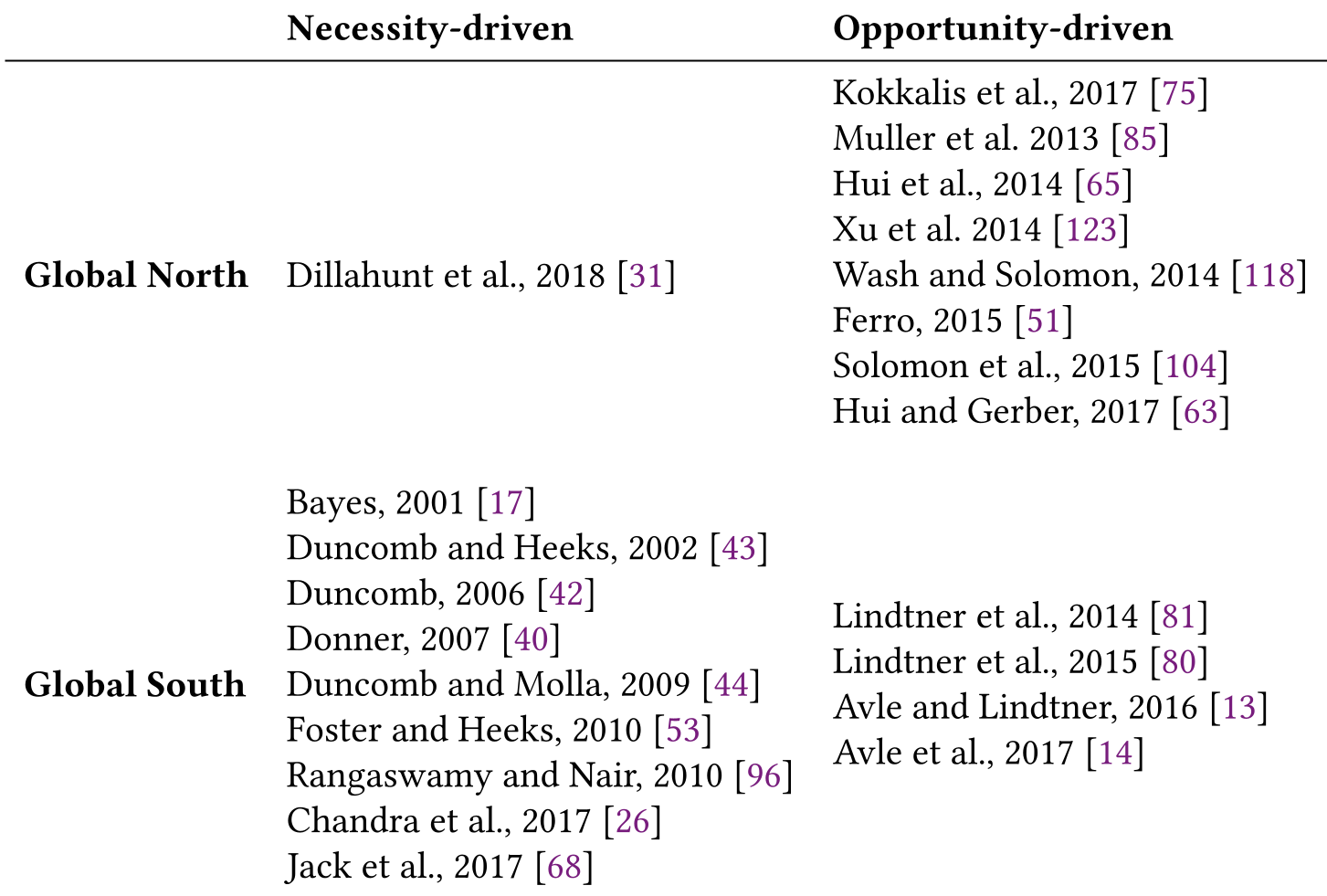 Table 1: The paper's framework for categorizing entrepreneurship research.
Key Findings: Agency Over Algorithms
1. Safety > Convenience: The Rejection of Uber
While Uber markets itself as "entrepreneurship on training wheels," Detroit entrepreneurs often found it stripped them of agency.
- Identity: One participant, an educator, refused to drive for Uber because "I’m not a driver; I teach history."
- Safety: Female entrepreneurs avoided ride-hailing because they couldn't pre-screen customers. Instead, they used Facebook Groups with 80,000+ members where they could "vibe check" a client via Messenger before ever meeting in person.
2. Privacy > Self-Promotion
Silicon Valley demands "transparency"—telling your life story for the brand. Detroit entrepreneurs found this intrusive and dangerous. Many kept their business Instagrams private or used fake names online. Why? Because when your business is "informal" (unlicensed catering or home salons), total transparency is a legal risk.
3. Community > Competition
Unlike the winner-take-all mindset of startups, these micro-entrepreneurs would sacrifice profit for community well-being.
- Example: One stylist spent 7 hours on a client's hair but only charged $45 because she knew the girl couldn't afford more.
- The Failure of Crowdfunding: Participants noted that Kickstarter/GoFundMe fails in their community because "plain African Americans don’t have a network of people with disposable income."
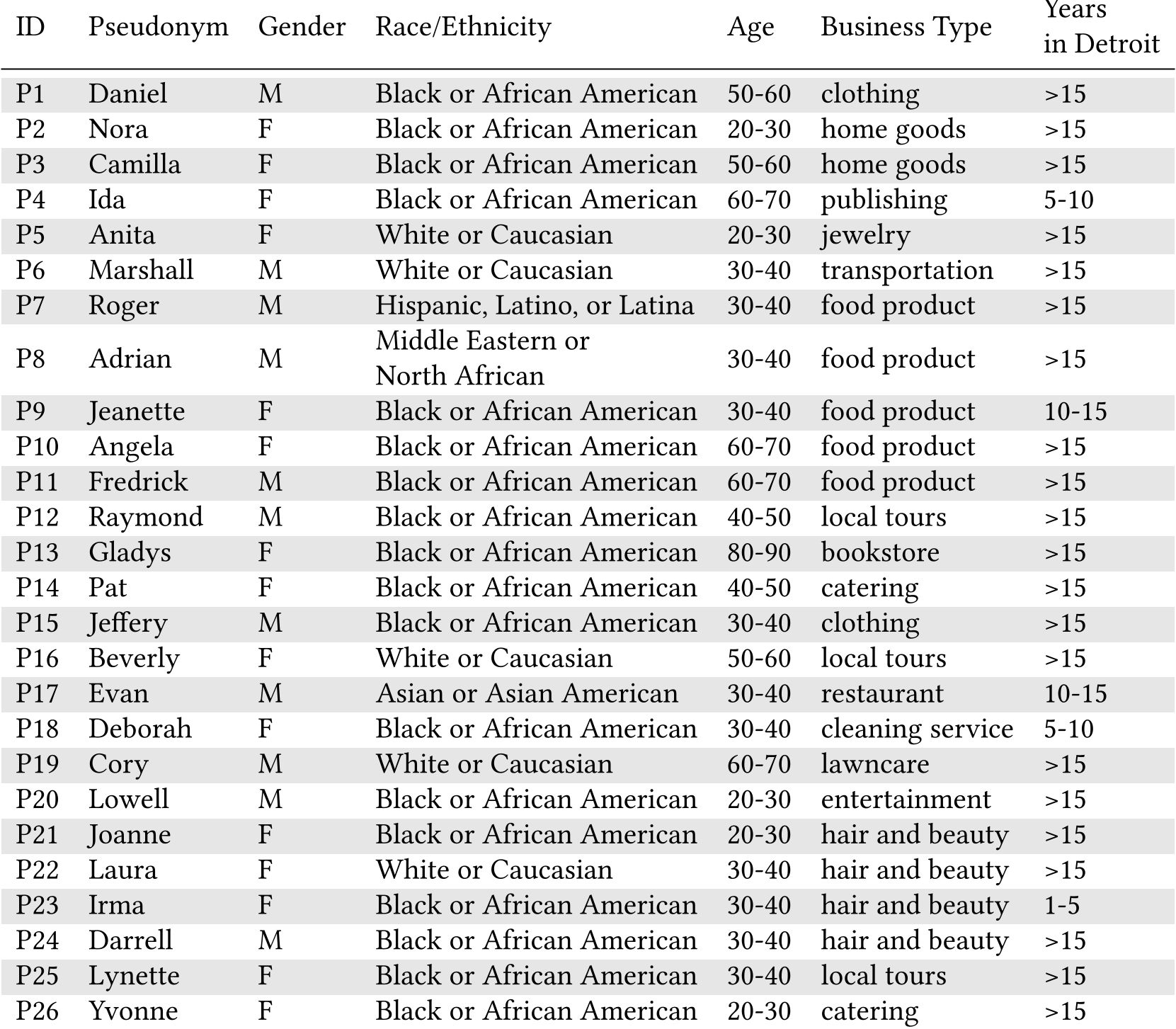 Table 2: The diverse array of micro-businesses studied, from local tours to lawncare.
Critical Insight: Designing for Professional Agency
The paper concludes with a roadmap for more inclusive tech design. To support marginalized workers, technologies must:
- Prioritize "Collaborative Privacy": Allow users to control exactly who sees what, rather than forcing public profiles.
- Enable Independence: Shift from "gig worker" models (where the platform owns the customer) to "entrepreneurship" models (where the worker builds their own brand and keeps their contacts).
- Facilitate the Offline-Online Transition: Trust in resource-constrained communities is built in-person. Tech should serve as a bridge to manage those relationships, not a replacement for them.
Summary Takeaway
This paper is a call to action for HCI and CSCW researchers to stop designing for the 1% of founders and start designing for the "necessity-driven" workers who are the backbone of urban resilience. Professional agency is not just about having a job; it’s about having the power to say how you work and who you work for in a world that often gives you very few choices.