
Unraveling the Facebook Habit: Motives and Addiction Among Malaysian Youth
Malaysian Facebookers: Motives and addictive behaviours unraveled
This study investigates the usage patterns, underlying motives, and addictive behaviors associated with Facebook among Malaysian university students. Utilizing a mixed-method approach, it identifies five primary usage motives and four psychological symptoms of addiction, positioning Malaysian students as some of the most active Facebook users globally.
Executive Summary
TL;DR: In an era where digital presence is synonymous with social existence, Malaysian students have emerged as some of the most "connected" individuals on the planet. This paper explores why they log on and what happens when they can't stop. Leveraging Uses and Gratifications Theory and Brown’s Addiction Framework, the study identifies that while students seek social capital and psychological relief, many exhibit textbook symptoms of behavioral addiction, specifically Salience and Withdrawal.
Context: This work is a seminal regional study that moves beyond Western-centric data, confirming that the "Facebook Addiction Disorder" (FAD) is a cross-cultural phenomenon driven by a universal human need for peer validation.
Problem & Motivation: The "Most Connected" Nation
By 2012, Malaysians were already reported to have the highest number of Facebook friends globally (averaging 233 at the time). Yet, the psychological "why" remained unaddressed. Prior work often treated social media as a mere communication tool, but the author intuited a deeper, potentially darker shift: social media was becoming an "over-attachment," or a behavioral addiction.
The challenge lay in distinguishing high engagement (being a "power user") from true addiction, which involves negative psychological consequences in offline life.
Methodology: A Dual-Lens Approach
The author utilized a two-step process to ensure the results were grounded in actual user experience:
- Qualitative Focus Groups: To identify themes like "feeling bored without access."
- Quantitative Factor Analysis: To statistically group these behaviors.
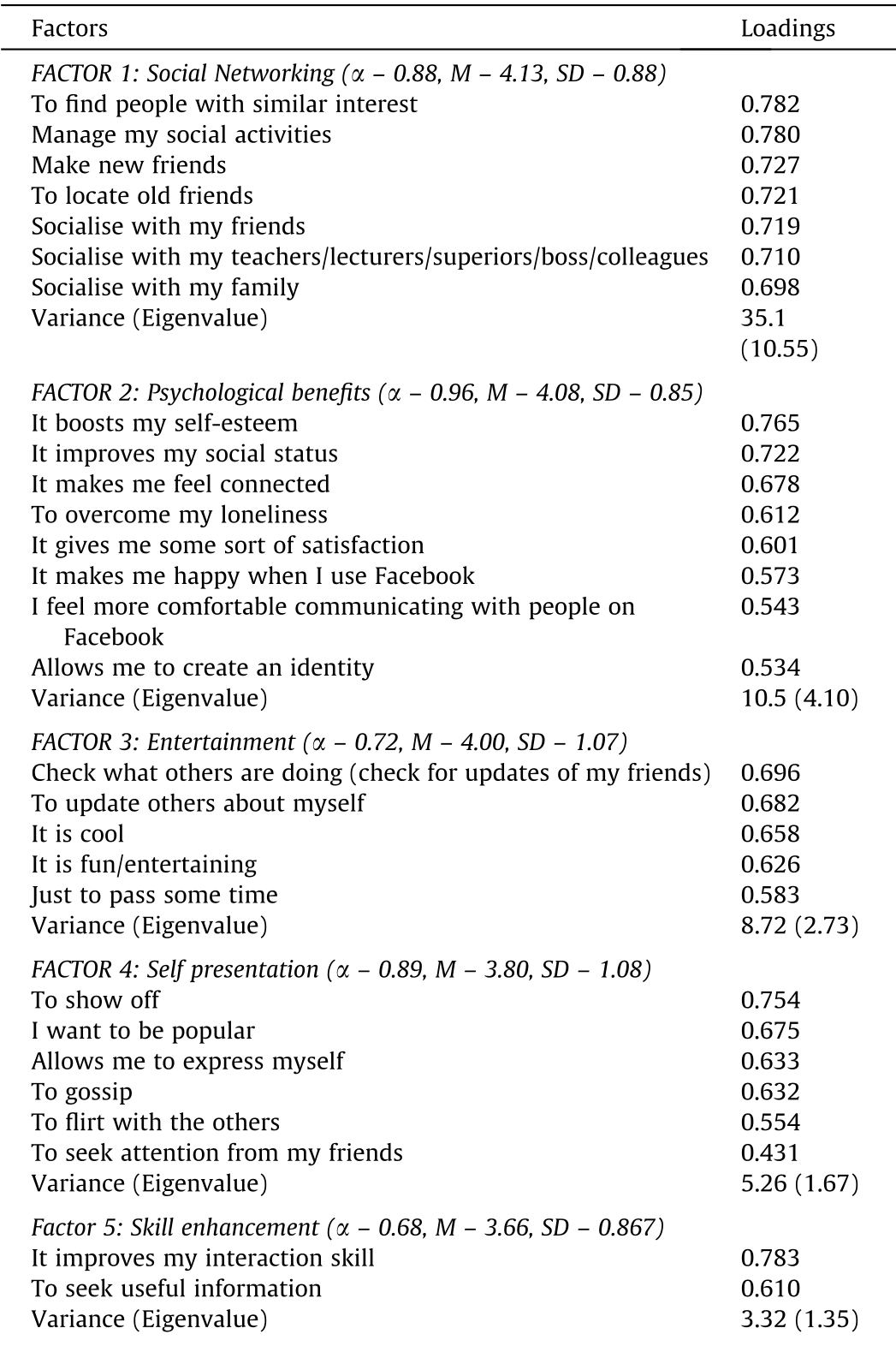 The study categorized motives into five distinct factors, with Social Networking and Psychological Benefits leading the charge.
The Core Insight: Why We Post
The study identified five "Gravitational Pulls" of Facebook:
- Social Networking: Maintaining existing ties and locating old ones. This was the strongest factor (35.1% variance).
- Psychological Benefits: Overcoming loneliness and boosting self-esteem through "likes" and feedback.
- Entertainment: The "passive observer" effect—scrolling to pass time.
- Self-Presentation: The quest for popularity and attention.
- Skill Enhancement: Learning information or improving interaction skills (particularly for shy individuals).
Results: The Symptoms of "Logging On"
The findings on addiction were striking. While the students often denied being addicted, the data told a different story.
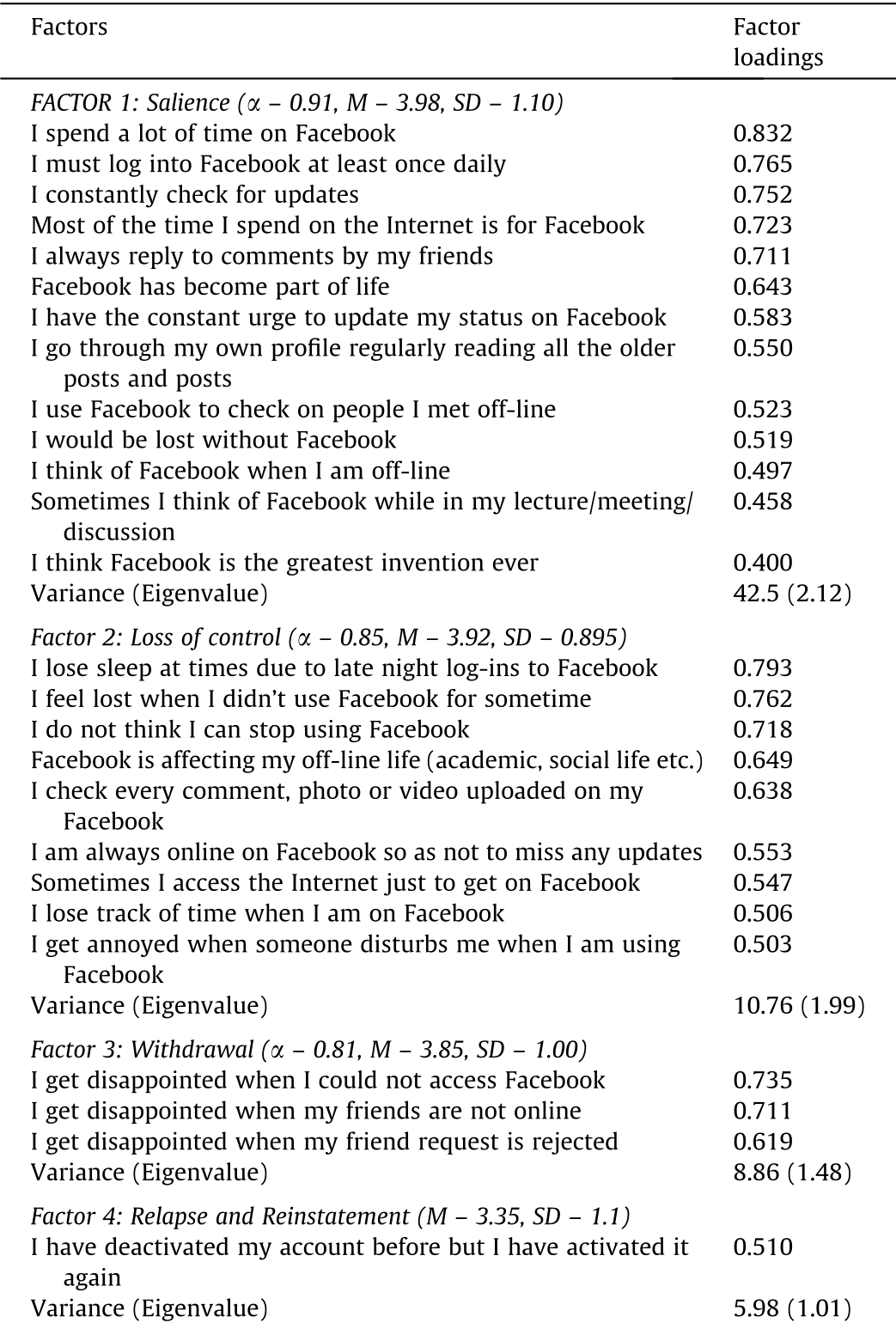
The Four Pillars of Facebook Addiction observed were:
- Salience: Facebook dominates the user's thoughts. Students admitted to thinking about their next status update even while in lectures.
- Loss of Control: An inability to limit time, leading to lost sleep and neglected offline responsibilities.
- Withdrawal: Feeling "lost," "anxious," or "disappointed" when access is denied or friend requests are rejected.
- Relapse: The cycle of deactivating an account only to reactivate it shortly after, realizing a perceived inability to live without the platform.
Critical Analysis & Conclusion
The "High Average" Friend Count: The Malaysian average of 612 friends is significantly higher than UK (297) or US academic samples. The author suggests this is a "measure of popularity" particularly valued in Asian cultures where overt self-expression is traditionally more reserved, making the digital "wall" a safer space for identity construction.
Takeaway: The study concludes that Facebook has evolved from a tool into a psychological environment. While it builds "Social Capital" (Social Networking), it also creates a feedback loop where self-esteem becomes dependent on digital validation, leading to behavioral patterns indistinguishable from other technological addictions.
Limitations: The study is limited to students (ages 17-30). Future research should investigate if "Digital Immigrants" (older users) exhibit the same withdrawal symptoms or if they possess higher self-regulation.
Editor’s Note: This paper remains a cornerstone for understanding the transition of social media from a utility to a central psychological fixture in Southeast Asia.