
DoEatWell: Bridging the Gap Between m-Health and Clinical Malnutrition Assessment
Malnutrition Risk Assessment in Frail Older Adults using m-Health and Machine Learning
This paper introduces a Decision Support System (DSS) leveraging m-Health (DoEatWell application) and Machine Learning to assess malnutrition risk in frail older adults. By integrating dietary intake data with body composition metrics, the system achieves a median accuracy of 94% and a recall of 92% in predicting nutrition status.
TL;DR
Malnutrition is a "silent killer" in nursing homes, often linked to cognitive decline and physical frailty. This paper presents a Decision Support System (DSS) that transforms a mobile meal-tracking app into a clinical-grade diagnostic tool. By combining food intake monitoring with bioimpedance scales and cost-sensitive Machine Learning, the researchers achieved a 94% accuracy in identifying seniors at risk of malnutrition.
Context: The Limitations of Periodic Screening
In geriatric care, the Mini Nutritional Assessment (MNA) is the gold standard. However, it is essentially a "snapshot"—a questionnaire filled out every few months. For a frail individual, nutritional status can deteriorate much faster than the screening cycle.
The authors identify three main gaps in current tech-driven nutrition solutions:
- Complexity: Most AI tools use computer vision for portion estimation, which is often inaccurate and burdensome for elderly users.
- Isolation: Tools focus on "what was eaten" but ignore "how the body changed" (anthropometrics).
- Imbalance: In clinical datasets, most subjects are "Normal," making it hard for standard AI to learn the rare but critical "At Risk" patterns.
Methodology: Engineering Nutritional Intuition
The researchers deployed the DoEatWell (DEW) app in an Italian Long-Term Care (LTC) facility. Rather than complex image processing, they used a simplified survey (0x, 0.5x, 1x, 2x portions) mapped to a medical food database.
1. Feature Engineering
They didn't just track calories; they tracked behavior:
- Meal Completeness: Does the user skip sides or desserts? (Indicator of anorexia or hyporexia).
- Variability Index: Does the user repeat the same choices daily? (Indicator of apathy or sensory loss).
- Fat Mass Index (FMI): Derived from bioimpedance scales, providing a physiological ground truth.
2. Handling Imbalanced Data
Because "Malnutrition Risk" cases are fewer than "Normal" cases, the team used Cost-Sensitive Learning. They assigned a 3x higher penalty for "False Negatives" (failing to catch a subject at risk) than for "False Positives."
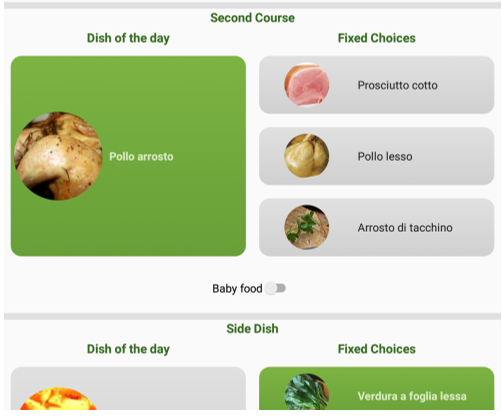 Figure 1: The DoEatWell survey interface designed for simplicity and nursing home workflow.
Experimental Results: The "Bioimpedance" Necessity
The study compared two scenarios: using nutrition data alone vs. combining it with body composition data.
- The Findings: Accuracy plummeted from 94% (Combined) to 74-78% (Nutrition Only).
- Insight: You cannot accurately predict malnutrition risk just by watching what a person eats; you must see how their body reacts to that intake.
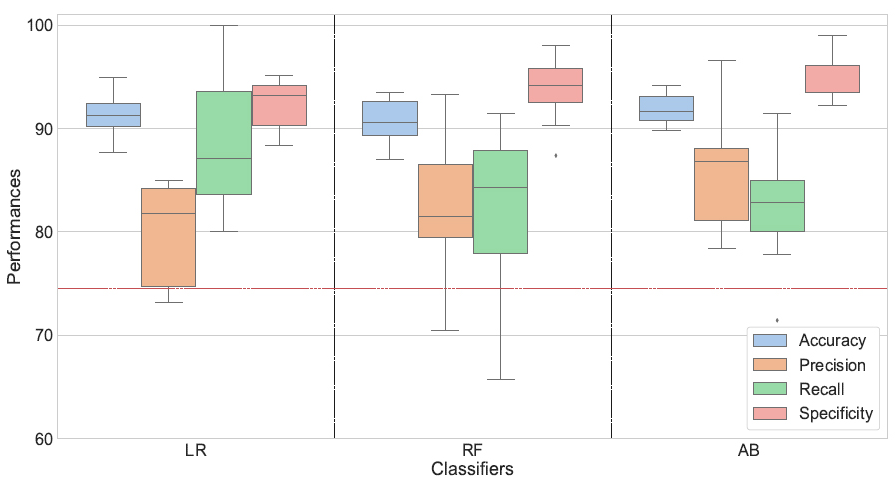 Figure 2: Performance metrics showing the superiority of Cost-Sensitive models in Recall (identifying risk).
Critical Analysis & Takeaways
The core strength of this work is its clinical grounding. By using MNA as the "Ground Truth" for their ML models, the authors ensured that the AI speaks the same language as doctors.
Limitations:
- The system still relies on users or caregivers being able to stand on a bioimpedance scale. For the most frail adults (bedridden), this remains a barrier.
- The sample size (T1, T2, T3 trials) was affected by COVID-19, leading to some data gaps.
Future Outlook: The takeaway for the industry is clear: m-Health is not just about apps; it's about ecosystems. The fusion of behavioral data (app logs) and physiological data (IoT scales) is what transforms a simple tracker into a life-saving medical device. Future iterations incorporating sleep and physical activity sensors could offer a 360-degree view of geriatric health.
Conclusion
This research moves us closer to a "Proactive Care" model, where a nursing home's DSS can flag a resident for medical intervention weeks before a human practitioner might notice the physical signs of decline.