
Fortifying Healthcare Data: A Machine Learning Approach to Advanced Malware Detection
Malware Detection for Healthcare Data Security
This paper introduces an advanced malware detection framework tailored for the healthcare industry using dynamic feature analysis and machine learning. By extracting Windows API call sequences and applying Class-wise Document Frequency (DCFS) for feature refinement, the authors achieved a peak classification accuracy of 99.1% using a Support Vector Machine (SVM).
TL;DR
The healthcare industry is under a state of digital siege, with data breaches increasing by over 125% in the last five years. This paper presents a robust defense mechanism that moves beyond "dead" signature-based detection. By leveraging dynamic Windows API call analysis and machine learning, the researchers achieved a 99.1% detection accuracy, providing a scalable solution to protect sensitive medical records from sophisticated cyber-threats.
The "Antivirus is Dead" Reality
In the world of cybersecurity, we are witnessing a paradigm shift. As Brian Dye (Symantec) famously noted, signature-based solutions are no longer effective against modern malware. Attackers now use Obfuscation and Remote Access Tools (RATs) to change the "fingerprint" of malware without altering its malicious intent.
For the healthcare sector, where a single breach costs an average of $2.2 million, this failure is catastrophic. The core scientific challenge is: How do we detect a threat we have never seen before?
Methodology: The Power of Dynamic Behavior
The authors argue that while malware can change its appearance (Static features), it cannot easily hide what it does (Dynamic features).
1. The Sandbox Environment
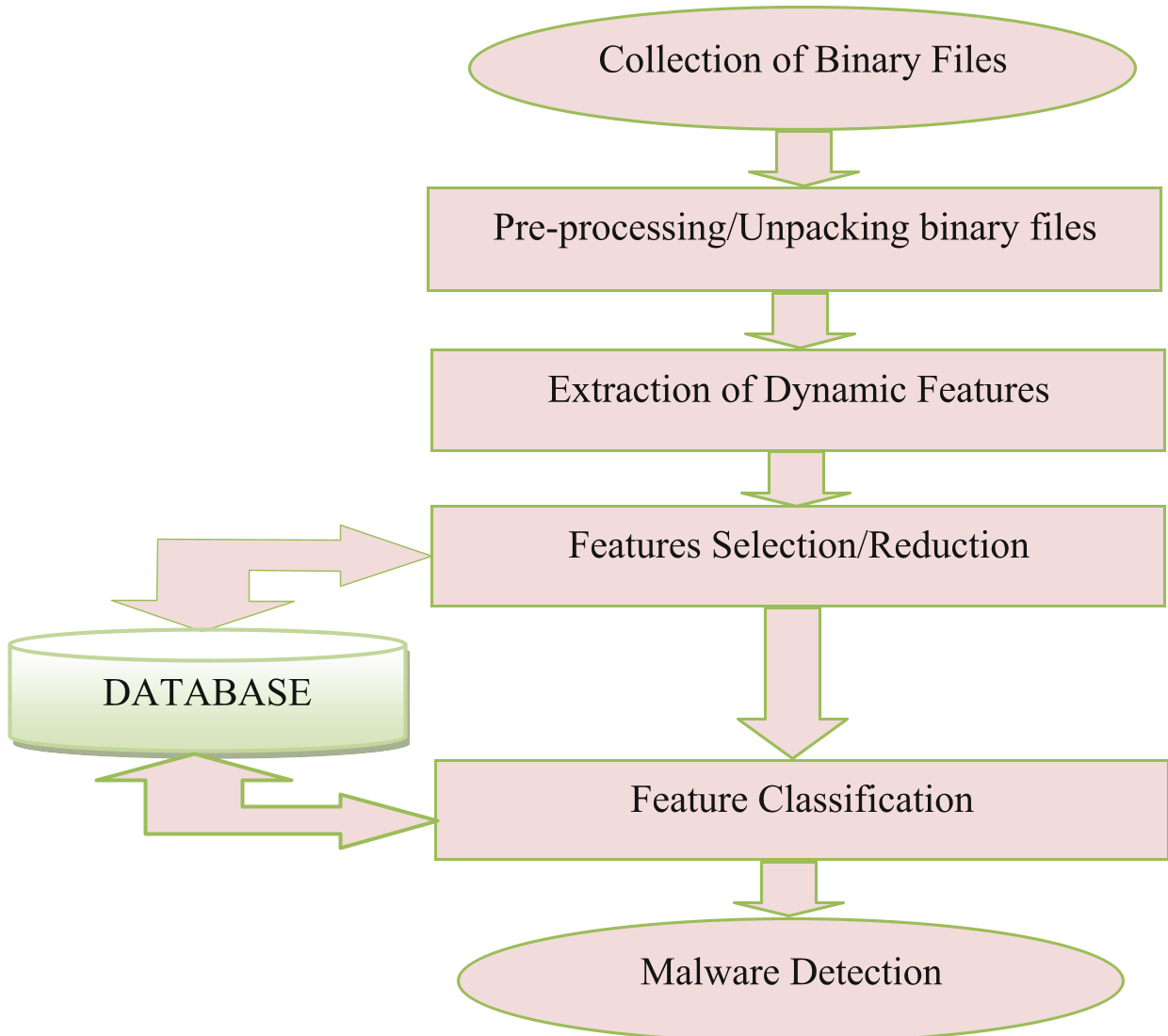
To safely observe malware behaviors, the researchers utilized a VirtualBox sandbox running Windows XP (a common target for older healthcare systems). Using a tool called HookMe, they intercepted Windows API calls—the specific requests a program makes to the operating system to open files, change registry keys, or connect to the internet.
2. Precise Feature Refinement
Executing thousands of files generates an overwhelming amount of data (172,641 API call sequences in this study). To find the "signals" within the "noise," the researchers employed Class-wise Document Frequency (DCFS). This statistical refinement ensures that the machine focuses only on the API calls that truly differentiate a Trojan or Worm from a legitimate medical application.
Experimental Battleground: SVM vs. The Rest
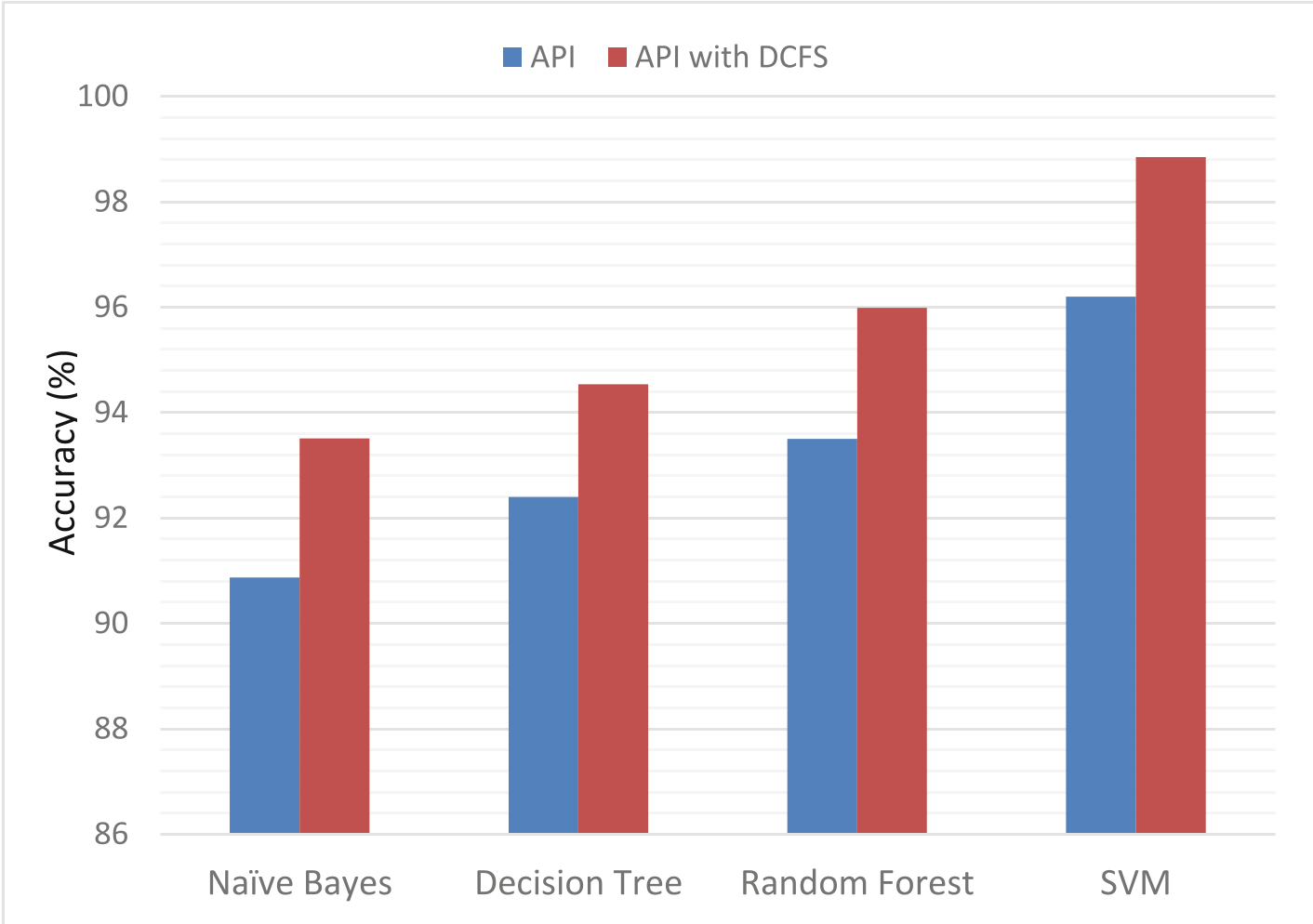
The study compared four major machine learning algorithms: Naive Bayes, Decision Trees (J48), Random Forest, and Support Vector Machines (SVM).
Key Findings:
- SVM Supremacy: The SVM model, trained with a Normalized Polynomial Kernel, emerged as the clear winner.
- The DCFS Boost: In every single case, applying the DCFS refinement algorithm improved accuracy. For SVM, accuracy jumped from 97.1% to 99.1%.
- Low False Alarms: In healthcare, blocking a legitimate medical tool is almost as bad as missing a virus. The proposed system kept the False Positive Rate (FPR) at a low 2.7%.
| Method | Baseline API Accuracy | API + DCFS Accuracy |
|---|---|---|
| Naive Bayes | 91.2% | 93.1% |
| Random Forest | 94.4% | 95.3% |
| SVM | 97.1% | 99.1% |
Critical Insight: Why This Matters for Healthcare
Most academic malware studies use small, generic datasets. This research stands out by utilizing a massive dataset of 52,185 files, including Trojans, rootkits, and backdoors specifically designed for healthcare infiltration.
The transition from focusing on the file's structure to the file's behavior allows the system to catch "Zero-Day" attacks—malware that has never been documented in a signature database.
Conclusion & Future Horizons
This paper confirms that ML-driven dynamic analysis is no longer an "option"—it is a necessity for modern healthcare infrastructure. However, the authors acknowledge a limitation: dynamic analysis is time-consuming (requiring at least 30 seconds of execution per file).
The next frontier, as suggested by the authors, is Hybrid Analysis: fusing the speed of static analysis with the deep insight of dynamic behavior to create a real-time, zero-latency shield for our most sensitive medical data.