
Let’s Gossip: Turning Social Media Into a Zero-Day Malware Radar
Let’s Gossip: Exploring Malware Zero-Day Time Windows by Social Network Analysis
This paper introduces a backward analysis methodology to estimate the "zero-day time window" of mobile malware by mining social networks and search trends. Using the SAP HANA Cloud Platform and custom NLP workflows, the study analyzes nearly 2 million messages to identify early symptoms of ransomware outbreaks before official identification by security vendors.
TL;DR
When a new piece of malware hits the wild, there is a "silent period" before antivirus companies release a signature. This paper explores how to listen to the "gossip" on Twitter and technical forums to detect these threats early. By building a specialized NLP vocabulary called Malwarersonomy, the researchers were able to filter millions of tweets to identify early symptoms of ransomware outbreaks, effectively shortening the zero-day time window.
The Problem: The Detection Lag
The current security model is reactive. A malware is released, it infects users, security researchers find it, create a signature, and then push an update. This gap—the zero-day window—is when hackers do their worst damage.
The authors argue that we are ignoring a massive, real-time data source: the users. When a phone gets locked or files get encrypted, users don't wait for a lab report; they complain on Twitter, Reddit, and forums. The challenge is that these complaints are buried under millions of "noisy" irrelevant posts.
Methodology: Building the "Malwarersonomy"
To separate signal from noise, the researchers didn't just use standard English dictionaries. They built a custom, hierarchical malware vocabulary.
- Data Collection: They gathered nearly 2 million messages from Twitter and forums like MalwareBytes and DSLReports.
- Lexical Resource Creation: Dubbed Malwarersonomy, this was a two-level vocabulary. The first level contains general terms (e.g., "malware," "virus"), while the second level contains specific behavioral symptoms (e.g., "pornography," "phone locked," "MoneyPak").
- Processing Pipeline: Using the SAP HANA Cloud Platform, they processed text via a pipeline that included normalization, TF-IDF ranking, and expert-led manual verification.
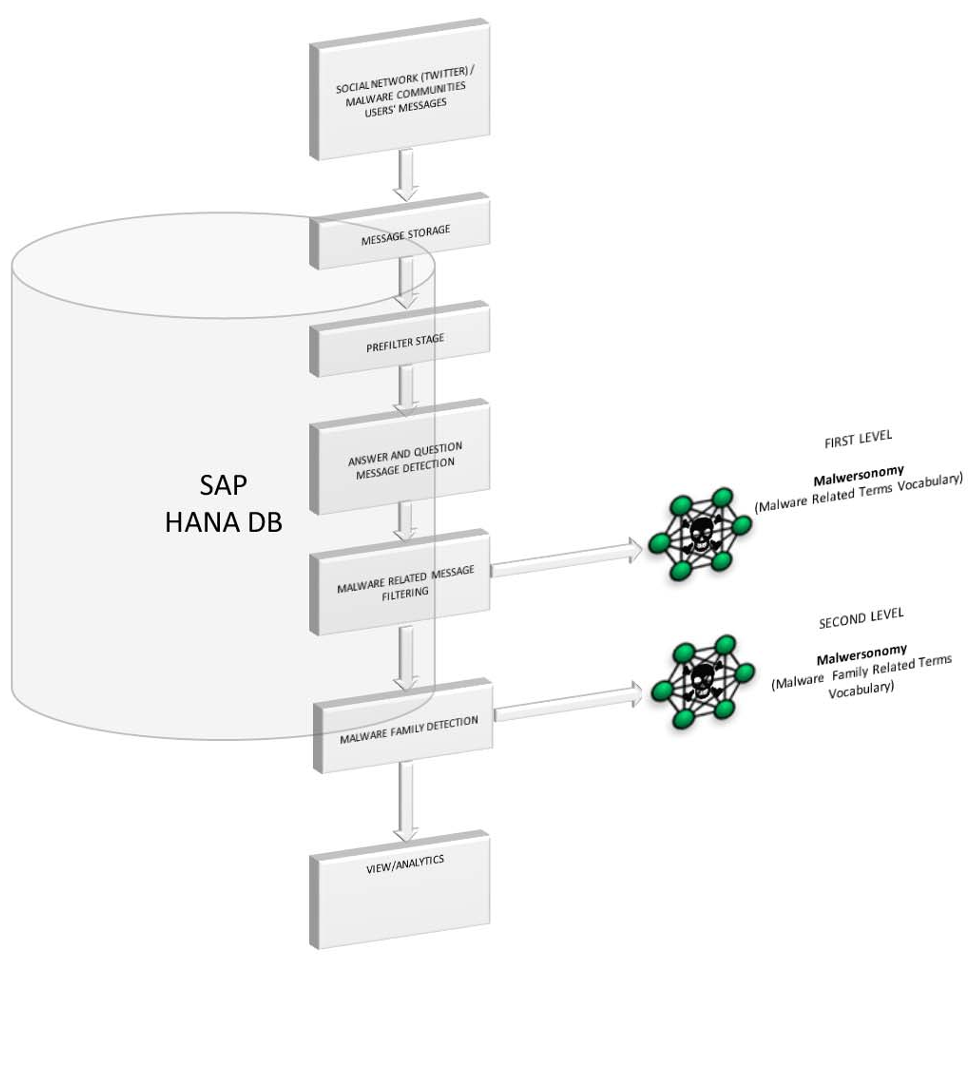 Fig 1: The multi-stage workflow from social data collection to analytics.
Experimental Insights: The Ransomware Trail
The study focused on prominent Android ransomware families from 2015, such as Locker, Koler, and SimpleLocker. By tracking specific keywords, they found a clear overlap between user interest and malware discovery.
Interestingly, they found that users often don't use the word "Ransomware" initially. Instead, they search for the symptoms. For example, the keyword "pornography" peaked alongside malware reports because many ransomware variants used fake law enforcement notices accusing users of viewing adult content to extort them.
 Fig 2: Interest trends over 2015 showing the correlation between generic "malware" terms and specific ransomware symptoms.
Strategic Value & Key Results
- Performance Boost: Using the specialized Malwarersonomy improved the Precision and Recall of the NLP system by 20% compared to standard linguistic tools.
- KPI Development: The authors proposed a new Key Performance Indicator (KPI) to estimate the width of the zero-day window based on the "first mention" in social networks vs. "official detection" date.
- User Awareness Gap: The data revealed a significant gap; while users discussed "malware" broadly, they lacked the technical vocabulary to identify they were being hit by "ransomware" specifically, highlighting a need for better user education.
Critical Analysis & Future Outlook
While this paper provides a robust framework for backward analysis, its real value lies in its potential for proactive monitoring.
Limitations:
- The study is a "backward analysis" (looking at historical data). Translating this to an "active" real-time warning system requires overcoming the latency of API data streaming.
- Social media "gossip" is highly prone to manipulation (e.g., botnets creating fake trends).
Future Work: The authors plan to upgrade the "taxonomy" to a full ontology, allowing for more complex semantic reasoning—for instance, automatically distinguishing between a legitimate system crash and a ransomware-induced lock-screen based on the context of the user's "gossip."