
Harmonizing Hesitancy and Scale: A New Frontier in Large-Scale Group Decision Making
Managing Multigranular Unbalanced Hesitant Fuzzy Linguistic Information in Multiattribute Large-Scale Group Decision Making: A Linguistic Distribution-Based Approach
This paper introduces a novel framework for Large-Scale Group Decision Making (LGDM) that manages multigranular unbalanced hesitant fuzzy linguistic information. It utilizes a Linguistic Distribution Assessment (LDA) approach and Hesitant Linguistic Distributions (HLDs) to achieve state-of-the-art results in information preservation and result interpretability.
TL;DR
In modern complex decision-making scenarios (like urban planning or e-democracy), "Large-Scale Group Decision Making" (LGDM) is the norm. However, humans are often hesitant and use subjective, unbalanced linguistic scales (e.g., a grading system with more positive than negative terms). This paper solves the "Lost in Translation" problem by providing a mathematical framework that preserves maximum information while returning a result that humans can actually understand.
The Core Conflict: Math vs. Meaning
In LGDM, experts often face two major hurdles:
- Complexity of Expression: Instead of saying "Good," an expert might say "between Fair and Good" (Hesitancy).
- Structural Diversity: Experts from different backgrounds use different "granularity" (some use 5 levels of quality, others use 9) and "unbalanced structures" (scales where the middle isn't actually the average).
Prior works often simplified these into rigid numbers, losing the "vibe" and nuance of human judgment. When these opinions are aggregated, the result is often a "spread-out" probability distribution that nobody can interpret.
Methodology: The Linguistic Bridge
The authors propose a multi-step workflow to bridge this gap:
1. The Unification Process
Using the 2-tuple linguistic model, the method transforms "unbalanced" hesitant expressions into a unified Linguistic Distribution Assessment (LDA) on a balanced "basic" scale. This ensures everyone's "Fair" is calibrated to the same baseline before math begins.
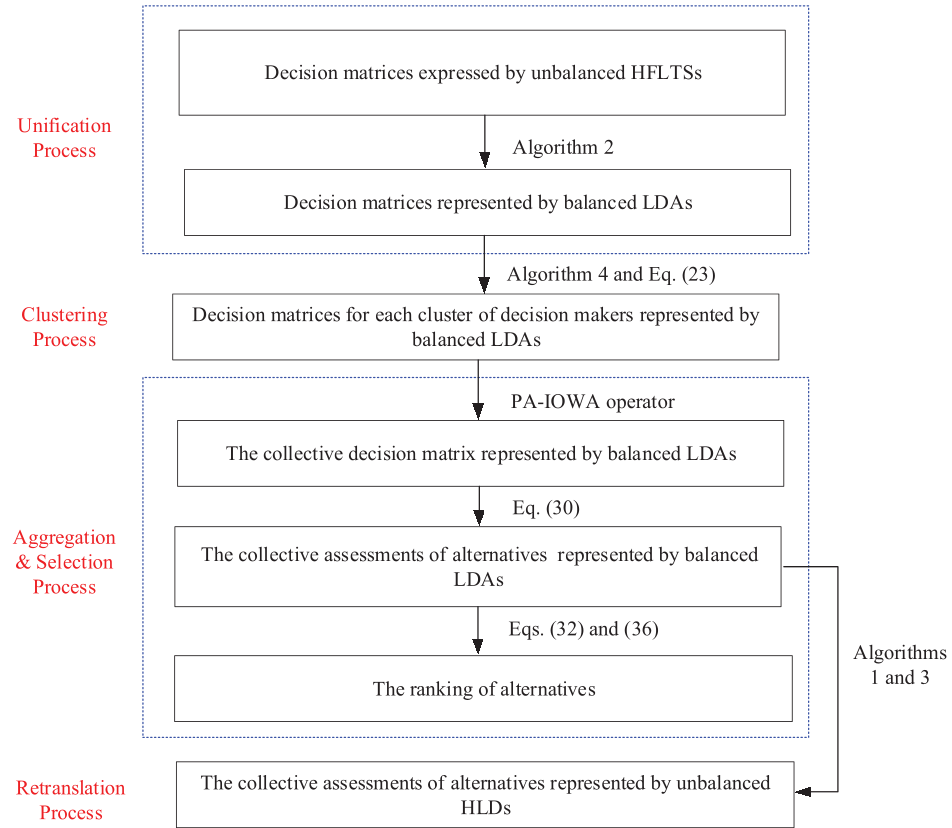 Figure 1: The proposed multi-attribute LGDM framework.
2. Intelligent Clustering with PA-IOWA
Large groups aren't monoliths. The authors use an LDA-based clustering algorithm (derived from Fuzzy C-means) to group similar experts. Crucially, they introduce the PA-IOWA operator.
- Proportion (P): Larger clusters get more weight.
- Accuracy (A): Clusters with "sharper," less fuzzy opinions (measured by information entropy) get higher reliability scores.
3. The Retranslation Secret Sauce
This is the "killer feature" of the paper. Instead of just giving a final score, the system uses Algorithm 1 to convert the messy aggregate distribution back into Hesitant Linguistic Distributions (HLDs).
- Example: Instead of saying "0.342," it says "At least Good (Support 0.6) and At most Fair (Support 0.4)."
Experimental Validation: Subway Line Selection
The authors tested this on a real-world analog: selecting a new subway line in China involving 20 stakeholders.
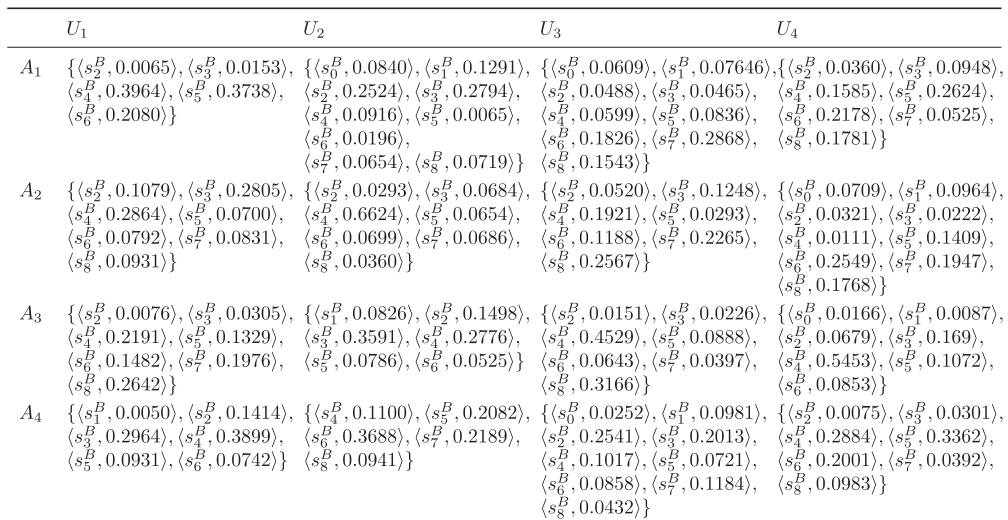 Figure 2: The collective decision matrix under the unified LDA format.
The system effectively managed three distinct linguistic sets (ranging from 5 to 9 terms) and successfully identified Alternative 2 as the winner. More importantly, when asked why, it provided decision-makers with a breakdown in their own initial linguistic terms, proving that the algorithm "understood" the expert's original context.
Critical Insight & Conclusion
The brilliance of this paper lies in the Transformation Algorithms (2 and 3). By connecting the mathematical rigor of LDAs with the psychological reality of HFLTSs, the authors have created a "Computing with Words" paradigm that doesn't feel like a black box.
Limitations & Future Work
While the selection process is robust, the paper notes that Consensus Reaching—the back-and-forth negotiation where experts change their minds—is not yet automated in this model. Integrating Social Network Analysis and Auto-negotiation agents would be the logical next step for this research.
In the age of AI, making decisions isn't just about finding the "best" answer; it's about finding an answer that the human stakeholders can trust and explain. This framework is a significant step toward that goal.