
Nokia Find & Connect: Bridging the Gap Between Physical Workspace and Social Networks
Managing Workplace Resources in Office Environments through Ephemeral Social Networks
This paper introduces Nokia Find & Connect (NF&C), an indoor location-based resource management and social networking system designed for office environments. It leverages WiFi-based positioning and the concept of Ephemeral Social Networks to optimize meeting room utilization and facilitate opportunistic social connections among employees.
TL;DR
Nokia Find & Connect (NF&C) is an innovative system that turns office resources like meeting rooms and desks into "social objects." By using WiFi-based indoor positioning, it automates workplace management and captures "ephemeral social networks"—temporary connections formed during meetings—to foster real-world social ties and drastically improve the efficiency of shared office spaces.
Problem & Motivation: The "Empty Room" and the "Familiar Stranger"
Modern office environments suffer from two distinct but related inefficiencies:
- Resource Wastage: Meeting rooms are often "ghosted"—booked in the system but unoccupied in reality, leading to a perceived shortage of space.
- Social Fragmentation: We often encounter the same colleagues daily (the "familiar stranger") but lack the context or automated triggers to establish a meaningful professional connection.
Current Online Social Networks (OSNs) fail here because they require manual updates. The authors’ insight was to leverage positioning technology to bridge this gap, using the physical meeting as the catalyst for both resource optimization and social network expansion.
Methodology: The Architecture of Ephemeral Connections
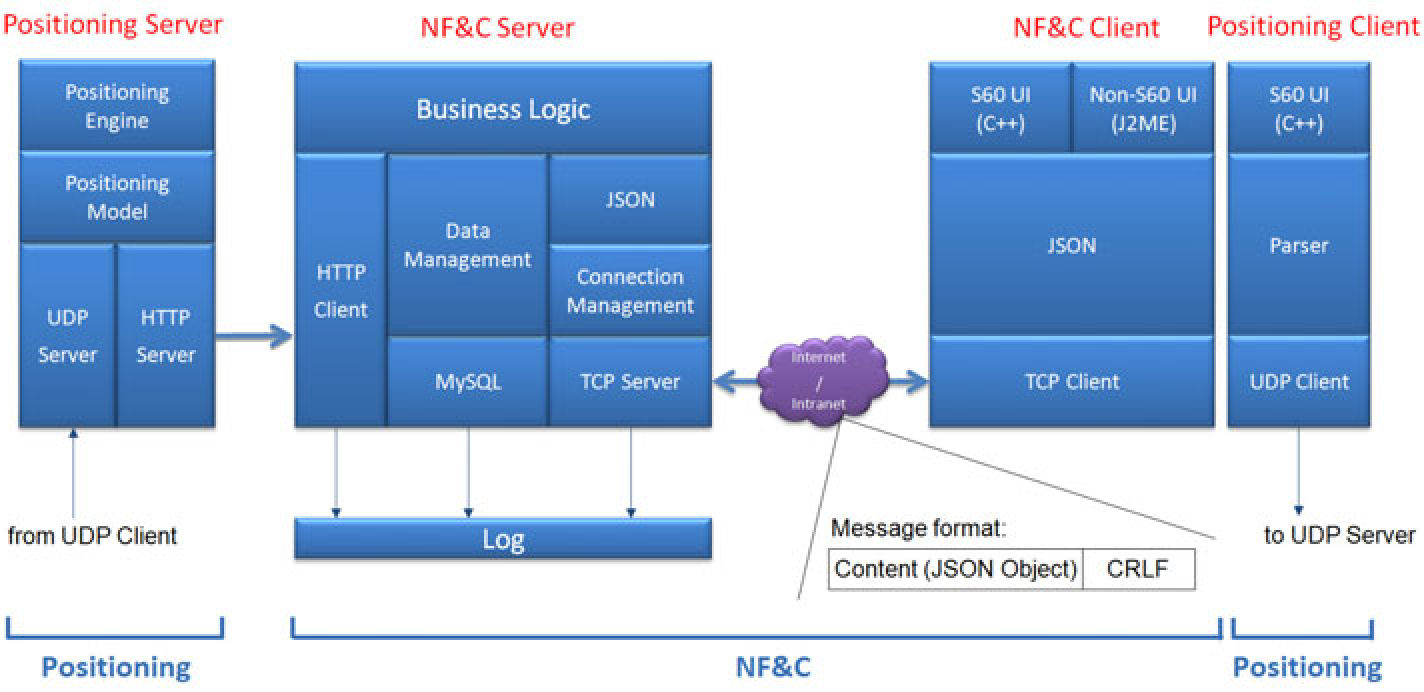
The NF&C system is built on a two-tier architecture: the Positioning Subsystem and the NF&C Subsystem.
1. Indoor Positioning Engine
Instead of expensive sensors, the system uses machine learning-based WLAN fingerprinting. It collects WiFi signal strengths (RSS) to map a user's location to specific office coordinates.
2. The Credential & Resource Logic
A central innovation is the automatic reservation cleanup. If a room is reserved but the positioning system detects no users after 10 minutes, the reservation is canceled. To reinforce this, a credit system rewards users for starting/ending meetings on time.
3. Defining Ephemeral Social Networks
The authors define these as ad-hoc networks created for a specific purpose (e.g., a meeting) that last a short time. NF&C captures these encounters, allowing users to:
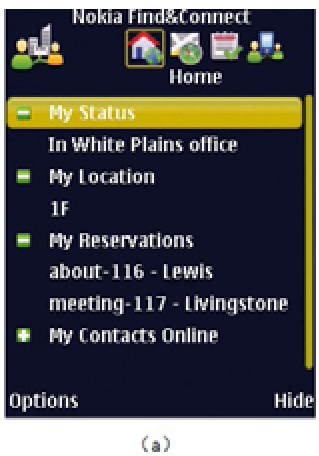
- View "People Nearby."
- Track "Meeting History" (who was in that room with you?).
- Use "Friend-of-a-Friend" discovery based on shared physical encounters.
Experiments & Results: Meeting Rooms as Social Catalysts
The system was piloted in a Beijing office for four weeks. Key findings include:
- Behavioral Change: 88.94% of meetings started on time, driven by visibility and the credit-based incentives.
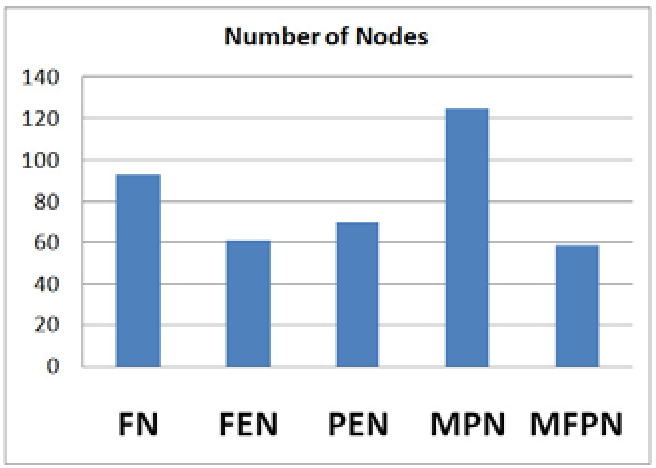
- Social Connectivity: The researchers compared 5 types of networks, finding that the Meeting Participants Network (MPN) was a far more efficient "bridge" to actual friendship than simple proximity encounters. Participants in meetings had a higher average of 5.39 friends compared to the general trial average.
- Network Efficiency: Friendship networks (FN, FEN) showed shorter average paths and more uniform clustering than raw encounter networks, suggesting that NF&C successfully converted random physical proximity into structured social capital.
Critical Analysis & Conclusion
Takeaway: NF&C proves that "context-aware" systems can solve the dual problem of office logistics and social isolation. By treating a meeting room not just as a square footage, but as a "social object," the system creates a self-optimizing environment.
Limitations: The study noted that users frequently forgot to "end" meetings manually, and the credit system was prone to gaming (repeatedly starting/ending). Future iterations should rely entirely on passive positioning to trigger meeting "end" states.
Future Outlook: As we move toward hybrid work models, the ability to digitally capture and leverage ephemeral face-to-face interactions will be crucial for maintaining corporate culture and accidental innovation (serendipity).