
Map-TBS: Transforming Process Guidance with Trace Mining and Intentional Modeling
Map-TBS: Map process enactment traces and analysis
The paper introduces Map-TBS (Map Trace-Based System), a framework that integrates Trace-Based Systems (TBS) and Data Mining techniques into the Map process formalism. It aims to provide context-aware recommendations for high-variability information system development processes by clustering user profiles and mining enactment sequences.
TL;DR
Managing complex software development processes is often a "choose your own adventure" nightmare. Map-TBS solves this by recording how experts navigate flexible process "Maps," clustering these traces based on project context, and using sequence mining to tell novices: "People like you, in a project like this, usually take this next step."
The Problem: The Paradox of Choice in Flexible Processes
In modern Information Systems Engineering (ISE), rigid workflows are being replaced by Intentional Process Models like the Map formalism. While Maps offer high flexibility by focusing on what to achieve (intentions) rather than just how (activities), they create a new problem: Decision Paralysis.
When a developer reaches a goal, the Map might offer ten different "strategies" to reach the next goal. Without guidance, the user doesn't know which strategy fits their specific level of expertise or project constraints. Traditional Process Mining (like the -algorithm) is too rigid for these "high-variability" environments because it expects linear event logs, not intentional jumps.
Methodology: Mining the Rationale
The researchers realized that to provide a good recommendation, you need more than just a log of "Task A followed by Task B." You need the Rationale and the Context.
1. The Map Trace-Based System (Map-TBS) Model
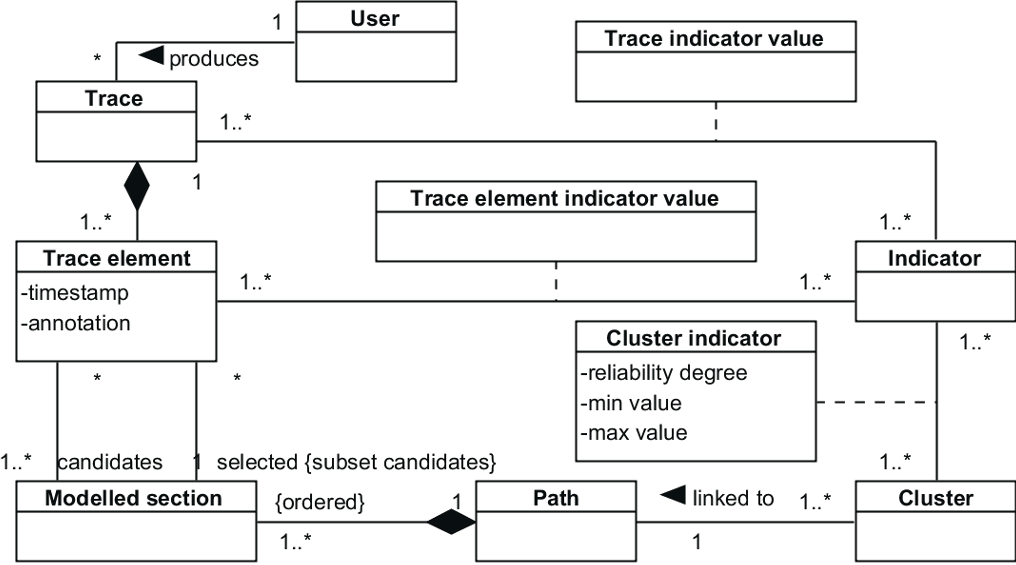
The authors extended the standard Map metamodel with a Trace system that records:
- Obsels (Observed Elements): The exact timestamp and section selected.
- Qualitative Annotations: "I chose this because it felt easier via a template."
- Indicators: Metadata about the user (age, experience) and the project (complexity, cost).
2. The Recommendation Pipeline
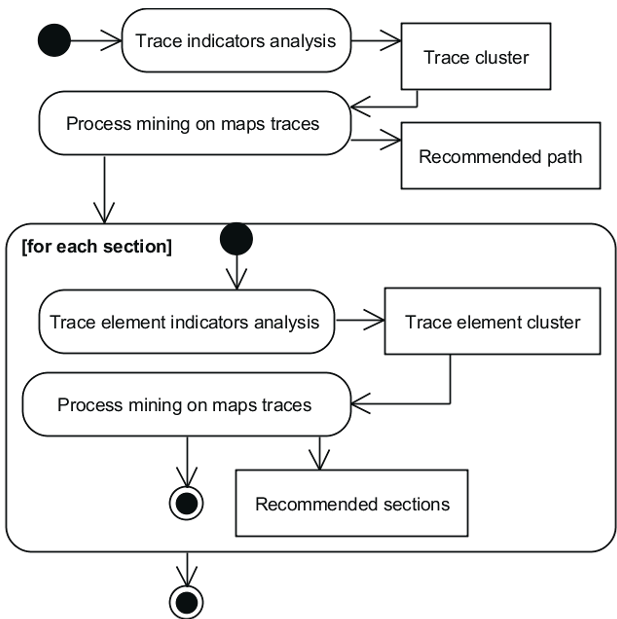
The system follows a three-stage mathematical pipeline:
- Dimensionality Reduction: Using Multiple Correspondence Analysis (MCA) to handle a mix of categorical (Role) and numerical (Age) data.
- Clustering: Applying HCPC (Hierarchical Clustering on Principal Components) to group users into "Profiles" (e.g., "Junior managers in short-duration projects").
- Sequence Mining: Running the CSpade algorithm on traces within each cluster to find the most frequent paths.
Experiments: CREWS-L’Ecritoire Illustration
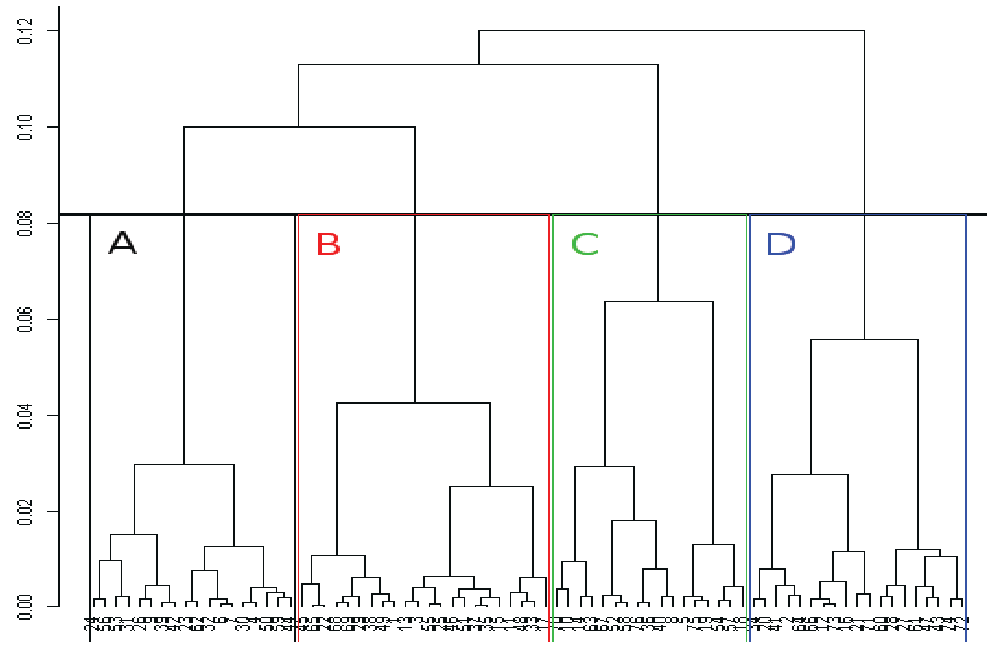
The authors applied Map-TBS to CREWS-L’Ecritoire, a method for requirements elicitation. By simulating 75 traces, they identified that different "types" of engineers follow drastically different paths through the Map.
For example, "Expert Requirement Engineers" (Group C) showed a high preference () for manual conceptualization strategies after writing scenarios. This allows the system to offer a tailored recommendation to a new user based on their similarity to Group C.
Critical Analysis & Conclusion
Takeaway: The real value of Map-TBS lies in its "Play-out" and "Play-in" capabilities. It doesn't just force a path; it builds a library of organizational expertise that evolves as more traces are collected.
Limitations:
- Cold Start: The system requires a "consistent set of traces" before it can define meaningful clusters.
- Human Factor: The quality of recommendations relies heavily on users actually providing qualitative annotations—a task often neglected in real-world high-pressure environments.
Future Outlook: As we move toward AI-assisted coding and engineering, Map-TBS provides the structural foundation to feed "Agentic" workflows with historical context, ensuring that AI agents don't just follow a script, but adapt to the "Intention" of the human project manager.