
Mapping the Nexus of Chemistry and Society: A New Framework for HAART Cocktail Prediction
Mapping chemical structure-activity information of HAART-drug cocktails over complex networks of AIDS epidemiology and socioeconomic data of U.S. counties
The paper introduces a novel Artificial Neural Network (ANN) framework for predicting the effectiveness of Highly Active Antiretroviral Therapy (HAART) drug cocktails. By integrating molecular structure descriptors with socioeconomic and epidemiological data from over 2,300 U.S. counties, the model achieves a state-of-the-art AUROC of 97.4% using SMOTE-balanced Multilayer Perceptrons (MLP).
TL;DR
Researchers have developed the first Artificial Neural Network (ANN) model capable of predicting the success of HAART "cocktails" (combinations of 1-3 drugs) by looking beyond the lab. By merging chemical structure data with U.S. Census socioeconomic datasets and AIDS prevalence rates, the model achieves a staggering 97.4% AUROC, providing a powerful tool for tailored public health policy and drug discovery.
Perspective: Why Chemistry Isn't Enough
In the fight against AIDS, the laboratory result of a drug is only half the story. Clinical outcomes are heavily modulated by the "social fabric"—poverty levels, education, and even the urban/rural status of a patient's county. While traditional computational chemistry focuses on how a molecule binds to a viral protein, this paper argues that to predict if a drug cocktail will actually halt an epidemic, we must model the drug and the environment as a single, complex network.
Methodology: The ALMA Technique
The core innovation lies in the ALMA (Assessing Links with Moving Averages) technique. The authors had to solve a massive data-fusion problem: how do you compare an IC50 value (chemical potency) with the Gini coefficient (income inequality) of a county in Nebraska?
- Shannon Entropy Transformation: All variables (17 socioeconomic and 13 molecular) were converted into information indices to remove scale bias.
- Box-Jenkins Operators: They used moving averages to calculate "deviations." For a county, this meant measuring how its socioeconomic status differed from its state average or urban-influence group.
- Network Mapping: They created a "core-periphery" network where counties and cocktails are central nodes, and specific drugs form the periphery.
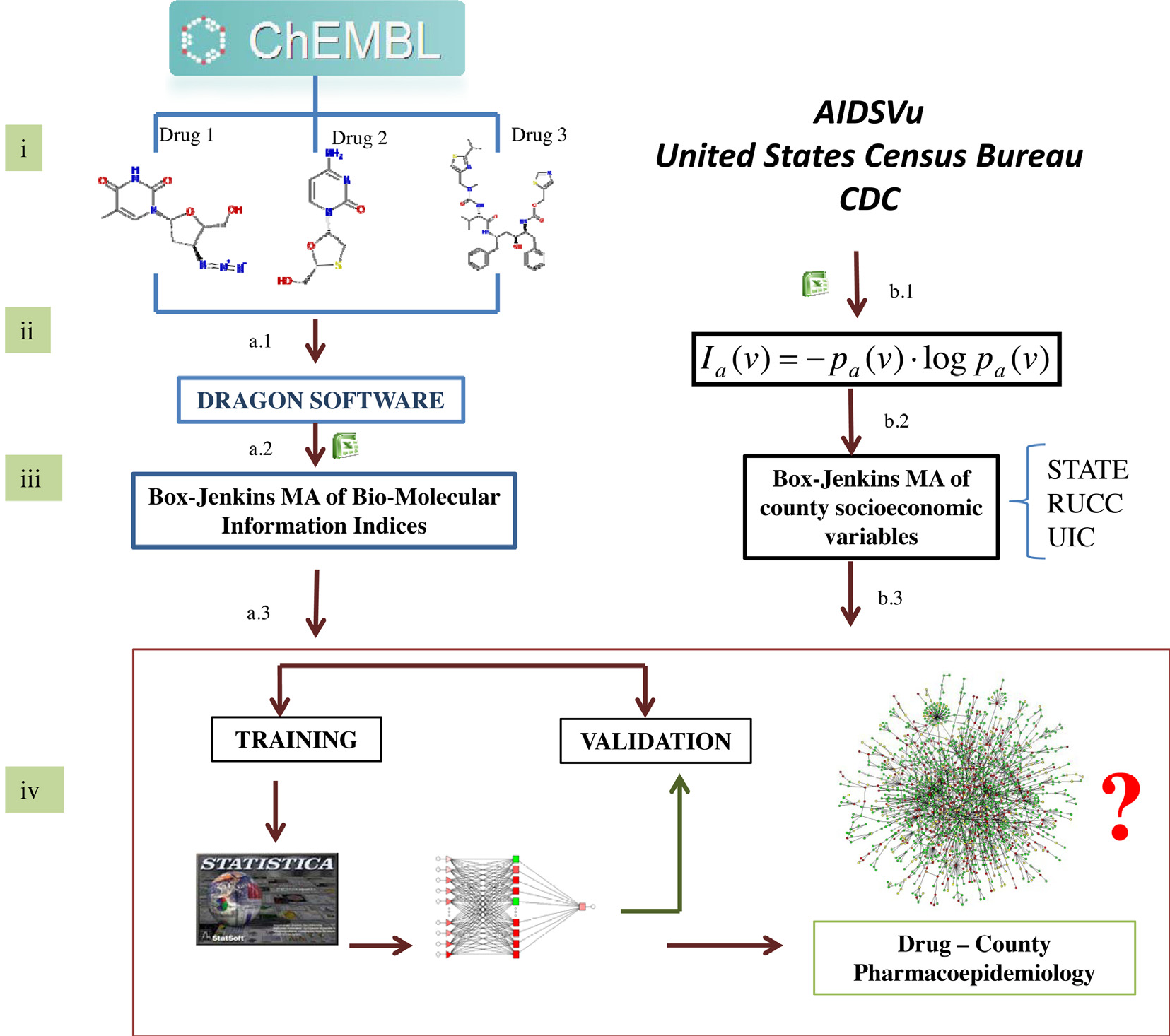 Figure 1: The overarching workflow for mapping multi-scale data into a unified ANN model.
Cracking the Imbalance: From 80% to 97%
Initially, the models faced a classic machine learning hurdle: Data Imbalance. There were far more negative cases (cocktails failing to reach a specific prevalence threshold) than positive ones.
The breakthrough came from using SMOTE (Synthetic Minority Over-sampling Technique). By balancing the training set, the researchers shifted from a simple Linear Neural Network (LNN) to a Multilayer Perceptron (MLP) that could capture non-linear relationships between variables.
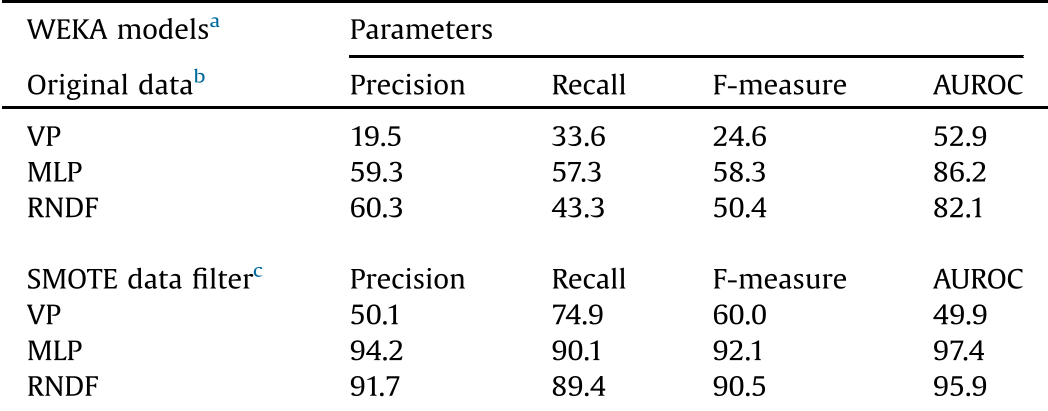 Table 1: Performance leap after applying SMOTE and non-linear MLP/Random Forest algorithms.
Visualizing the Epidemic Network
The model allows for "Back-projection." We can visualize the probability of halting AIDS in specific regions, such as New York State, based on the cocktails available in the ChEMBL database.
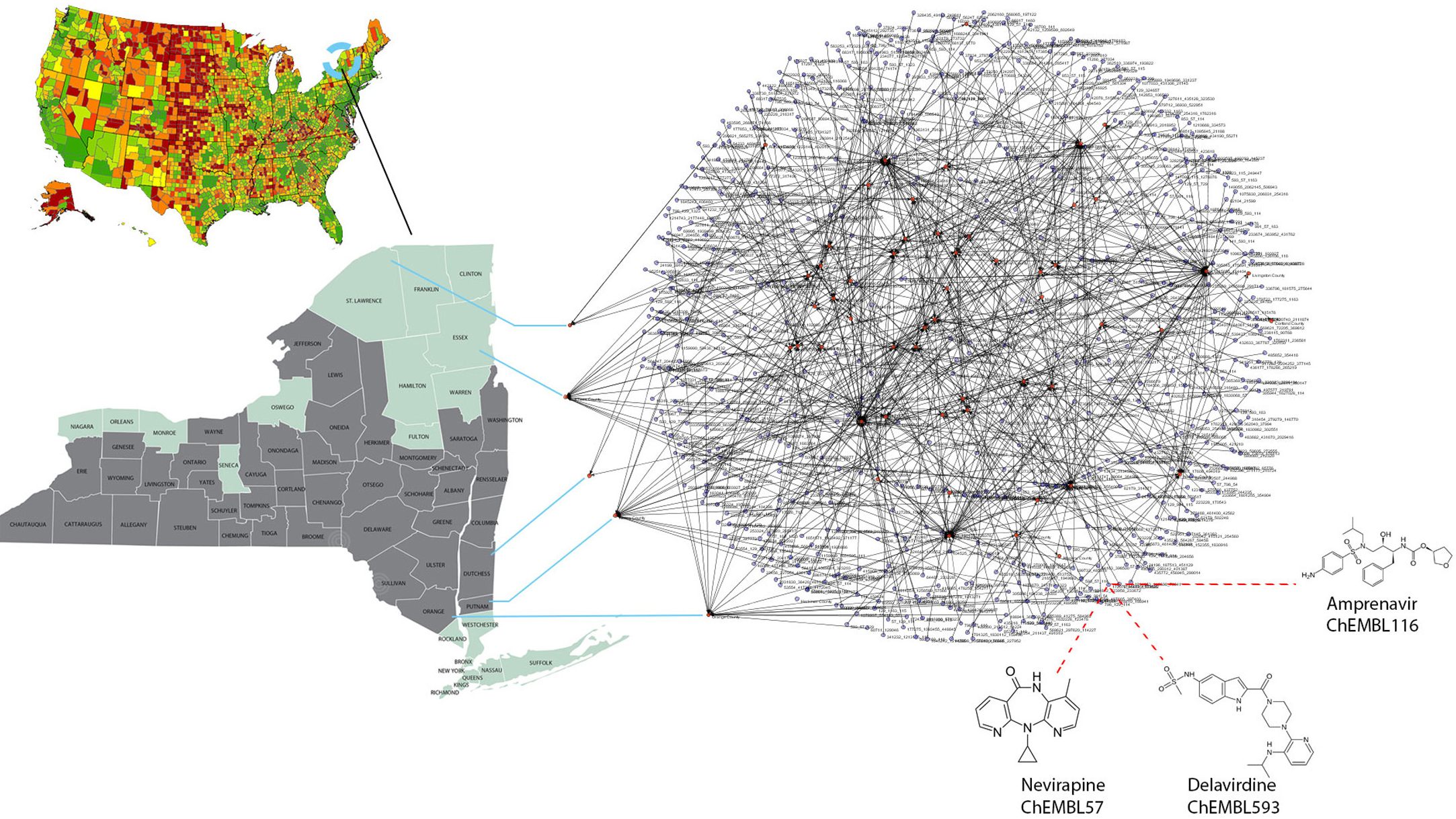 Figure 2: Sub-network depicting the connection between NY counties (red) and HAART cocktails (blue).
Critical Analysis & Conclusion
Key Takeaway
The success of this model suggests that demographic structure codes (UIC/RUCC) are essential features for epidemiological modeling. It effectively bridges the gap between chemoinformatics and social science.
Limitations
- Adherence vs. Biology: While the model predicts "effectiveness," it cannot definitively distinguish if a failure is due to chemical resistance or socioeconomic barriers to treatment adherence.
- Temporal Shift: The data relies on 2010 census/epidemiological markers. The dynamics of the HIV epidemic have evolved with newer drugs (like Integrase Inhibitors) not fully represented in older datasets.
Future Outlook
This approach paves the way for "Precision Public Health," where pharmaceutical companies and governments can screen cocktail combinations against the specific socioeconomic profiles of target regions, maximizing the impact of healthcare investment.