
A Market in Your Social Network: Why Paying Your Friends Might Actually Save the Friendship
A Market in Your Social Network: The Effects of Extrinsic Rewards on Friendsourcing and Relationships
The paper introduces Mobilyzr, a friendsourcing platform integrated with Facebook, to investigate how monetary and non-monetary extrinsic rewards affect response rates and personal relationships. It demonstrates that large rewards significantly increase response rates (up to 70%) without the predicted "crowding-out" of intrinsic motivation or damage to social ties.
TL;DR
When you ask a friend for a favor and they ignore you, it hurts the relationship. But what if you offered them $5? New research reveals that offering extrinsic rewards—like cash or candy—not only boosts response rates by up to 70% but also protects your friendship by giving you an excuse for why they didn't help: "The reward wasn't good enough," rather than "They don't care about me."
The "Crowding-Out" Fear: Will Money Ruin My Social Life?
In the world of Human-Computer Interaction (HCI), Friendsourcing (leveraging your social network for tasks) has a glaring problem: most requests fall on deaf ears. While community Q&A sites like Yahoo Answers enjoy high engagement, a huge portion of social media requests are simply ignored.
Researchers have long debated the "Crowding-Out" hypothesis. The fear is that if you introduce money into a communal relationship, you switch from a "Social Market" to a "Money Market." In a social market, friends help out of altruism; in a money market, they help for the paycheck. Conventional wisdom warned that once you offer a dollar, the altruism vanishes, and if the dollar isn't enough, your friend won't help at all.
Methodology: The Mobilyzr Experiment
To test this, the authors built Mobilyzr, a platform where users post tasks to Facebook with attached rewards (5 Amazon cards, or small/large bags of M&Ms).
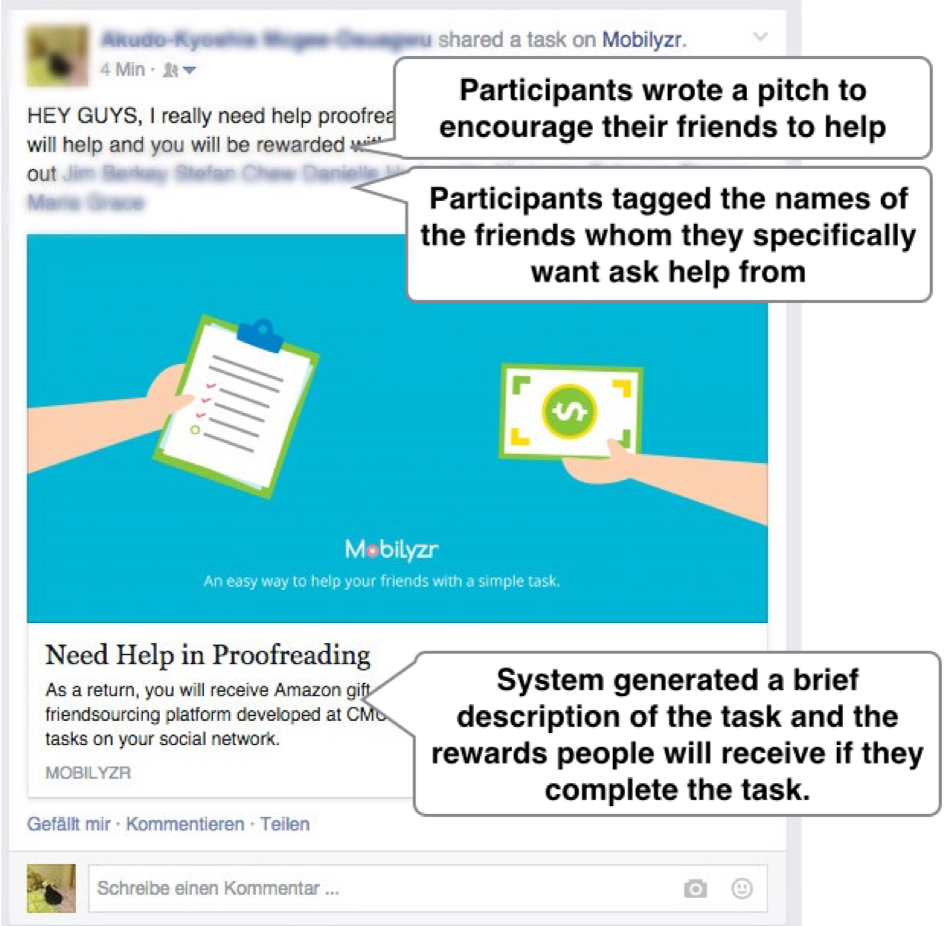 Figure 1: How the task requests appeared to friends on the Facebook newsfeed.
The study tracked 105 tasks and 630 tagged friends, measuring both the response rate and the perceived relationship strength (using a 1-100 scale measuring care, closeness, and willingness to loan money).
The Results: Efficiency and Emotional Buffering
The findings were a blow to the "Hostile World" view that money corrupts intimacy.
1. Large Rewards Move the Needle
Contrary to the fear that rewards might discourage help, the experiment showed a clear Market Shift. Large rewards—whether cash or candy—significantly outperformed the control group.
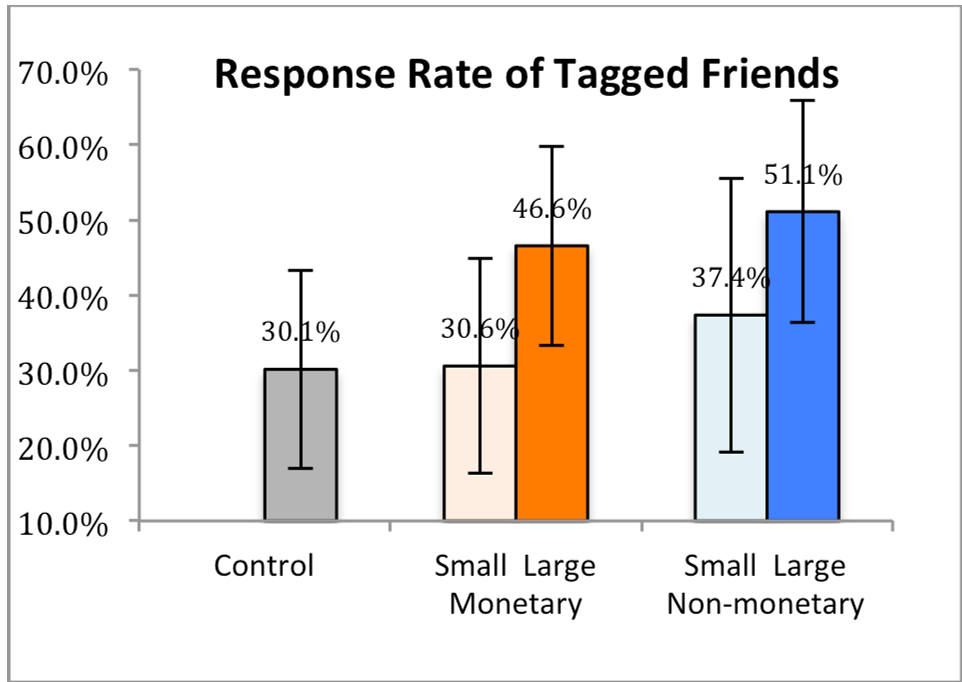 Figure 2: Large rewards ($5 or large candy) significantly boosted participation compared to the No-Reward Control.
2. The Relationship "Pillow"
Perhaps the most profound insight is how rewards changed the psychology of rejection.
- In the Control Group: If a friend didn't help, the requester felt a measurable drop in relationship strength. They felt "let down" or "shocked" by the lack of care.
- In the Reward Group: Requesters were far less hurt. They rationalized the rejection by saying, "My friend is busy," or more importantly, "$1 isn't enough to make them get out of bed."
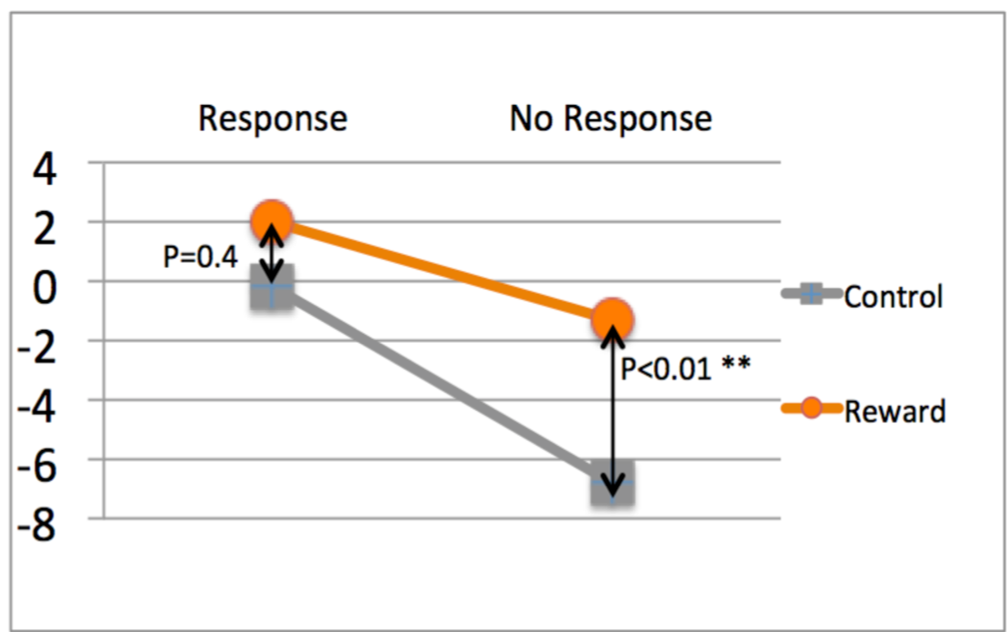 Figure 3: While failing to help usually damages a relationship (Control), the presence of rewards mitigates this negative effect by externalizing the blame.
Why It Works: Justifying the Motive
The researchers found that responders used "Self-Presentation" strategies to protect their own social image. Even when they were arguably motivated by the $5, they would comment things like, "I'm only doing this for you, not the money!" or jokes like "I better get my M&Ms!" This allows the friend to accept the reward while maintaining the identity of a helpful, altruistic friend.
Takeaways for the Future of Social Tech
This study has massive implications for the Sharing Economy (Ubber, Airbnb, TaskRabbit):
- Designing for Social Capital: Platforms should encourage small rewards not just for incentive, but to "insulate" users from social friction.
- External Attribution: By making the transaction explicit, social platforms can help users preserve ties even when their requests are ignored.
Conclusion: If you're building a tool for people to ask favors, don't be afraid to let them offer a cup of coffee or a few dollars. It won't turn their friends into mercenaries; it might just save them from feeling rejected.