
Marketing Knowledge Management: Bridging the Gap Between Big Data and Actionable Insight
Marketing Knowledge Management Model
The paper proposes a conceptual "Marketing Knowledge Management Model" that integrates Database Marketing (DBM) with Knowledge Discovery in Databases (KDD). It establishes a structured framework to map specific marketing objectives (Who, What, When, How) to corresponding Data Mining (DM) techniques like classification, regression, and clustering.
TL;DR
This paper addresses the "data rich, information poor" paradox in modern marketing. By proposing a conceptual Marketing Knowledge Management Model, the authors bridge the gap between raw Database Marketing (DBM) and Knowledge Discovery in Databases (KDD). The model provides a systematic roadmap for turning transactional data into personalized "one-to-one" marketing strategies through targeted Data Mining (DM) techniques.
Background: The Shift to Customer-Centric Models
The marketing world has undergone a seismic shift from mass marketing to relationship marketing. The old mantra of design-build-sell is being replaced by sell-build-redesign. In this new landscape, the ability to capture and retain customers is the primary competitive advantage. However, as organizations collect vast amounts of demographic and transactional data, the sheer volume has outpaced human analytical capacity.
The Core Problem: The Complexity of "The Ask"
Most organizations treat databases as simple silos. The authors argue that the current failure of DBM projects stems from two issues:
- Unstructured Approaches: Marketers often perform ad-hoc queries without a unified view to guide their search for knowledge.
- Technical Barriers: Data is rarely "ready-to-use" outside of its original operational purpose, requiring a robust preprocessing and transformation pipeline that most marketing departments lack.
Methodology: The Three-Phase Framework
The authors present a structured model designed to synchronize marketing objectives with data mining capabilities.
1. The Integrated Macro-Process
The proposed model is divided into three distinct phases:
- Information Gathering: Consolidating internal, external, and market research data into a central Marketing Database.
- Knowledge Discovery (The KDD Core): This is where the heavy lifting happens, involving Selection, Preprocessing, Transformation, and Modeling.
- Evaluation and Implementation: Translating patterns into business rules and integrating them back into the CRM system.
2. Mapping Marketing Questions to Algorithms
Perhaps the most insightful part of the paper is the mapping of fundamental marketing questions to specific Data Mining tasks:
| Marketing Question | DM Objective | Example Application |
|---|---|---|
| Who do I achieve? | Classfication / Description | Customer Segmentation / Profiling |
| What do they want? | Dependencies Modeling | Market Basket Analysis / Cross-selling |
| When should I act? | Time-series / Dependencies | Promotional Email Timing |
| How to promote? | Deviations / Prediction | Churn Prediction / Response Modeling |
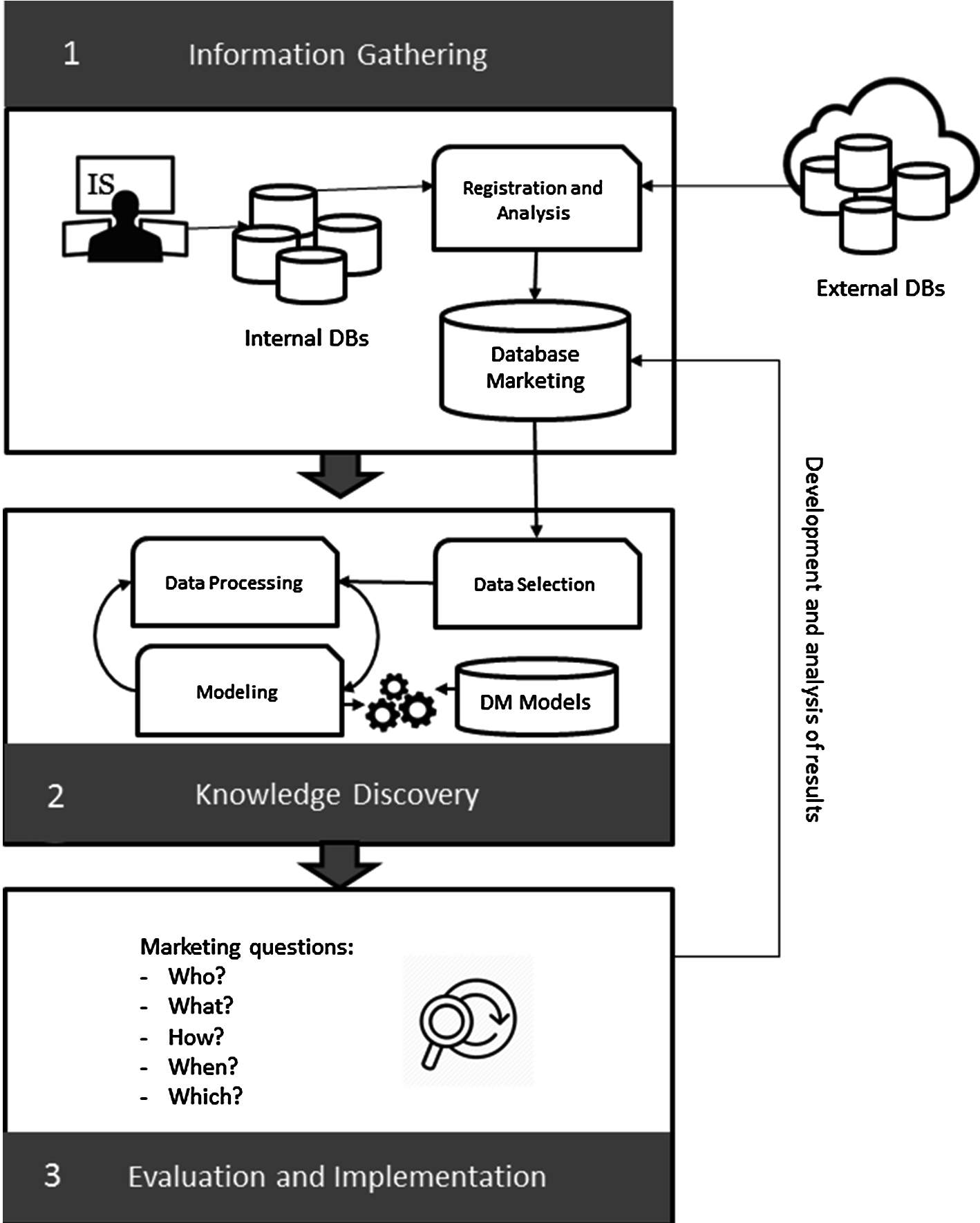 Figure 1: The proposed integrated framework for Marketing Knowledge Management.
Critical Insights: Why it Works
Unlike traditional statistical tools that merely test hypotheses (e.g., "Do women buy more than men?"), the Data Mining approach within this model is exploratory. It is responsible for creating hypotheses—discovering associations and patterns that the marketer might not even have thought to look for.
By applying Estimation Modeling (Regression/Classification) and Descriptive Modeling (Clustering), the model transforms the database from a passive storage unit into an active decision-support system. This allows for segments of "likely responders" or "potential defectors" to be identified with high statistical confidence.
Conclusion and Future Outlook
The "Marketing Knowledge Management Model" provides a necessary theoretical scaffolding for the increasingly technical field of Marketing Analytics. While it focuses on structured data, the authors acknowledge that Web Technology and real-time interaction will be the next frontier.
Key Takeaways for Practitioners:
- Don't just collect data; prepare it. The Preprocessing phase in KDD is where most of the value is created/lost.
- Align Algorithm with Objective. Classification is for the "Who," while Dependency Analysis is for the "What."
- Move toward One-to-One. The ultimate goal of this model is personalization at scale, moving away from wasteful mass-marketing campaigns.
Limitations: The model is primarily conceptual and would benefit from a case study demonstrating specific ROI or a breakdown of how it handles the "velocity" aspect of Big Data in real-time environments.
Authored by the Senior Academic Tech Editor, based on "Marketing Knowledge Management Model" by T. Guarda et al.