
Beyond Usability: Integrating Marketing Intelligence into Multi-Platform UI Design
Addressing Marketing Requirements in User-Interface Design for Multiple Platforms
The paper introduces a multidisciplinary framework that integrates User-Centered Design (UCD) with Services Marketing to elicit requirements for multi-platform interfaces. It identifies "customer experience requirements" as a critical driver for Internet service adoption, specifically within the Portuguese banking sector.
TL;DR
This paper argues that designing interfaces for the modern "Internet service environment" requires a marriage between Human-Computer Interaction (HCI) and Services Marketing. By moving from simple functional requirements to customer experience requirements, designers can better understand why users adopt or reject digital channels. The study highlights that in banking, the choice between an app and a physical branch isn't just about features—it's about the emotional and experiential value associated with specific tasks.
The Shift from Office to Market: Why Usability Isn't Enough
For decades, UI design was focused on the "Work Environment," where efficiency and task completion were king. However, as services shifted to the Internet, the context changed to the Market Environment. The authors point out a critical gap:
- Designers cannot control the user’s environment or motivations.
- The interface is no longer just a tool; it is a service provision channel.
In this open-market context, traditional usability metrics (speed, error rate) fail to capture the "Why." Why does a customer feel comfortable checking their balance on a phone but insists on visiting a branch to sign a mortgage? The answer lies in experience requirements.
Methodology: The HCI-Marketing Synergy
The paper proposes a dual-lens approach. While HCI provides the "How" of interaction, Services Marketing provides the "Who" and the "Value."
1. The Multidisciplinary Framework
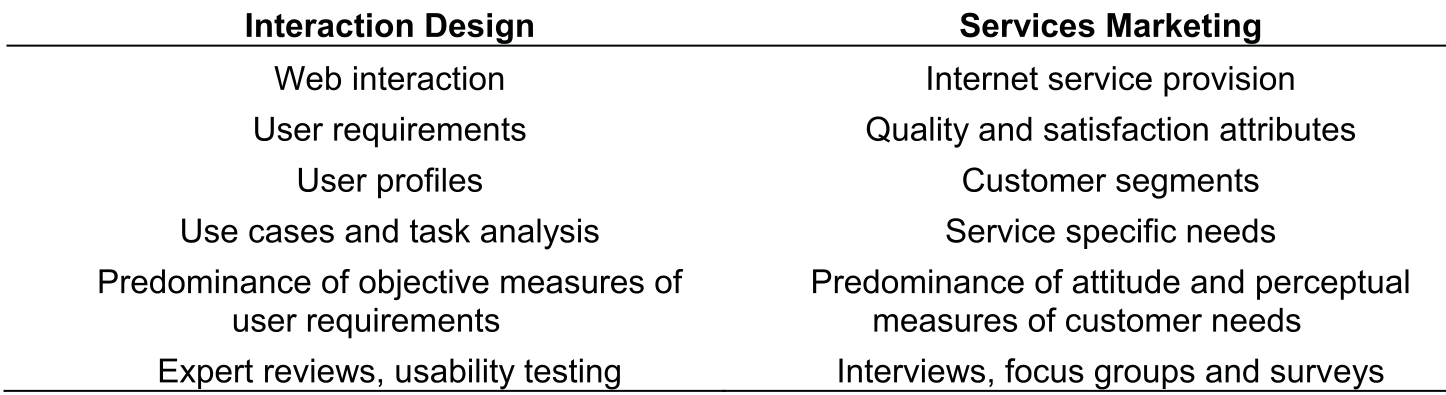
The authors map HCI concepts to Marketing equivalents to bridge the communication gap between engineers and analysts:
- User Profiles Customer Segments
- Task Analysis Service Specific Needs
- Usability Goals Service Quality (SERVQUAL)
2. Essential Use Cases as a Bridge
A key tool used here is the Essential Use Case. These are technology-independent descriptions of user intentions. By abstracting the task away from the platform (e.g., "Request Loan" instead of "Click Loan Button"), designers can identify the experience needed for that specific goal across any channel.
Research Findings: The Banking Case Study
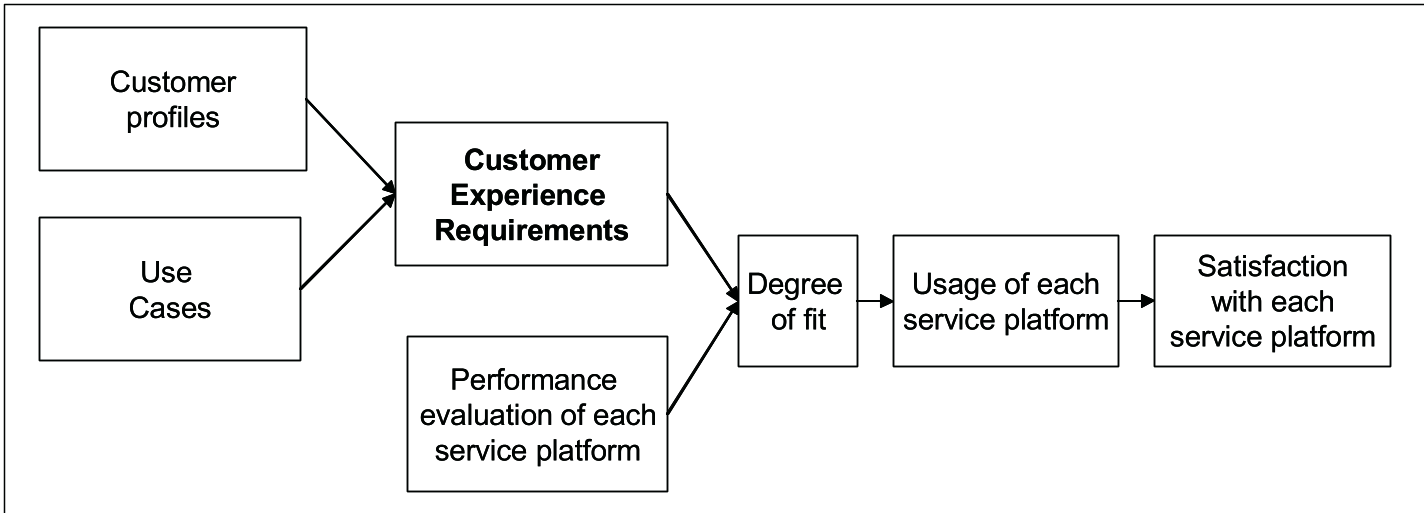
The authors conducted a qualitative study of a Portuguese bank, interviewing both staff and customers. They discovered that channel choice is a dynamic interaction between User Profiles and Use Cases.
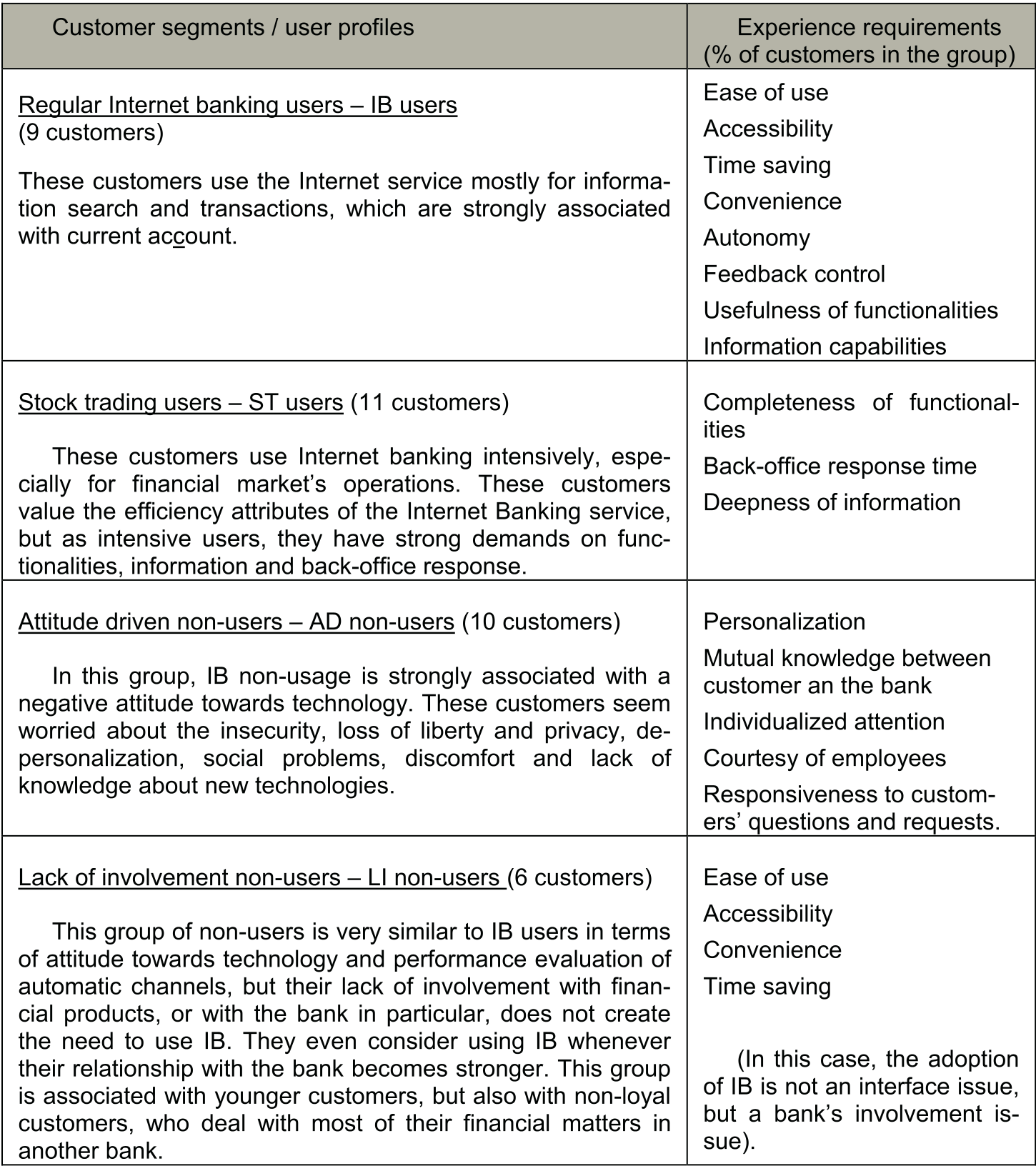
- Profiles: "Regular IB Users" value autonomy and feedback control, whereas "Attitude-driven non-users" are paralyzed by security fears and a lack of personalized empathy.
- Task Complexity: For low-risk tasks (balance inquiry), the experience requirement is Efficiency. For high-risk tasks (mortgage application), it is Professional Competence and Trust.
Deep Insight: Matching Platform to Experience
One of the most profound insights is the breakdown of why some digital features fail despite being functionally perfect. If a user requires "Mutual Knowledge" (feeling known by the provider) for a complex decision, a sterile web form will fail—not because it's hard to use, but because it provides the wrong experience.
Critical Analysis & Conclusion
Takeaway
The web interface should not be designed in isolation. It must be seen as part of a multi-channel ecosystem. Designing for "Experience" means understanding when to leverage the efficiency of a screen and when to guide the user toward human interaction.
Limitations
As the study was qualitative and focused on a specific Portuguese bank in the early 2000s, the specific "security concerns" may have evolved. However, the underlying logic—that emotional and risk-based requirements drive channel adoption—remains highly relevant in the age of AI and mobile-first banking.
Future Outlook
As we move toward AI-driven interfaces, the "experience requirement" for Trust and Empathy will become even more critical. Designers who can integrate these marketing-driven "soft" requirements into "hard" technical specifications will be the ones who successfully transition users into the next generation of digital services.