
Beyond Simple Search: Hybrid Mashup Recommendation through Social-Interest Fusion
Mashup Service Recommendation Based on User Interest and Social Network
This paper proposes a hybrid Mashup service recommendation approach that integrates TF/IDF-based user interest mining with a multi-layered social network model. By analyzing invocation relationships and tag-based social marking, the system achieves SOTA performance in personalized service discovery on the ProgrammableWeb dataset.
TL;DR
With the explosion of Web 2.0, finding the right "Mashup" (a combination of multiple Web APIs) has become a needle-in-a-haystack problem. This paper presents a dual-engine recommendation system that mines User Interest via usage history and builds a Social Network of services based on shared APIs and tags. The result is a system that understands what you want and how services are structurally related.
Motivation: The Web API Jungle
Traditional service discovery relied on WSDL (Web Service Description Language), which is too rigid for today's RESTful Web APIs. Existing methods often suffer from two extremes:
- Semantic systems focus only on descriptions but ignore service popularity and relationships.
- Social systems focus on "who uses what" but ignore the specific functional interests of the developer.
The authors argue that a truly effective recommendation must bridge the gap between a user’s persistent interests and the underlying "social" fabric of the API ecosystem.
Methodology: The Fusion of Graphs and Text
The core of the paper lies in its two-pronged modeling strategy:
1. User Interest Modeling (The "What")
The system treats the developer’s service history as a corpus. Using a modified TF/IDF (Term Frequency/Inverse Document Frequency), it weights terms based on their uniqueness. Crucially, they use to give more "selective power" to rare, highly descriptive terms.
2. The Social Network Model (The "How")
The researchers constructed an undirected graph where:
- Nodes: Mashup services.
- Edges: Created if two services share a Web API or a tag.
- Weight: Calculated using a Jaccard Similarity Coefficient () which balances shared APIs () and shared tags ().
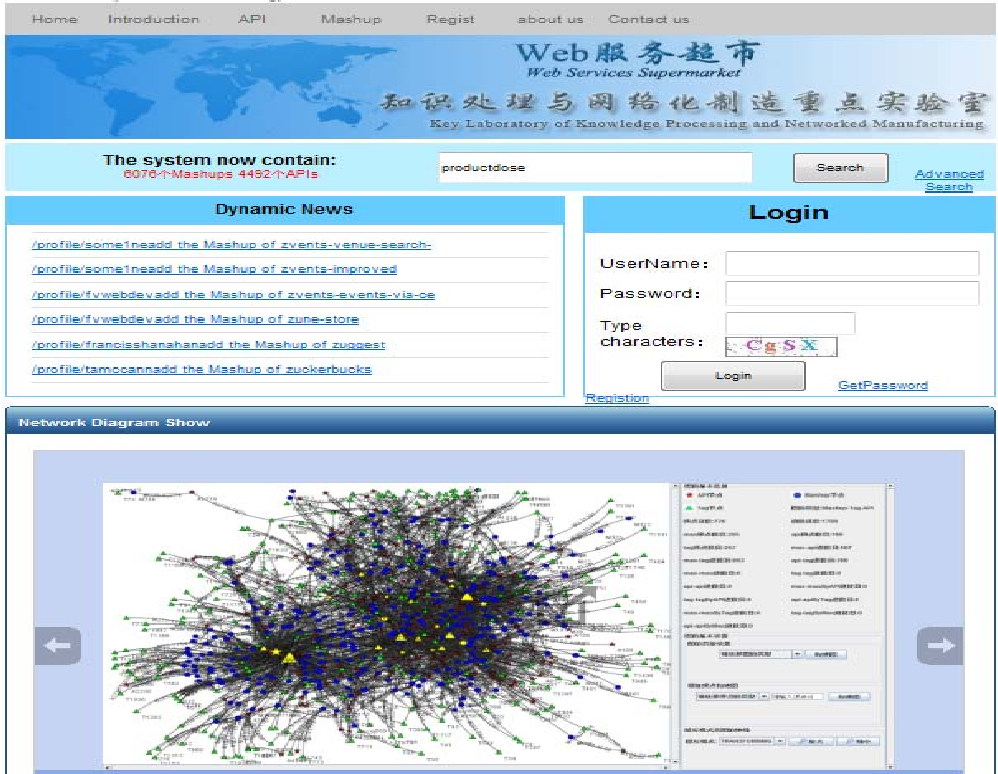 Figure 1: The architecture demonstrates the flow from data crawling to hybrid similarity calculation (Text + Social).
3. The Recommendation Algorithm
The system doesn't just return a list; it handles three cases. If it can't find perfectly matching services, it employs a Breadth-First Traversal on the social network to find Composition Paths—effectively suggesting how a user might combine different services to reach their goal.
Experimental Validation
Using a large-scale real-world dataset from ProgrammableWeb (6,000+ Mashups), the authors used Discounted Cumulative Gain (DCG) to measure performance.
Key Findings:
- Interest Relevance: Their hybrid approach significantly outperformed purely social-based methods (DCG ~3.0 vs. 0.5 for Top-10).
- Social Relevance: While purely social methods have slightly higher structural affinity, the hybrid approach maintains high scores (DCG ~30) while ensuring the services are actually relevant to the user's past behavior.
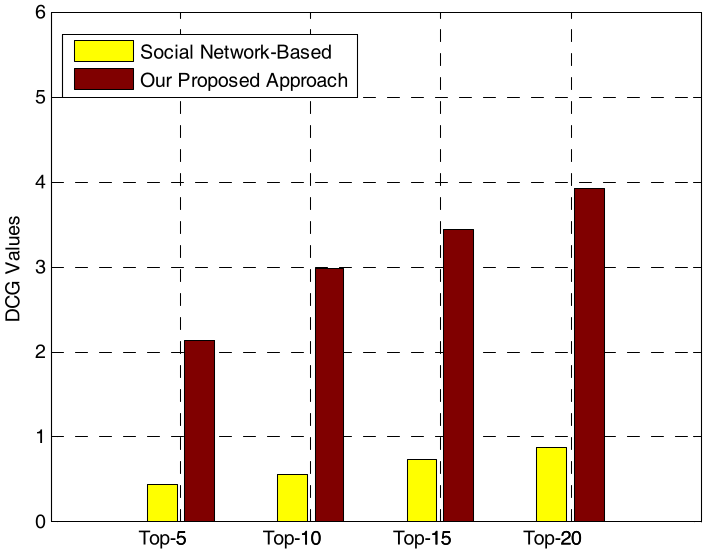 Figure 2: Performance analysis showing the hybrid approach (Top curve) maintaining high user interest relevance compared to pure social methods.
Critical Insight & Conclusion
This work highlights a pivotal shift in Service-Oriented Architecture (SOA): services are no longer isolated black boxes; they are part of a living ecosystem.
The Takeaway: By weighting structural similarity (shared dependencies) and content similarity (user history) equally, the authors have created a robust framework for a "Recommendation-As-You-Go" experience. However, a potential limitation is the reliance on manual tag quality; future iterations could benefit from automated semantic indexing using Large Language Models to handle the "noise" in user-generated tags.
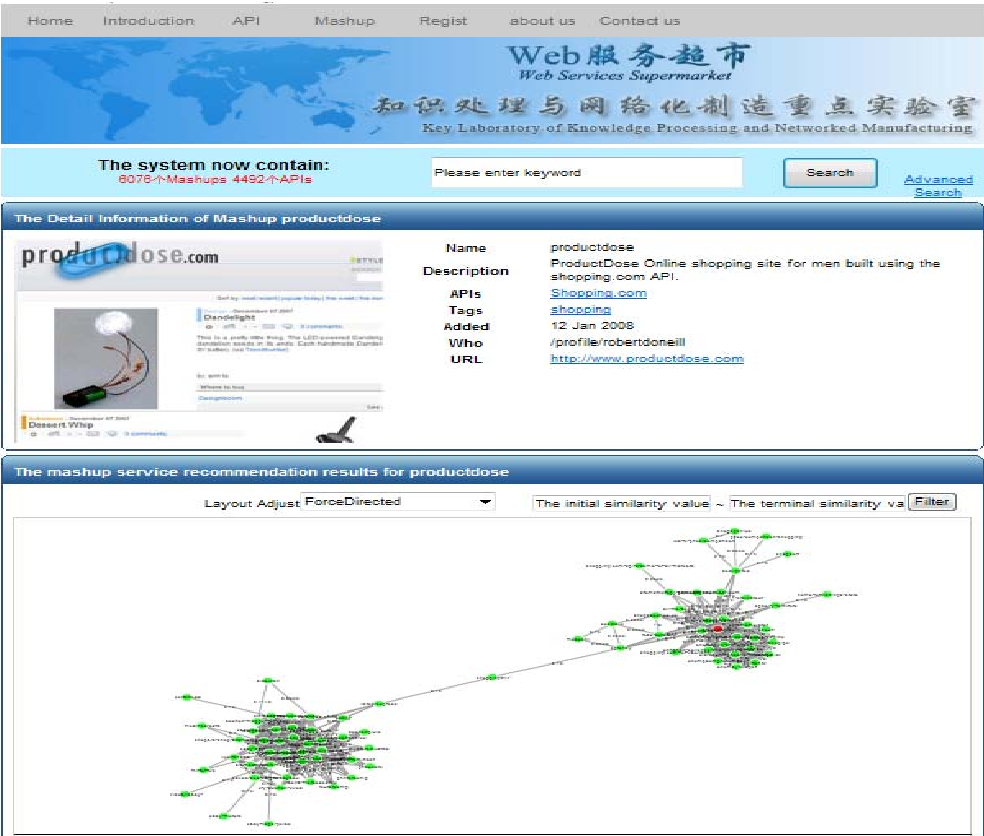 Figure 3: The implemented prototype system showing Top-K service composition paths.