
MatchNMingle: Redefining Social Signal Processing with In-the-Wild Multimodal Data
The MatchNMingle Dataset: A Novel Multi-Sensor Resource for the Analysis of Social Interactions and Group Dynamics In-the-Wild During Free-Standing Conversations and Speed Dates
MatchNMingle is a large-scale multimodal dataset designed for analyzing free-standing conversational groups and speed-dates "in-the-wild." It features 2 hours of synchronized data from 92 participants using overhead cameras and wearable sensors (acceleration/proximity), setting a new SOTA for dataset scale and annotation depth in social signal processing.
TL;DR
MatchNMingle is a 92-participant multimodal dataset addressing the complexities of human social interaction. By capturing both structured speed-dates and unstructured "mingle" parties through cameras and wearables, it provides a unique window into attraction, group dynamics, and personality. It stands out by proving that expert human behavior coding is indispensable for high-quality social action datasets.
Problem & Motivation: The Gap in Social Data
Understanding how humans form groups (F-formations) and express interest is a cornerstone of Social Signal Processing (SSP). Historically, researchers faced a trade-off:
- High Scalability, Low Resolution: Using millions of mobile pings without ground truth for actual face-to-face interaction.
- High Richness, Low Scale: Intensive lab studies with very few participants (e.g., the 6-person Cocktail Party dataset).
The authors of MatchNMingle argue that to truly "solve" social behavior, we need "in-the-wild" data that is both large-scale and meticulously annotated. They also challenge the industry's reliance on Amazon Mechanical Turk (MTurk) for complex behavioral labeling, suggesting that social signals are too nuanced for untrained crowds.
Methodology: Capturing the "Mingle"
The dataset setup is an engineering feat of synchronization. 92 participants were monitored over three events, each consisting of:
- Phase 1 (Speed Dating): 3-minute structured dyads.
- Phase 2 (Mingle): An unstructured cocktail party.
The Sensor Stack
- Custom Wearable Badges: Triaxial acceleration (20Hz) and radio-based binary proximity.
- 9 Overhead GoPro Cameras: strategically placed to minimize occlusions in crowded areas.
- Biometric & Psychometric Data: HEXACO personality scores, hormone baselines (Cortisol/Testosterone), and self-reported attraction levels.
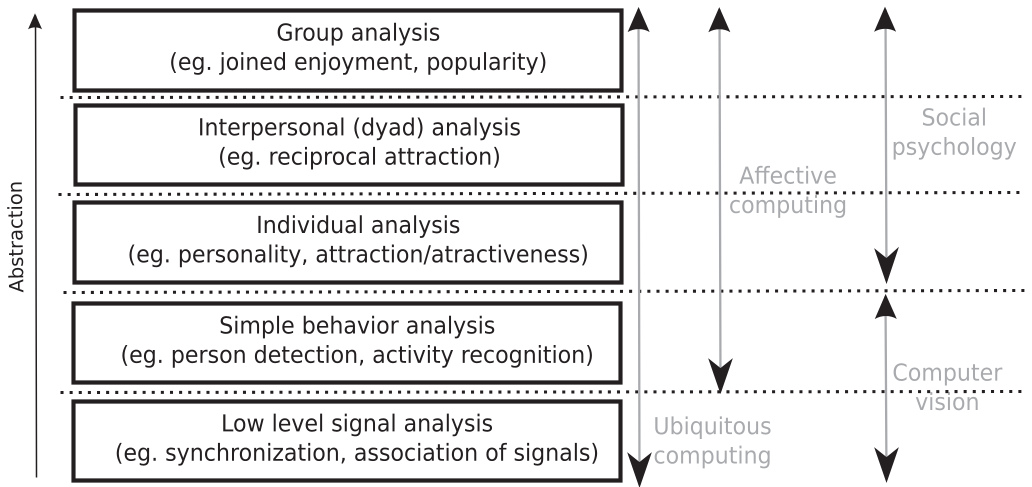 Fig 1: Visual summary of the modalities and data collection flow.
The Hidden Cost of Crowdsourcing
One of the paper's most critical insights is the Comparison of Annotator Performance. The authors tested MTurk workers against trained on-site annotators for two tasks:
- Simple (Position Tracking): Both groups performed well (MTurk: 0.84 overlap vs. On-site: 0.92).
- Complex (Social Actions): MTurk failed catastrophically. Workers often missed subtle cues like "hair touching" or "head gestures" and submitted empty tasks, leading to an 11-day overhead for data that trained annotators finished in 1 day.
Experiments & Results
MatchNMingle isn't just a data dump; it’s a proven resource for several tasks:
1. Attraction Detection
Can we predict if someone wants a second date just by how they move? Using wearable acceleration to measure physical arousal, the authors achieved an F-score of 0.65 for Romantic Interest, significantly outperforming random baselines.
2. Personality Estimation
Using a multi-modal approach (merging body movement, speaking turns, and proximity), they predicted traits like Conscientiousness and Openness with ~70% accuracy.
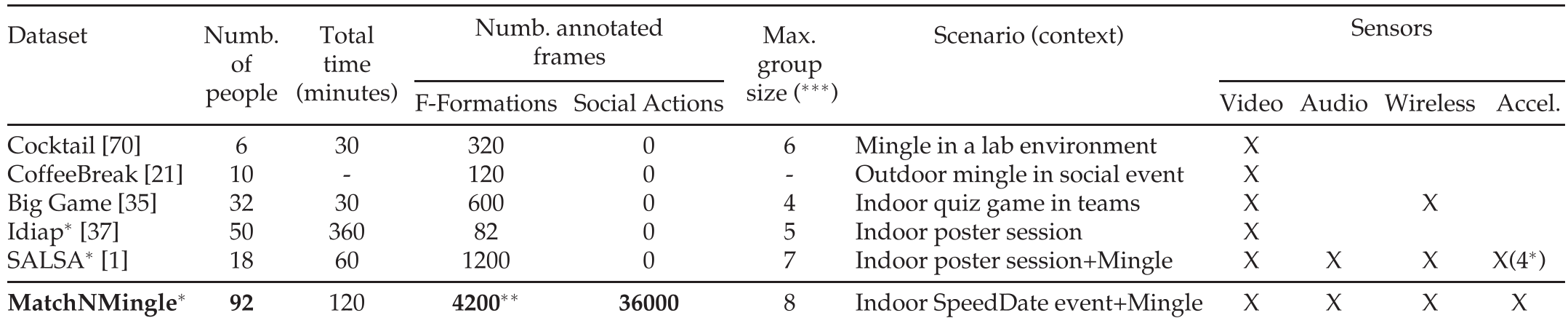 Table 1: Comparison of MatchNMingle against predecessors like SALSA and CoffeeBreak.
Critical Insights & Limitations
The Precision Paradox: The use of radio-based (omnidirectional) proximity instead of Infrared (directional) resulted in high Recall (90%) but low Precision (33%). While it captures people standing side-by-side in a group, it also "sees" people in the next group over. Future researchers will need to filter this noise using the provided video ground truth.
Future Outlook: MatchNMingle provides the community with a rare bridge between social psychology and data science. The inclusion of hormone data and personality traits alongside raw sensor streams allows for deep inquiries into why certain people become the "hubs" of social networks.
Conclusion
MatchNMingle is an essential benchmark for the next generation of SSP models. It proves that while sensors can capture the "what," high-quality human expertise is still required to define the "how" of social life.