
MatrAIx: The Era of 8 Billion Virtual Testers
MatrAIx: Simulating the World with 8.3 Billion Persona Agents
Summary
Problem
Method
Results
Takeaways
Abstract
This paper introduces MatrAIx, a population-scale infrastructure for simulated-user evaluation of AI systems. It features Persona 8B, a dataset of 8.3 billion synthetic and human-grounded personas, and a playground for testing agents across Survey, Chatbot, Web, and App environments using over 1,000 domain-specific tasks.
## TL;DR
Human evaluation is the gold standard but doesn't scale. **MatrAIx** solves this by creating a "digital twin" population of **8.3 billion personas**. By powering these personas with frontier LLMs, researchers can simulate how diverse users interact with chatbots, websites, and even mobile apps, catching failure modes before a single real human touches the product.
## The Wall of Static Benchmarking
Current AI evaluation is stuck in a binary trap: it’s either a static leaderboard (like MMLU) that ignores user interaction, or a slow, expensive human trial. The industry lacks a way to answer: *"How will a risk-averse, non-technical senior citizen in rural Japan react to our new financial advisor bot compared to a tech-savvy student in New York?"*
MatrAIx addresses this by providing **Persona 8B**, a massive repository of heterogeneous agents that don't just "answer" but "behave."
## Methodology: Building a Digital Humanity
The core innovation lies in the **1,290-dimensional schema**. Instead of simple labels, each persona is a complex web of background, psychology, and capability.
### 1. Dependency-Aware Generation
To avoid "impossible" people (e.g., a toddler with a PhD), the authors use a **Directed Acyclic Graph (DAG)**. Attributes are sampled conditionally—English proficiency is drawn based on region and primary language, ensuring the population maintains internal logic.
### 2. The Four Environments
MatrAIx isn't limited to text. It provides four "playgrounds":
- **Survey**: For market research and price sensitivity.
- **AI Chatbot**: Multi-turn goal-oriented dialogues.
- **Web**: Driving real browsers to complete tasks.
- **App**: The most impressive feat—using **Computer Use Agents (CUAs)** to operate native iOS and Linux applications.
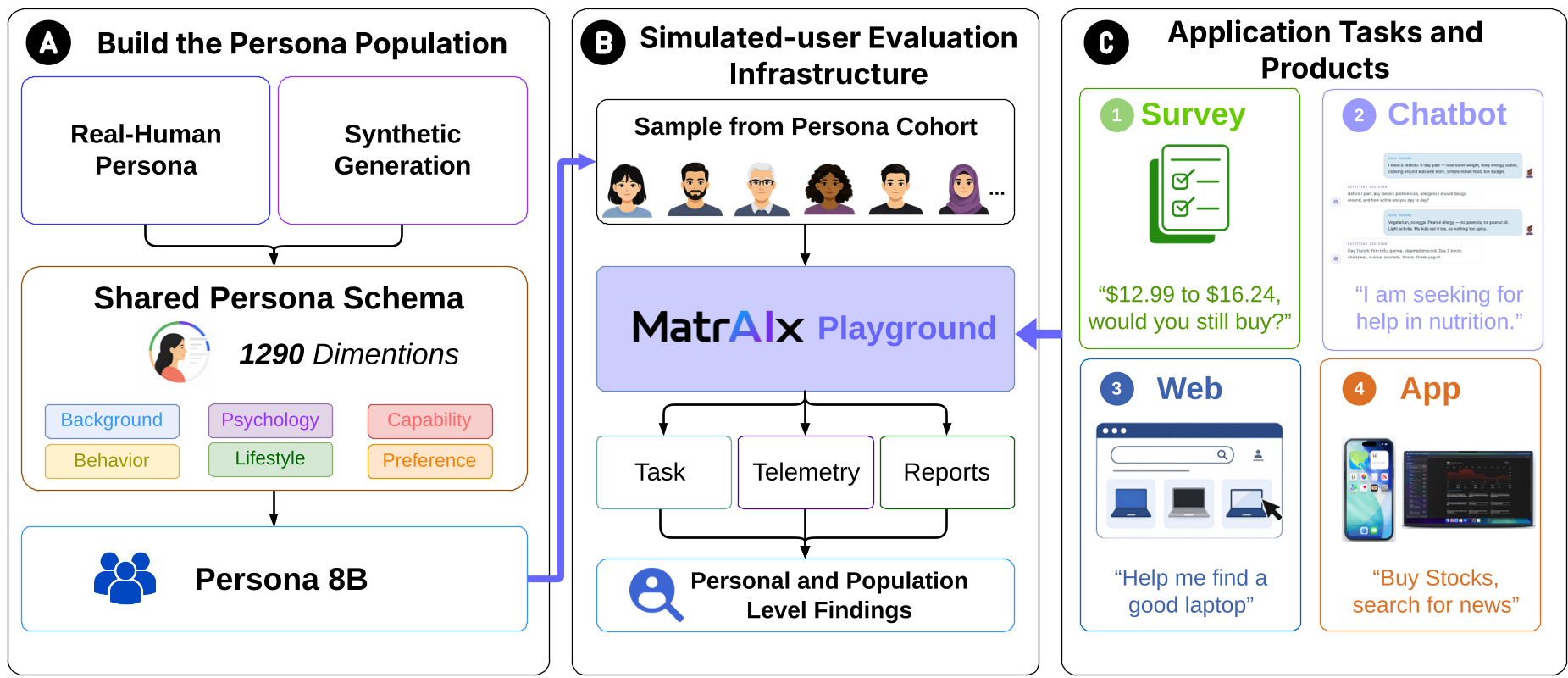
*Figure 1: The MatrAIx pipeline from cohort selection to environment-specific verification.*
## Experiments: Do Agents Actually "Act"?
The researchers tested the "Persona Fidelity"—whether an agent actually follows its instructions. In a controlled study of 400 trials, agents successfully expressed or suppressed specific traits (like humor, jargon, or politeness) **91.5% of the time**.
### Case Study: Meal-Planning & Price Sensitivity
In a meal-planning task, different personas interacted with the same GPT-4o assistant. The results were telling: "Empty Nesters" were far more likely to follow a plan than "Career Changers." In another study involving a price increase, GPT-5.5 agents were significantly more "hesitant" to purchase than Claude Opus agents, highlighting how the choice of the **persona-agent model** itself influences results.
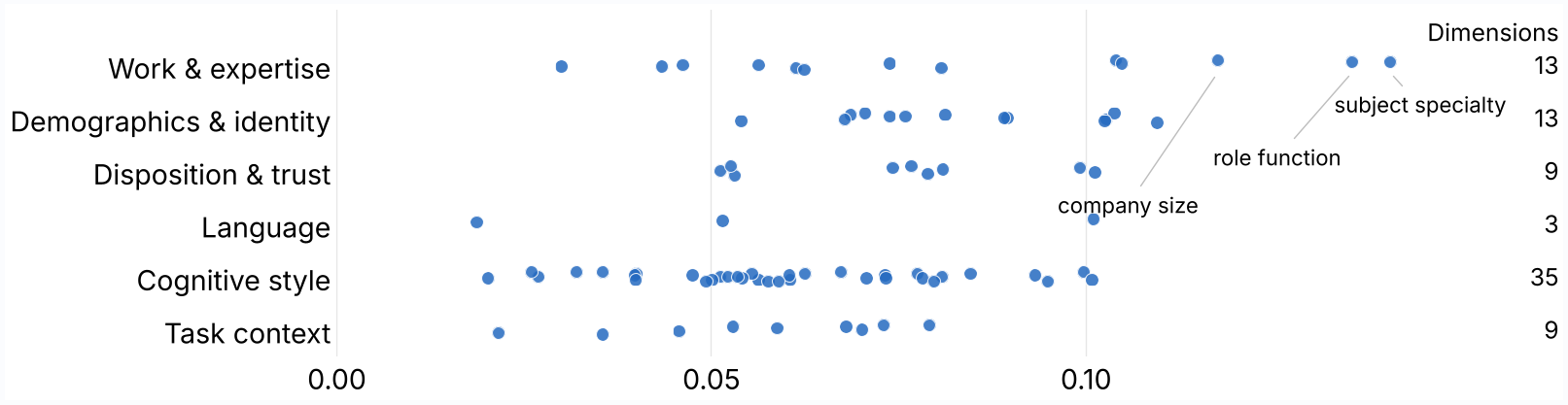
*Figure 2: Analysis showing how different persona dimensions correlate with task outcomes.*
## Critical Insight: The "Self-Preference" Risk
One of the most profound takeaways from the paper is the **Model-to-Model Bias**. If the persona-agent and the system-under-test use the same backbone (e.g., both are GPT-5.5), the evaluation might be artificially positive. The agent might "like" the response simply because it recognizes its own style. MatrAIx suggests that for valid results, we must test using a **cross-model approach**.
## Conclusion
MatrAIx represents a shift from "AI for tasks" to "AI for social simulation." By providing the infrastructure to simulate billions of diverse users, it allows developers to move beyond "average" performance and start designing for the fringes of human experience.
**The future of QA isn't just code coverage—it's persona coverage.**