
Bridging the Digital Literacy Gap: A Maturity-Based SNS for Science Teachers
Social network service with maturity level for science teachers
This paper proposes a Social Networking Service (SNS) integrated with a 5-level Maturity Model to support Japanese science teachers in sharing ICT-based teaching knowledge. It introduces a mechanism where user interfaces provide personalized guidance messages based on a teacher's activity level to encourage knowledge internalization and externalization.
TL;DR
In the landscape of modern education, having digital tools is not enough; knowing how to use them effectively is the real challenge. This paper addresses the "stagnation of knowledge" among Japanese science teachers by proposing a custom Social Networking Service (SNS). By implementing a five-level Maturity Model based on the SEI’s Capability Maturity Model (CMM), the system nudges teachers from being passive resource downloaders to active contributors of "Good Practice" in ICT-based education.
Context & Motivation: The "One-Way" Content Problem
Japan’s "RikaNetwork" offers over 40,000 digital resources for science education. However, researchers found two major bottlenecks:
- Heterogeneous Maturity: Teachers have wildly different comfort levels with ICT. While some innovate, others are overwhelmed and spend excessive time just preparing basic classes.
- Stagnation: Valuable instructional knowledge (guidance plans, troubleshooting tips) is rarely shared beyond local, face-to-face meetings.
The fundamental insight hereof is that a repository is not a community. To transform a library into a vibrant ecosystem, the authors argue we must model the social process of knowledge creation.
Methodology: The 5-Level Maturity Framework
The core of this work is the adaptation of the Capability Maturity Model (CMM) to human behavioral patterns in a digital community.
| Level | Basic Action | Knowledge Strategy |
|---|---|---|
| 1. Trial | Trial use and basic downloads | Internalization starts |
| 2. Learning | Creating plans for personal use | Learning from others |
| 3. Local Sharing | Sharing within the local community | Local externalization |
| 4. Global Sharing | Open sharing to all teachers | National collaboration |
| 5. Continuous | Maintaining and updating "Good Practice" | Change management |
The System Architecture
To support this, the authors built an SNS prototype using OpenPNE. The system logs user activities—such as the number of guidance plans uploaded, comments made, and resources downloaded—to dynamically calculate a teacher's maturity level.
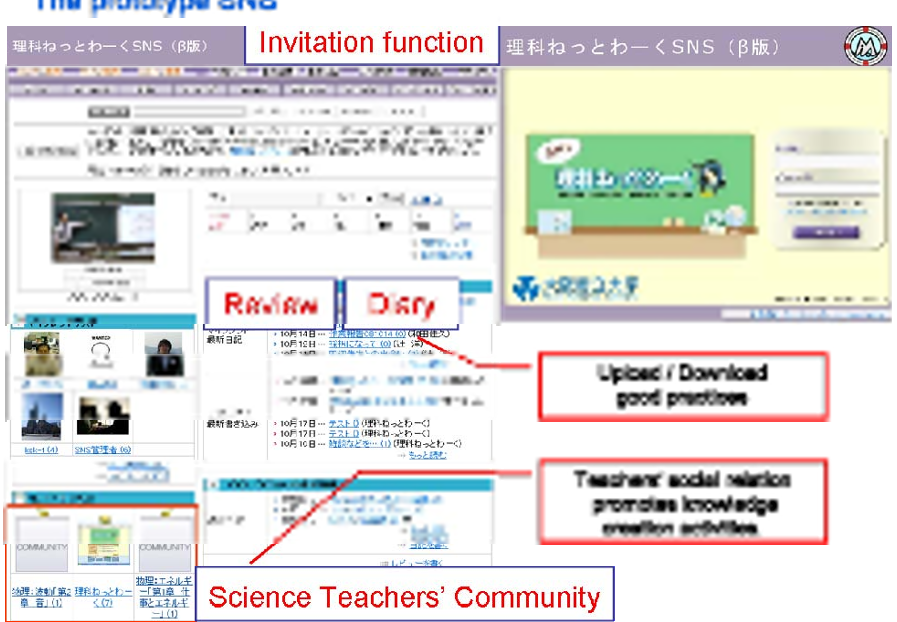 Figure 1: The architecture linking the User Interface, the Maturity Judge, and the expanded Database.
Nudging for Growth: UI and Data Models
The system doesn't just track maturity; it actively promotes it. Depending on the current level, the UI generates specific recommendations. For instance, a Level 1 teacher sees messages encouraging them to read others' plans, while a Level 3 teacher is nudged to open their community-only plans to the global teaching population.
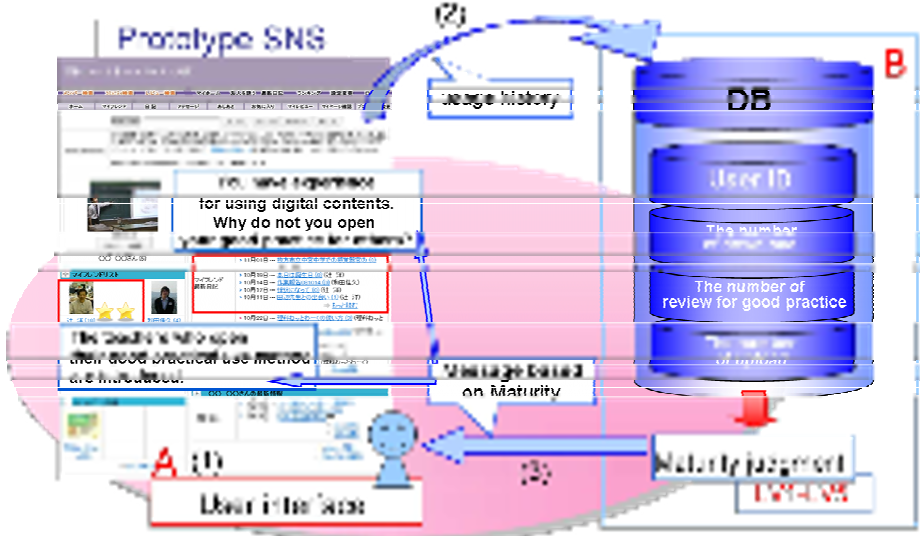 Figure 2: Example of UI tailored for Level 1 teachers, emphasizing guidance for novice users.
The underlying Database was extended with specialized tables to track interaction metrics, such as "Guidance Plan Upload Counting" and "Comment/Evaluation Tables," allowing for a quantitative judgment of professional engagement.
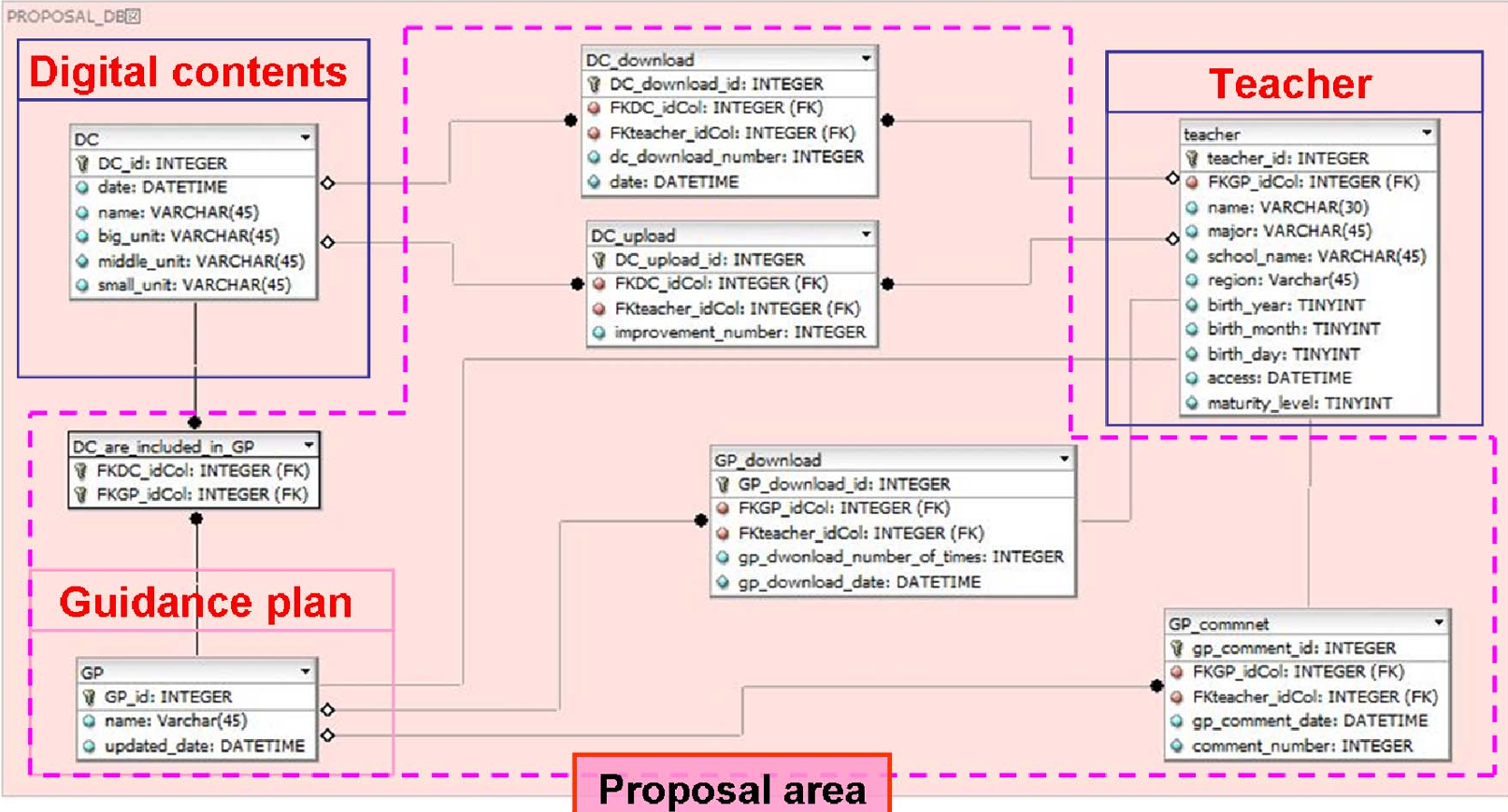 Figure 3: The ER model showing how SNS metadata is linked to educational digital contents.
Critical Insight & Results
The researchers formalize the "Maturity Model Draft" (Table II & III), setting concrete thresholds (e.g., Level 4 requires uploading at least 1 global plan and providing at least 5 evaluations).
By leveraging the SECI Model (Socialization, Externalization, Combination, Internalization), the system facilitates a "knowledge spiral." Instead of a static database, the SNS acts as a catalyst for mass collaboration (Wikinomics), where one teacher's failed experiment becomes another teacher's lesson learned.
Conclusion & Future Outlook
This work demonstrates that the barrier to ICT adoption in schools is cultural and social as much as it is technical. By acknowledging that teachers are at different stages of their digital journey, the maturity-based SNS provides a roadmap for professional development.
Future Directions: The authors suggest that reaching a "critical mass" of users is essential for the platform's stability. Success will ultimately depend on whether these digital "nudges" can overcome the high cognitive load and time constraints that primary and middle school teachers face daily.